A 110V DC contactor order in industrial panel work usually means the coil, and the published CZW coil lists run 6 V through 220 V with discrete values at 96 V and 120 V ending in etc. — 110 V itself is not a listed value, so the RFQ must name the control battery voltage explicitly and let engineering confirm the coil build, while the published 0.8–1.2 Us working range row frames the supply-tolerance discussion; if the request means a 110 V load circuit instead, the published answer changes family to the ≤150 V QZJ class.
This guide is for panel builders in plants whose control power standard is a 110 V DC battery. The coil-option system lives across the CZW series DC contactors pillar, and every claim below points at a published table row or code slot.
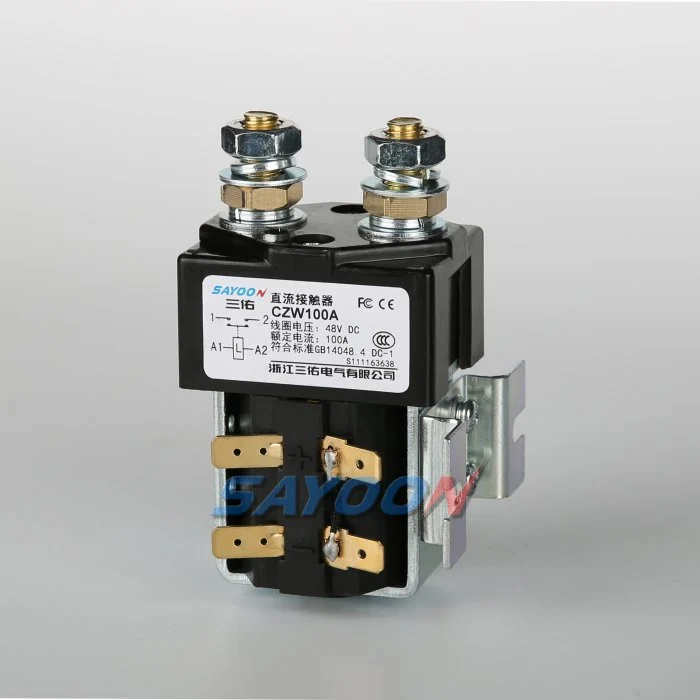
Part 1. What does a 110V DC contactor request usually mean in panel work?
A 110V DC contactor request carries two possible meanings, and industrial panels see both. Most often the 110 V describes the control side: plants standardize control batteries at 110 V DC, and every contactor coil in the lineup must drink from that battery.
Less often the 110 V describes the load circuit the contacts switch. The two meanings route to different published rows — coil rated voltage lists for the first, contact voltage classes for the second — so the RFQ must say which one it means.
| Meaning of 110 V | Device row it points to | Catalog consequence |
|---|---|---|
| Control battery feeding the coil | Coil rated voltage list | Coil option confirmation on any amp class |
| Load circuit across the contacts | Contact voltage class | Family change: ≤80 V CZW classes cannot serve it |
Part 2. Which published coil voltage lists apply to 110 V control panels?
The published lists deserve exact reading. The CZW100A normally open DC contactor page lists coil rated voltage as 6V, 12V, 24V, 36V, 48V, 60V, 72V, 84V, 96V, 120V, 150V, 220V etc. — neighbors 96 V and 120 V are discrete values, 110 V itself is not, and the list closes with etc.
That reading produces the ordering discipline for this whole topic. A 110 V control battery panel cannot silently order a listed value; it writes 110 V DC explicitly on the RFQ and lets engineering confirm the coil build behind the etc.
| Published coil list fact | CZW100A example | RFQ consequence |
|---|---|---|
| Discrete values 6–220 V | Includes 96 V and 120 V | Neighbors exist, 110 V is not listed |
| List ends with etc. | Other voltages by confirmation | Name the battery voltage explicitly |
| Same list structure across classes | CZW400A publishes the same pattern | One discipline covers the panel |
Neighboring coil-voltage guides on this site follow the same logic one value away — see the 120 V coil contactor wiring guide and the 24 V contactor coil stability notes.
Part 3. How does the published working range row frame 110 V coil questions?
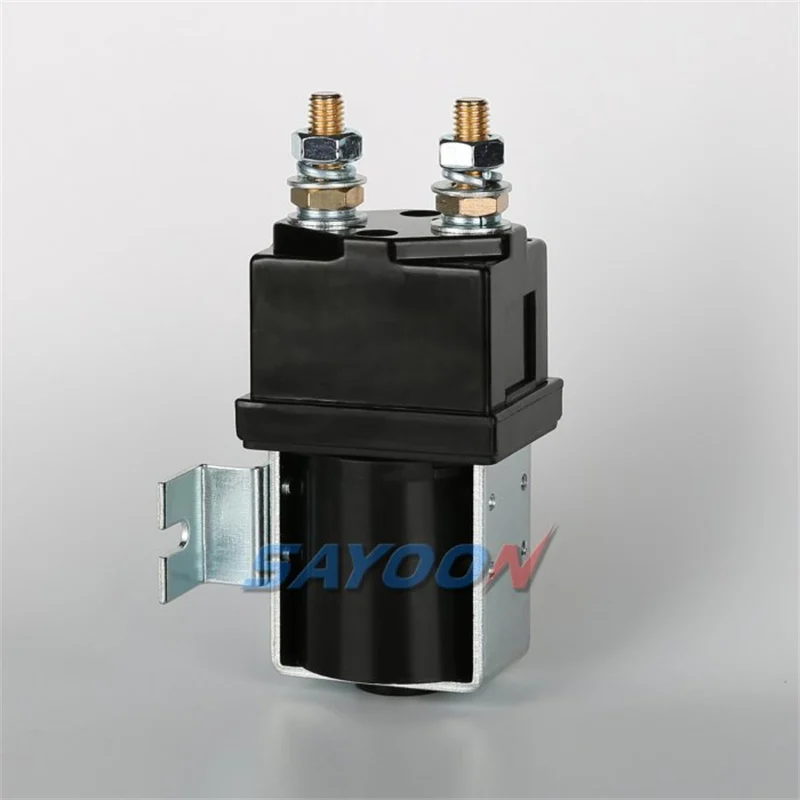
Every cited CZW table publishes a working voltage range row for the 40 C coil: 0.8–1.2 Us, where Us is the ordered coil’s rated voltage. That row is the frame for every can-it-run question a 110 V battery panel asks.
The discipline is to hand engineering the numbers rather than do datasheet arithmetic in the panel shop. Control batteries float above nominal and sag under load, so the RFQ should state nominal voltage, float ceiling, and worst-case sag, and ask which coil build keeps the whole band inside the published range.
| Battery reality to document | Why it matters against 0.8–1.2 Us | Where it goes |
|---|---|---|
| Nominal 110 V | Anchor value for Us discussion | RFQ line 1 |
| Float ceiling | Upper band must stay ≤1.2 Us | RFQ line 2 |
| Worst-case sag | Lower band must stay ≥0.8 Us; pull-in row also applies | RFQ line 3 |
The published pull-in voltage row (≤70% on cited CZW SKUs) belongs in the same conversation: sagging supplies that still exceed pull-in requirements close reliably; the confirmation is engineering’s, not the shop’s.
Part 4. How do published ordering codes carry the coil voltage?
CZW model implication tables publish the ordering grammar, and the coil voltage always rides in the final slot — the pattern shown as /24V in the published example rows.
- Product type and rated current open the code (CZW, 100A).
- Function letters follow — auxiliary switch, magnetic blow-out, mounting bracket, and option codes on the published lists.
- The coil rated voltage closes the code after a slash, which is where a confirmed 110 V build would be written.
Code literacy prevents the classic swap error: a panel that writes the coil voltage into the wrong slot, or omits it, receives default coils that fail on a 110 V battery. Copy the published code structure line by line onto the PO.
| Code slot (published pattern) | Example content | Panel-order rule |
|---|---|---|
| Type + current | CZW 100A | Match the load class first |
| Option letters | -S, -C, -M variants | Only published codes |
| /Coil voltage | /110V (after confirmation) | Explicit, confirmed, never assumed |
Part 5. Which published class serves 110 V load circuits instead?
When the 110 V in the request describes the load circuit, coil lists stop being the answer and contact classes take over. The CZW100A publishes contact voltage ≤80 V — it cannot switch a 110 V load circuit regardless of which coil it carries.
The published LV class that contains 110 V is the QZJ family: the QZJ100A normally open DC contactor publishes contact voltage ≤150 V with a 100 A load line and coil power Start: 35–65, Keep: 2–5 W.
| Load-side question | Published answer | Row that decides |
|---|---|---|
| 110 V load on CZW100A? | No | Contact voltage ≤80 V |
| 110 V load on QZJ100A? | Within published class | Contact voltage ≤150 V |
| Coil for that QZJ on a 110 V battery? | Same confirmation discipline | QZJ coil list 6–96 V etc. |
Part 6. Which SAYOON models anchor a 110 V panel RFQ?
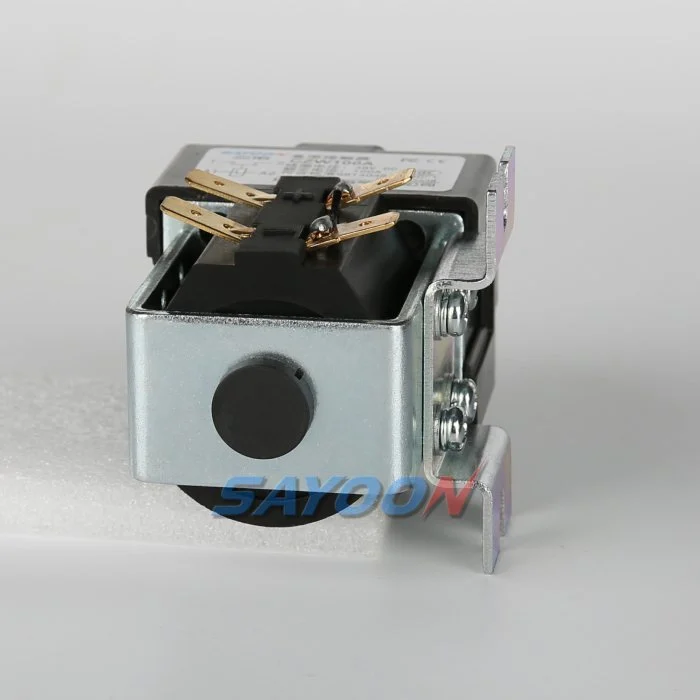
Product recommendation: structure control-side 110 V RFQs around the CZW100A normally open DC contactor — its published coil list, 0.8–1.2 Us working range row, and clean ordering-code grammar make coil confirmation straightforward, and its 8–13 W coil band sizes the control battery draw.
Why not other lines without review: larger CZW classes reuse the same coil logic when the load demands them; the QZJ100A takes over when 110 V describes the load circuit, under its published ≤150 V class; and no SKU should be promised with a 110 V coil until engineering confirms the build behind the published etc.
Fit Boundary: the ≤80 V contact class never serves a 110 V load circuit; coil confirmation is mandatory because 110 V is not a listed discrete value; and fault clearing stays with breakers, whatever coil the contactor carries. Low-voltage coil variants follow the same list discipline — see the 12 volt coil contactor notes.
To close the loop, send your control battery details with nominal, float, and sag values plus the SKU and amp class.
Part 7. What coil-ordering mistakes disrupt control panels?
- Assuming 110 V is a listed discrete coil value instead of confirming behind the etc.
- Ordering a neighbor voltage silently and hoping the range absorbs the difference.
- Doing 0.8–1.2 Us arithmetic in the shop instead of documenting battery band values for engineering.
- Writing the coil voltage into the wrong ordering-code slot.
- Confusing the coil request with a 110 V load circuit and staying in the ≤80 V class.
- Ignoring float ceiling on the battery when specifying the coil.
- Forgetting coil watts times device count in the control battery budget.
References
FAQs
What is a 110V DC contactor?
Usually it is a DC contactor whose coil is fed from a 110 V DC control battery. Less often the phrase means a contactor switching a 110 V load circuit, which routes to a different published class.
Is 110 V a published SAYOON coil option?
The published CZW coil lists show discrete values including 96 V and 120 V and end with etc.; 110 V is not a listed value, so it is an RFQ confirmation item for engineering.
Can a 120 V coil work on a 110 V control battery?
That is a working-range question framed by the published 0.8–1.2 Us row. Document nominal, float, and sag values on the RFQ and let engineering confirm the correct coil build.
Where does the coil voltage sit in the ordering code?
In the final slot after a slash — the published examples show the /24V pattern. A confirmed 110 V build would be written the same way at the end of the code.
What happens if coil voltage sags too low?
Cited CZW tables publish pull-in voltage at ≤70% and the working range at 0.8–1.2 Us. Supplies sagging below those bands risk missed pull-ins and chattering, which the RFQ review must exclude.
Which SKUs handle a 110 V DC load circuit?
The QZJ family publishes contact voltage ≤150 V — QZJ100A for example — while CZW classes publish ≤80 V or lower and cannot switch a 110 V load.
Where should a 110 V panel RFQ start on this site?
Start at the CZW series pillar for control-side coils or the QZJ pages for 110 V load circuits, then send the battery details through the contact page for confirmation.