A DC contactor CMRT review should establish who reported, what products and reporting period are covered, which minerals are in scope and whether the supporting smelter information is consistent with the declaration. A completed workbook is a supply-chain information tool, not a product safety certificate or automatic proof that every contactor is conflict-free. Start by matching the supplier response to the ordered parts, then resolve coverage and data-quality gaps before making a sourcing claim. This guide does not assert the composition or responsible-minerals status of any Sayoon product.
Understand what the CMRT is designed to do
The Responsible Minerals Initiative provides the Conflict Minerals Reporting Template to exchange information through the supply chain. Its mineral scope concerns tin, tantalum, tungsten and gold, often abbreviated as 3TG. The template helps a customer collect supplier information; it does not replace a complete due-diligence programme.
RMI’s official CMRT page and completion guidance explain the template and its use. Obtain the current requested version from the official source, then read the instructions associated with that version. A historical guide can explain general workflow, but it should not be used to invent current validation rules or override the instructions in a newer workbook.
A contactor buyer should not infer mineral content from appearance. A bright contact surface is not a material analysis. Nor does a product’s function establish that all four minerals are present. Ask the supplier to answer the applicable declaration questions using its actual product and supply-chain evidence.
Define the reporting boundary before checking answers
A supplier may respond at company level, product level or another declared scope permitted by the template. Identify that boundary before interpreting the rest of the workbook. A company-wide response may include mineral processors unrelated to the contactors you buy. A product-level response may provide a narrower connection but still require explanation of unresolved suppliers.
List the exact part numbers and options covered by your request. If the supplier uses a product list, verify that its naming maps to the purchase order and approved drawing. A list that says “electrical components” is less precise than one that identifies the relevant contactor family and ordered configuration.
The reporting period also matters. A response describing a previous year’s sourcing is not automatically evidence for a later production period. Ask whether the supplier considers it representative of the ordered material and whether any change has occurred. Preserve the answer with the submission instead of assuming that the newest email contains the newest data.
Review the workbook using a consistent checklist
| Review item | Evidence to collect | Decision boundary |
|---|---|---|
| Reporting boundary | Company or product scope and part list | Do not infer product-level facility mapping |
| Period | Reporting year and current applicability | Request confirmation for new production |
| Mineral answers | Consistency with scope and supporting data | Keep unknown information visible |
| Facility information | Identity and relationship to reported scope | Resolve names without inventing provenance |
These checks support a purchasing review. They do not create an audit opinion or establish regulatory compliance. Use the template’s own instructions and the customer’s due-diligence requirements when deciding which gaps require follow-up or prevent acceptance.
Check declaration answers for internal consistency
Read the declaration as a connected account. If the supplier reports that an in-scope mineral is used but provides no explanation of the information available from its supply chain, ask what evidence supports the answer. If two fields seem inconsistent, clarify the intended meaning before interpreting them as deliberate misreporting.
A reported absence should have an evidential basis appropriate to the supplier’s scope. Conversely, an incomplete answer should remain incomplete. Do not replace a blank field with “No” merely to satisfy a customer’s upload system. Doing so changes the supplier’s assertion and removes the visibility of uncertainty.
Keep the original submitted file. Where your process permits a normalized working copy, identify the edits and preserve a connection to the source. Formatting corrections should not silently change declarations, mineral coverage or reporting scope. Ask the supplier to issue a corrected response when a substantive answer needs revision.
Treat smelter data as information requiring interpretation
A facility name, location and identifier can help distinguish similar names and reduce duplicate entries. Use the official reference tools applicable to the template and keep the date of the check. An unrecognized name may indicate a spelling problem, a different type of facility or information that needs further assessment; it is not automatically proof of misconduct.
Do not treat a list of facilities as a direct bill-of-materials map for a contactor unless the supplier actually establishes that relationship. Company-level lists can cover many product lines. Ask whether a listed facility is known to relate to your products, potentially relates to them or appears because of the broader declared scope.
An assessment status also has its own scope and time. Avoid turning a facility-level result into an unrestricted claim about every shipment. Responsible sourcing review depends on the available chain information, the risks identified and the actions taken. Preserve those distinctions in the customer-facing conclusion.
Separate CMRT from other mineral reporting templates
RMI maintains other reporting templates for different mineral scopes. Do not assume that a CMRT answers a customer request about every mineral used in a battery system or industrial assembly. Read the customer’s request and identify which information belongs in which template.
If a customer asks about a mineral outside the CMRT’s scope, explain that boundary and request the appropriate information through an agreed process. Avoid adding unsupported columns or altering the official workbook in a way that creates a misleading impression of standard conformity. A separate explanatory attachment may be clearer when used under your customer’s procedure.
This is particularly relevant when a contactor is purchased as part of a larger energy-storage assembly. The assembly can include many materials that the contactor supplier neither selects nor controls. Keep responsibility aligned with the supplied scope instead of asking one component supplier to declare the whole system.
Design a supplier follow-up that closes real gaps
Prioritize questions that affect interpretation: missing product coverage, unclear reporting period, inconsistent mineral declarations and unexplained processor information. Include the relevant workbook field and a concise description of the conflict. A specific request is easier to route to the supplier’s responsible person than a general complaint about data quality.
Agree who will supply an update and when. If information depends on upstream suppliers, record the limitation and the intended follow-up. Do not demand a fabricated final answer simply because the first-tier supplier cannot immediately establish the complete chain. A transparent unknown is more useful than a confident but unsupported response.
Where a customer requires a particular format or submission portal, preserve the supplier’s actual assertion during transfer. If a field cannot be represented accurately, request clarification or document the mapping issue. The act of entering information into a system should not expand its scope.
Make the purchasing decision distinct from the report
An accepted CMRT submission means that the response has met a defined review requirement. It does not automatically mean that all sourcing risks are eliminated. The responsible team should decide how the information fits into its due-diligence process and whether additional risk assessment or supplier engagement is necessary.
Electrical acceptance remains separate. A contactor still requires appropriate operating voltage, current, switching duty, environmental suitability and documentation. A responsible-minerals response cannot establish those properties. Keep the sourcing record connected to the ordered part while preserving the separate technical approval.
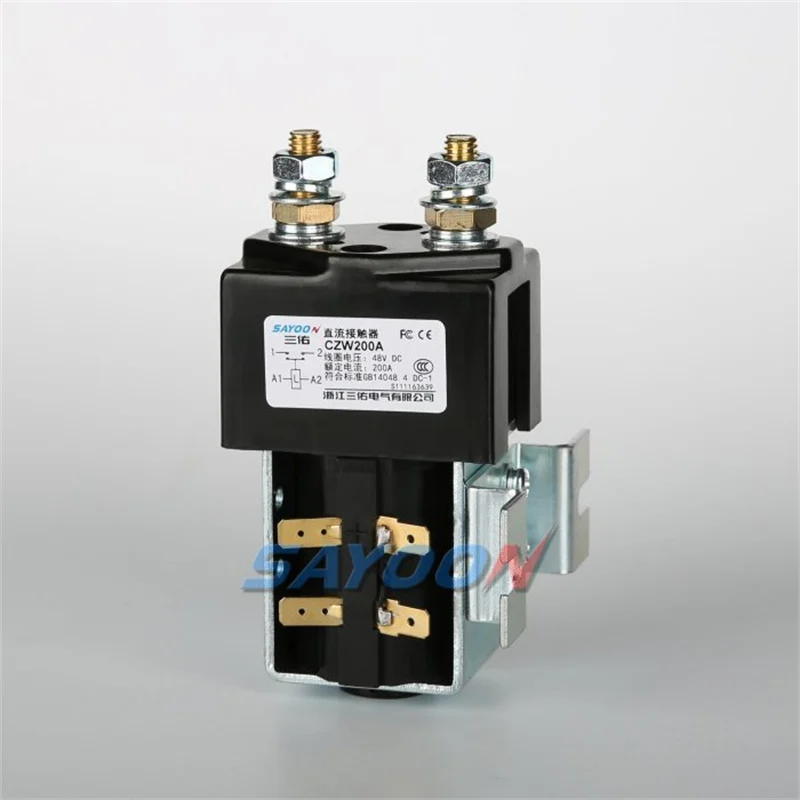
For Sayoon enquiries, include the part numbers, requested reporting period, destination or customer requirement and required template. Ask for the available response and a contact for unresolved questions. Do not assume that the presence of a product photograph on this page means that a particular report has been issued or approved.
Retain a useful audit trail for repeat orders
Save the original workbook, supplier contact, receipt date, scope explanation, review notes and any follow-up. Record the review outcome in language that describes the evidence. “Accepted for this customer’s information request with listed limitations” is more precise than a universal conflict-free label when the evidence does not justify that label.
Review the record when the supplier, product, reporting period or relevant sourcing information changes. Avoid automatically copying the previous year’s status into a new order. If the old record remains applicable, document the reason and the current confirmation. This allows another buyer to understand the decision without reconstructing every email.
Educational video
The Responsible Business Alliance introduces OECD minerals due diligence. This explains the wider process around supplier reporting; a completed CMRT alone is not a sourcing certification.

Frequently asked questions
Does a completed CMRT certify a contactor as conflict-free?
No. It is a structured supply-chain reporting tool. The information must be interpreted within its declared scope and the buyer’s due-diligence process.
Can a company-level CMRT cover the parts I buy?
It can provide relevant information, but verify the declared scope and its relationship to the ordered parts. Do not assume that every listed facility relates to your contactor.
Should an unknown answer be changed to No?
No. Preserve the supplier’s actual information and request clarification. Changing unknown or blank information into a negative declaration misrepresents the evidence.
Does the CMRT cover every mineral in an energy-storage system?
No. Identify the scope of the current template and use the appropriate additional reporting process when a customer requests other minerals or system components.
Product documentation and complementary guides
Discuss the CZW200A contactor construction reference with Sayoon and request current documentation for the exact ordered configuration. Use the DC contactor selection guide for the separate technical selection process. Complementary documents include How to Review RoHS Documents for a DC Contactor RFQ, How to Review a DC Contactor Test Report.
Primary references and scope
The official sources support the document and management concepts discussed above. Their jurisdiction and publication context remain distinct. They do not certify or endorse the pictured product.