A DC contactor declaration of conformity review should connect the document to the exact product, responsible organisation, destination market and applicable requirements. A certificate for a similar series, a test report cover page or a CE logo in a catalogue does not complete that connection. Ask who is declaring conformity, what configuration the declaration covers and which supporting documents explain the claim. Keep missing evidence open rather than assuming that an attractive PDF establishes suitability for your equipment.
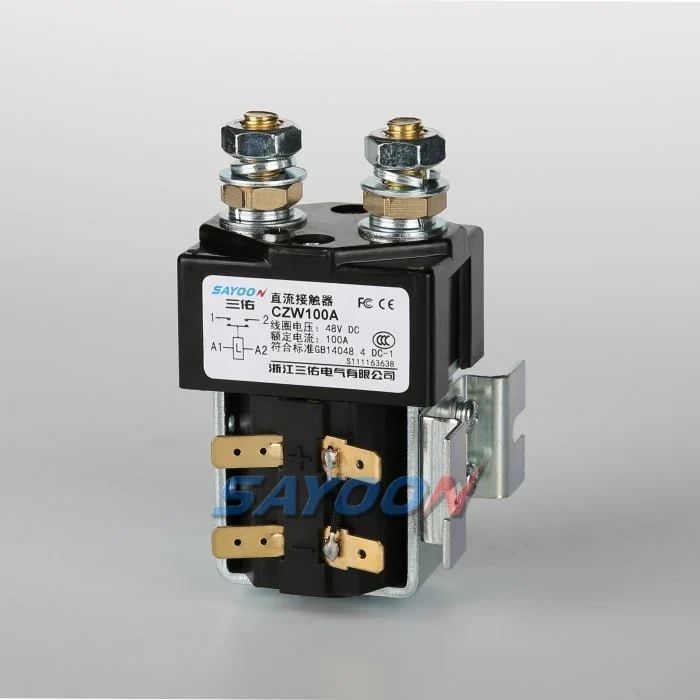
This guide is a purchasing workflow for buyers and equipment integrators. It does not certify a Sayoon contactor or decide which legislation applies to your project. The pictured product is an identification reference. Its appearance cannot establish a declaration, approval or conformity assessment for an ordered configuration.
Establish the market and supplied object first
Begin the enquiry with the intended destination and what is actually being supplied: a standalone contactor, a replacement component, an enclosure or a complete machine. Record the legal manufacturer and the party responsible for placing that object on the relevant market. Avoid asking for a generic European certificate before these basic questions have been answered. Different supplied objects can need different documentation and assessment routes.
The European Commission describes the manufacturer’s responsibilities for assessment, technical documentation and declarations within the CE framework. Use that official explanation to understand responsibilities, then check the legislation applicable to the actual product. Great Britain, Northern Ireland and the EU must not be treated as one undifferentiated destination. The current GOV.UK collection links the corresponding market guides and should be consulted when the destination changes.
Request a declaration tied to the complete order code
Give the supplier the full part number, coil option, contact arrangement, accessories and revision specified in the quotation. Request the document covering that combination. If a declaration lists a family rather than each suffix, ask for an explanation of the naming rules and the relationship between the ordered item and the declared family. Keep that explanation with the order rather than relying on a salesperson’s recollection.
Compare names across the declaration, drawing, quotation and proposed product label. A distributor’s trading name may differ from the manufacturer’s legal name without indicating a problem, but the relationship must be understandable. Ask the supplier to clarify legitimate differences. Unexplained identity changes require resolution before acceptance; they should not be silently corrected by editing the supplier’s document or substituting a familiar company name.
Separate declarations, reports and certificates
A declaration identifies the responsible party’s claim under the applicable framework. A laboratory report describes the work and samples within its own scope. A third-party certificate can provide additional evidence, but its meaning depends on the scheme and stated conditions. These documents can support each other without being interchangeable. Classify each received file by what it actually says rather than by its filename or the wording in an email.
For example, a document headed attestation may state restrictions on what it establishes. Read those restrictions and request the required declaration separately where applicable. Conversely, do not demand an invented universal government-issued CE certificate as the only acceptable evidence. Ask the responsible compliance reviewer to identify the proper route, including whether independent assessment is required for the specific product and legislation.
| Review stage | Evidence to collect | Responsible party |
|---|---|---|
| Identity | Full order code and covered options | Supplier |
| Responsibility | Manufacturer name and authorised signature | Compliance reviewer |
| Scope | Applicable market and supplied object | Equipment owner |
| Evidence | Declaration and related report references | Manufacturer |
| Decision | Resolved discrepancies and controlled record | Purchasing |
This is a procurement review register, not a regulatory acceptance table. Use the official references below and the actual project documents to resolve each item.
Check scope and references without inventing applicability
Create a list of the legislation and standards cited by the supplier. Ask why each item is relevant to the supplied object and intended use. A contactor’s DC switching function, coil supply and integration arrangement are important technical context, but the buyer should not convert a single characteristic into a complete legal classification. The responsible reviewer must assess the actual product and market requirements.
Check document dates, revisions and supporting references. An older issue date alone does not prove a declaration is invalid, and a new date does not prove its contents are correct. Where a standard or assessment basis has changed, ask for the manufacturer’s documented review of continued applicability. Do not replace editions yourself or copy a competitor’s standards list into the supplier’s declaration.
Review responsibility and document completeness
Identify the organisation accepting responsibility and the person authorised to sign on its behalf. Look for product identification, the declared requirements, date and signature information required by the applicable framework. A scanned signature is not automatically evidence of fraud; equally, an impressive signature image does not validate the underlying claim. Resolve incomplete or inconsistent information through the responsible organisation using a verified communication channel.
HSENI provides a useful explanation of declaration identity and completeness checks, but its page includes historical legislative references. Treat it as background for document review, not as a current list of legislation for every contactor. Use current official market guidance and the applicable legal text for the final assessment. This distinction prevents a practical checklist from becoming an outdated compliance instruction.
Preserve the connection to the technical file
Ask what supporting evidence can be supplied for your review: relevant report references, instructions, drawings and explanations of family coverage. Commercial confidentiality may limit which complete files are shared with a purchaser. That does not justify accepting unrelated evidence. Agree on a suitable review arrangement with the manufacturer and responsible compliance team, while distinguishing purchaser access from information authorities may require.
Keep a register linking each document to its purpose. A report identifier should lead to a defined sample and configuration, not merely to a statement that testing occurred somewhere. If only a report summary is available, record what remains unverified. A purchase order can state the outstanding information and release condition so that an unresolved evidence request does not disappear when the order transfers between departments.
Keep component evidence separate from equipment acceptance
A declaration for a contactor does not automatically cover the machine, battery system or control enclosure containing it. The equipment manufacturer needs to evaluate its own supplied object and integration responsibilities. Keep component documents as inputs to that process, alongside installation instructions and the actual design. Do not describe the completed equipment as approved solely because one purchased part carries a document.
The reverse is also important. A declaration for a finished assembly may not establish a separate claim for an individually sold replacement contactor. Ask which object the evidence identifies. If the purchasing team is buying a replacement, verify the permitted configuration with the equipment owner and manufacturer. Electrical similarity alone is insufficient reason to expand the scope of someone else’s declaration.
Handle document discrepancies through a controlled decision
When a suffix is missing or an address differs, record the discrepancy, affected order and requested clarification. Separate administrative questions from technical scope questions. An administrative correction can sometimes be resolved with a replacement controlled document; an uncovered configuration may require further assessment. The person releasing the order should know which type of issue remains and who has authority to close it.
Avoid accepting a promise to send the correct file later as if it were the file itself. If shipment is being considered before review completion, the responsible organisation must define what is permitted and how the goods will be controlled. This article does not authorise conditional release. Its purpose is to make the missing evidence visible so that an accountable decision can be made.
Build a useful RFQ documentation request
Include the complete product description, destination, intended supplied object and required document list in the RFQ. Ask the supplier to identify which documents are currently available and which require clarification. Request the declaration version, model coverage explanation, instructions and supporting report identifiers. Make clear that a product photograph is for identification, not proof of certification or a substitute for the controlled documentation.
For a Sayoon enquiry, start from the actual product page and request model-specific information. Keep ordinary electrical selection questions separate: operating current, main-circuit voltage, load, duty, coil supply and installation conditions still need confirmation. A completed documentation review cannot compensate for an unsuitable electrical specification, and a suitable electrical specification does not complete the documentation review.
Retain an acceptance record that survives personnel changes
Archive the received declaration, supporting correspondence, review date, responsible reviewer and final disposition. Link the record to the purchase order and delivered configuration. Save the actual controlled file rather than only a webpage link that may later change. This makes it possible to explain why the item was accepted without reconstructing the decision from scattered emails months later.
Define change triggers for future orders. A new manufacturer identity, model suffix, accessory, revision, market or intended supplied object should prompt a check of continued coverage. Reusing an approved supplier does not remove the need to compare the new order with the approved record. Focus the review on meaningful differences and preserve the reasoning when the existing evidence remains applicable.
Educational video
Compliance Gate provides a short educational overview of CE marking and documentation. It explains the document categories discussed here; it does not assess a Sayoon model or replace current official market guidance.
Frequently asked questions
Is a CE logo sufficient for a DC contactor documentation review?
No. Connect the actual product and configuration to the responsible organisation’s declaration and supporting evidence under the applicable market framework. A catalogue symbol alone cannot establish that relationship.
Does every test report replace a declaration of conformity?
No. A report describes its own samples, methods and results. Check whether a declaration is required and request the appropriate document from the responsible party. The documents serve different purposes.
Must a declaration list every serial number?
Check the identification requirements of the applicable legislation. Family or model coverage can require an explanation, and any serial numbers that are stated must correspond to the relevant goods. Do not invent a universal serial-number rule.
Can a component declaration approve my complete control enclosure?
Do not assume so. The equipment manufacturer must assess the complete supplied object and integration obligations. Component documents support that work within their stated scope; they do not automatically extend to the assembly.
Product documentation and related guides
Use the CZW100A product identification reference to begin a model-specific enquiry, and the DC contactor selection guide for ordinary electrical selection. Related reading: UL 60947-4-1 Certification for DC Contactors, DC contactor supplier ISO 9001 certificates: scope and validity review. These complementary topics do not replace the specific evidence review described here.
Official references and application limits
- HSENI: declaration identification background (historical references)
- GOV.UK: current CE and UKCA market guidance
The sources explain their own regulatory or assessment context. The review workflow is an editorial purchasing aid. It does not extend those sources into a product approval or establish compliance of a particular contactor or installation.