Pitted contactor contacts have localized surface depressions; burned contacts may show heat damage, erosion or discoloration. These observations require a product-specific inspection and disposition, not an automatic sanding repair. Isolate the equipment safely, determine whether the assembly is designed to be opened, preserve evidence and compare accessible contact condition with the manufacturer’s criteria. A photograph alone cannot establish remaining life, safe DC interruption capability or permission to return a device to service. For sealed or non-serviceable DC contactors, document external evidence and seek supplier instructions instead of opening the enclosure to copy an HVAC repair demonstration.
Separate a surface observation from a failure conclusion
Describe what is visible without inventing its cause. A crater, material transfer, discoloration and an overheated terminal are different observations. The technician should record their location and the conditions under which they were found. Do not label all dark surfaces as burned contacts, or infer a permissible wear depth from a photograph of another product.
Arcing during switching can affect contact surfaces, but the interpretation depends on construction, material, duty and the applicable inspection criteria. A rough-looking surface is not enough to establish the remaining service margin, and a clean surface is not proof of health. Use the exact product instructions and an authorized decision rather than a universal appearance chart.
Confirm that the device is serviceable before opening it
Identify the complete ordering code and obtain current service instructions. Determine whether inspection of internal contacts is permitted and what access method is authorized. Some assemblies are sealed or not intended for field disassembly. Opening one can change its condition, destroy evidence and compromise the construction being evaluated. Do not assume that visible screws authorize a repair.
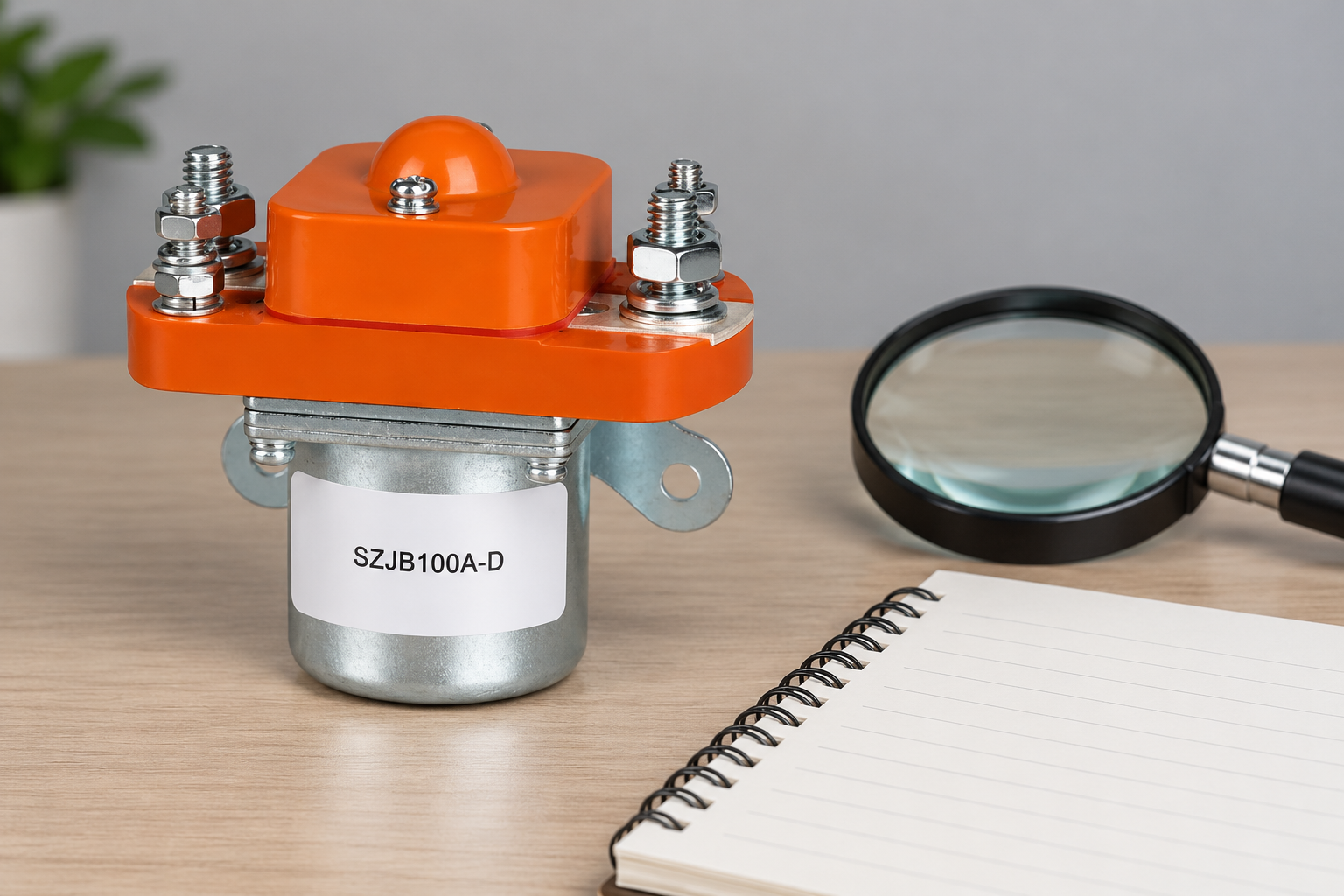
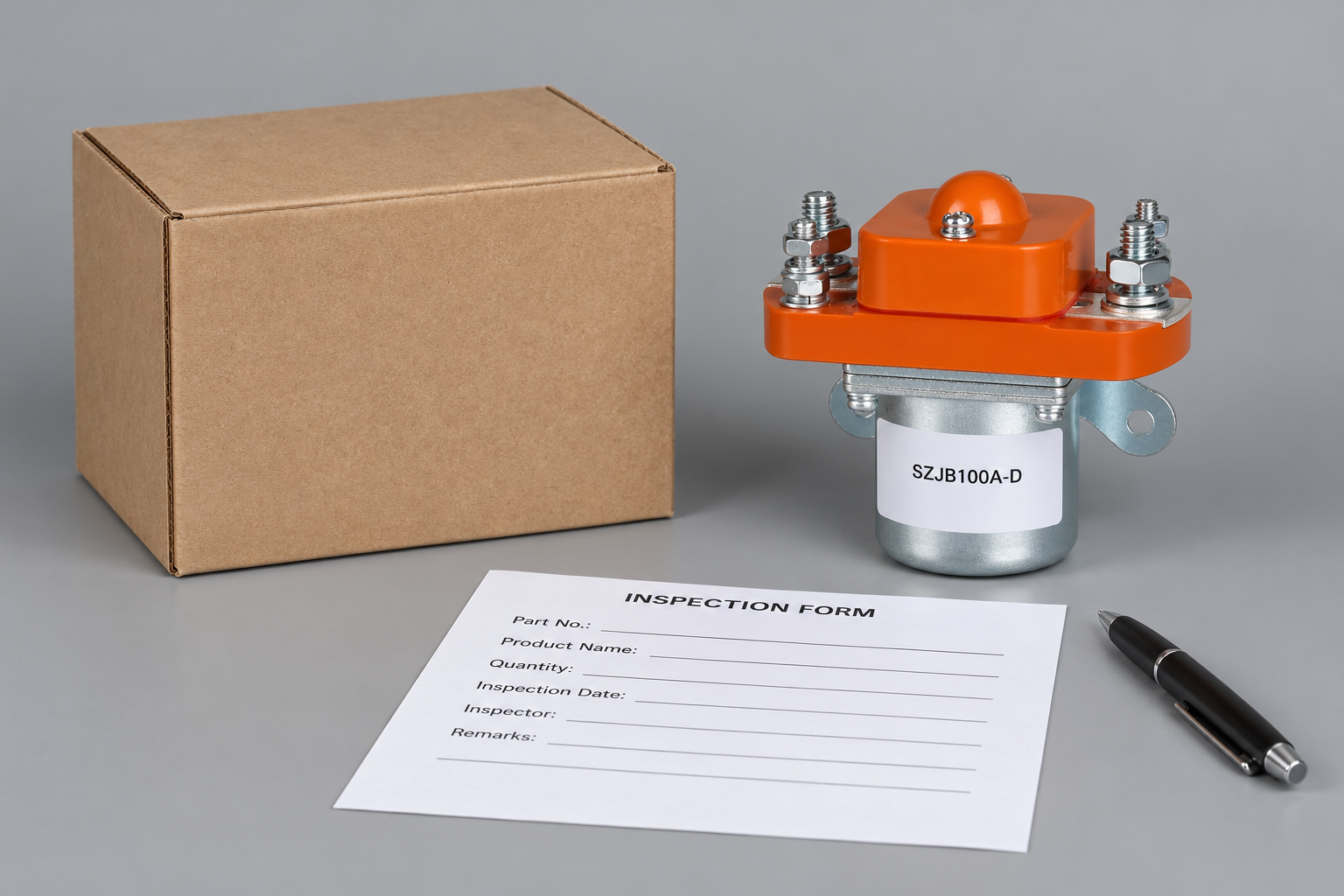
The product illustrations in this article show an intact external contactor. They do not depict damaged internal contacts and should not be used as a reference for pitting depth or acceptable wear. If internal examination belongs to supplier return analysis, preserve the unit as directed and provide the event history. Ask which evidence can be collected externally without affecting the investigation.
Isolate all sources before an accessible inspection
Qualified personnel should follow the equipment isolation procedure and control stored energy before accessing the contactor. An open contactor or an off command does not establish a safe work condition. The applicable US workplace practices in 29 CFR 1910.333 include deenergization and verification requirements; follow the local rules and equipment instructions governing the installation.
Preserve labels, connection identity and external condition before cleaning or removing hardware. Record what was disconnected and how the part was handled. Do not perform an informal energized inspection to watch an arc, and do not deliberately switch a questionable device under load to see whether it still works. Such an operation can create a new event without answering the original inspection question.
Collect photographs that preserve scale and identity
Where the approved procedure allows access, photograph the as-found condition before disturbing deposits or contact surfaces. Include overall orientation and closer views, tied to the unit and pole identification. Use a suitable scale only when the method permits it and when its position supports a meaningful measurement. A camera angle can exaggerate or hide a depression.
Keep original images with the inspection record. Avoid editing contrast or removing marks in a way that changes the evidence; an annotated copy can identify locations while the original remains available. Record whether the observed surface was accessible directly or through an inspection opening. If the view is incomplete, say so instead of extending the observation to hidden areas.
Distinguish internal contact damage from connection heating
Inspect accessible terminals, conductors, hardware and insulating surfaces under the approved method. Local heating can involve a poor external connection, an unsuitable installation or another system issue. Finding a hot-looking terminal does not establish the state of the internal contact faces. Keep the external and internal observations in separate report fields.
Compare the installed arrangement with the exact drawing and hardware requirements. Do not apply a generic torque value or reuse questionable hardware merely because it fits. Correcting an external connection does not automatically clear possible damage to insulation or the contactor. The responsible person should define which components need further assessment before returning the assembly to service.
Use an inspection decision table
This table organizes a qualified review and intentionally avoids universal wear or resistance limits. Manufacturer instructions, the equipment requirements and the actual event determine the acceptance basis. When a required criterion is missing, obtain a disposition rather than inventing one from a neighboring model.
| Check | Required evidence | Decision or record |
|---|---|---|
| Sealed or non-serviceable assembly | Exact service instructions and external observations | Keep intact; obtain supplier disposition or an approved return-analysis route. |
| Accessible contact-face depression | As-found photographs, permitted measurement and product criteria | Describe the condition and compare with the applicable acceptance basis. |
| Material transfer or apparent welding | Inspection evidence and event history | Keep out of service pending an authorized assessment; do not force apart for reuse. |
| Discolored terminal or damaged insulation | External connection details and applicable construction requirements | Investigate connection and equipment condition separately from hidden contact wear. |
| Resistance result differs from baseline | Controlled method, temperature and exact acceptance basis | Review the result and its limitations; appearance alone cannot explain it. |
| Recurring rapid operation | Control and coil evidence with timestamps | Investigate repeated switching rather than treating surface damage alone. |
| No documented wear criteria | Supplier instruction and responsible engineering review | Do not create an acceptance threshold from online photographs. |
Do not sand or file contacts without an explicit approved method
A generic online instruction to polish a contact is not an authorized repair for every DC contactor. Contact material, surface condition, geometry and mechanical arrangement matter. Removing material can change the construction and erase evidence. Use a manufacturer-approved maintenance procedure only when it applies to the exact serviceable product and condition.
Do not separate welded contacts with a tool and assume that movement restores the device. Similarly, contact-cleaner chemistry or abrasive residues may be incompatible with the construction. If the specified response is replacement or return analysis, follow that disposition. The aim is a defensible service decision, not a visually smooth surface achieved through an undocumented process.
Interpret resistance evidence within its measurement limits
When an approved contact-resistance check is relevant, define the contact state, connection method, instrument and environmental conditions. NIST’s traceability guidance helps frame the measurement evidence and uncertainty questions. A reading without those conditions is a weak basis for comparing different units or declaring wear acceptable.
The contact-resistance guide addresses that separate measurement topic. A satisfactory reading does not prove interruption capability or remaining electrical life. An unusual reading does not identify pitting as the sole cause. Preserve the measured result, acceptance basis and any setup limitations with the photographs rather than replacing the inspection record with a single pass label.
Investigate the duty that preceded the damage
Record the switching sequence, relevant load conditions, event count where known, protective-device behavior and any abnormal operation. Carrying current and making or breaking duty need separate consideration. An apparently adequate continuous-current rating does not establish suitability for every interruption. Avoid using a product family name as a substitute for evidence about the actual variant.
If repeated chatter or unstable control preceded the finding, include the control-event investigation in the corrective plan. If an unexpected opening occurred, retain the event sequence. Replacing damaged hardware without addressing an inappropriate duty or unstable command can leave the original problem active.
Make replacement and release decisions traceable
Identify who can authorize continued service, replacement or return analysis. Retain the exact part and relevant documents when the cause is unresolved. A replacement needs the correct contact arrangement, coil option, installation requirements and duty evidence. Similar external dimensions or a matching nominal current are insufficient to establish equivalence.
Use the cross-reference checklist to organize substitution questions. After approved corrective work, complete the required equipment checks and record the release scope. Do not describe the device as restored to original performance unless the evidence actually supports that claim. Keep removed parts separated from usable stock until their disposition is clear.
Ask Sayoon for the exact service and selection evidence
The SZJB100A-D Normally Closed DC Contactor pictured here is an intact construction reference. It is not shown with internal damage and its illustration does not establish a serviceable-contact design, wear limit or repair method. Send the exact identity, as-found condition, operating history and available inspection results when requesting technical guidance.
The DC contactor selection hub can help organize the application inputs for a replacement inquiry. State whether you need inspection instructions, return analysis or a new selection. Obtain the applicable documents for the actual configuration and keep unresolved system-duty questions with the equipment designer. That provides a clear path from an observed condition to an authorized disposition.
Educational video: understand the contact arrangement
The Electrician U explanation below introduces how a coil operates contactor contacts. Use it to understand the distinction between control and main circuits before reading an inspection drawing. It provides general education, rather than a test procedure or approval of the illustrated Sayoon model.
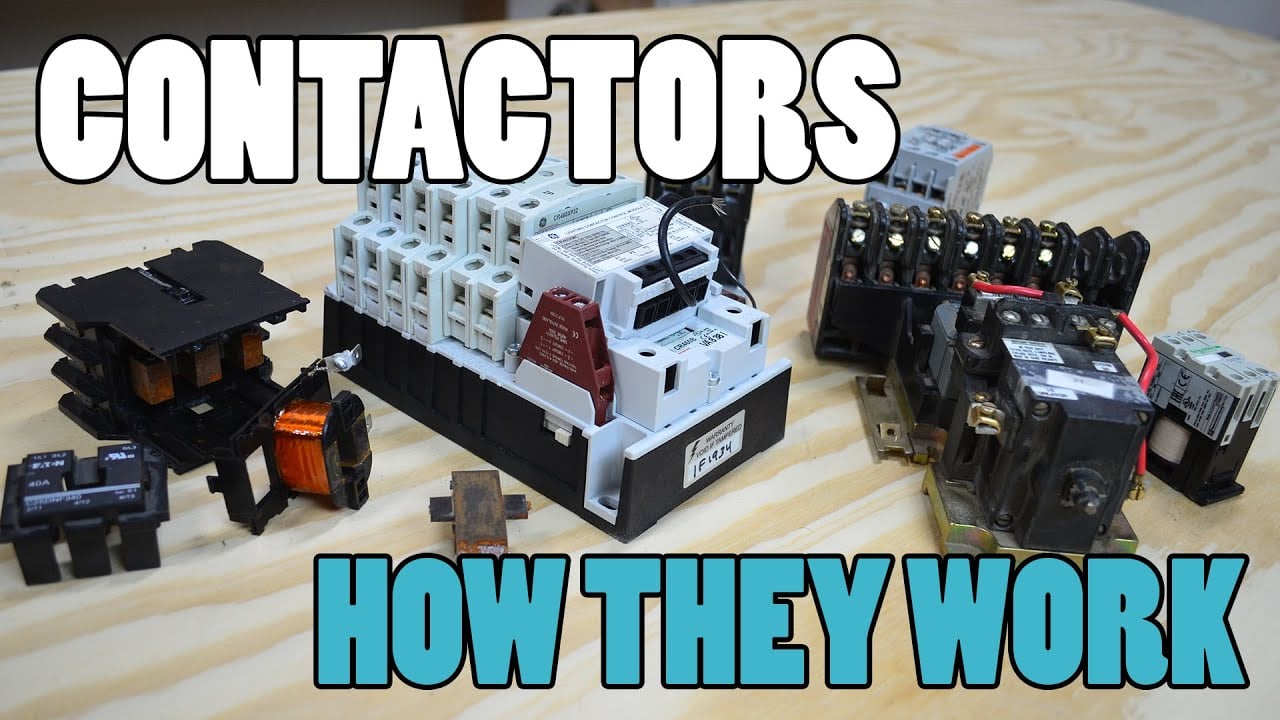
Watch the Electrician U educational explanation.
Frequently asked questions
Should pitted contacts always be sanded smooth?
No. Use only an explicit manufacturer-approved method for the exact serviceable product; otherwise obtain a replacement or return-analysis disposition.
Can a sealed DC contactor be opened for routine inspection?
Do not assume so. Follow the exact product instructions and preserve the unit for supplier analysis when internal access is not authorized.
Does low resistance prove that damaged contacts remain safe?
No. A resistance result does not establish interruption capability, remaining life or all aspects of contact condition.
Do the product pictures show actual pitted contacts?
No. They are intact external construction references and provide no wear-depth or acceptance evidence.