A DC contactor clicking sound can be normal when the mechanism closes or opens once in response to a command. Repeated clicks, rapid chatter, or an unexpected opening deserve investigation because they can indicate an unstable command, inadequate coil supply, a protection response or a mechanical problem. The sound alone does not prove that the main contacts are healthy or that the contactor is rated correctly for the load. Record when the sound occurs and compare it with the control command and operating conditions. Isolate the equipment safely before inspecting wiring, terminals or the contactor mechanism.
Identify the sound pattern before choosing a remedy
Describe whether there is one click on startup, one on shutdown, a short sequence during an intended control routine, or persistent repeated operation. Record the equipment state, load condition and whether the event follows a command. A normal mechanical transition can sound different through different enclosures and mounting panels. Loudness alone is a weak basis for deciding that the contactor is defective, particularly without a baseline for the exact equipment.
Distinguish repeated full operation from a steady buzz or vibration. DC coils, electronic drivers, suppression circuits and magnetic-holding mechanisms do not all behave identically. Some sounds can originate in a neighboring relay, converter, fan or panel rather than the contactor. Use observations to narrow the source without touching exposed live parts or removing guards in operation. A recording and timestamps can help an authorized technician correlate the event with controller logs.
Make the equipment safe before inspection
A battery-fed circuit can remain hazardous after the operator switch is turned off. Follow the equipment’s isolation procedure, identify all energy sources and address stored energy before accessing terminals. Inspection and testing should be performed by appropriately qualified people with suitable equipment. Do not treat an open contactor as the only isolation point or assume a low nominal control voltage makes the main circuit harmless.
The electrical work-practice requirements in 29 CFR 1910.333 provide a US workplace reference for deenergizing and verifying electrical safety, subject to their scope. Apply the relevant local rules and equipment instructions to your installation. Energized diagnostics require a justified procedure and appropriate protections; this article does not authorize an improvised live battery test or defeating an interlock.
Why an electromechanical contactor produces a click
An electromechanical contactor uses a coil and magnetic structure to move a mechanism that operates contacts. At a commanded transition, moving parts reach a mechanical position and the resulting impulse can be heard as a click. Contact springs and the release mechanism also contribute to the physical transition. The exact sound depends on construction; it cannot be predicted from the nominal main-current label alone. A product with electronic control can still operate a mechanical contact assembly.
Opening and closing need not sound identical. The mechanical energy and path can differ between pull-in and release, while the enclosure changes what reaches the listener. A click does not directly reveal which electrical terminals changed state. Consult the exact contact arrangement and equipment indication rather than assuming every audible transition closes every contact. A normally open, normally closed or changeover arrangement can produce a similar actuation sound while serving a different circuit function.
Read a normal startup or shutdown sequence
An equipment startup can include more than one intended switching action. Different contactors may operate at separate stages, and a controlled precharge or permissive sequence can include an intentional opening or closing. The number of audible clicks alone does not establish a fault. Compare the sound with the approved sequence and the equipment’s normal indications, while recognizing that the listener may hear several devices through the same panel.
At shutdown, the controller may remove the coil command and the contact mechanism releases. Magnetic-holding constructions can use a different control sequence from an ordinary continuously energized coil. Review the equipment documentation and the exact contactor control option before deciding what sound should occur. This explanation does not prescribe a startup timing or a precharge design. If the observed sequence differs from the documented behavior, use an authorized service review rather than repeatedly issuing commands to learn by trial.
Use a sound-interpretation table
This qualitative table explains what common observations can and cannot show. It is not a fault-code list, an acoustic limit or a live-test procedure. Interpret each observation against the intended equipment sequence and the exact construction before deciding whether further review is needed.
| Observation | Possible normal interpretation | Limit of the observation |
|---|---|---|
| One click after a close command | A mechanism reaches its commanded position. | The sound does not prove every contact is electrically healthy. |
| One click after removal of the command | The mechanism releases under the intended control sequence. | Consult the exact contact arrangement; do not infer circuit isolation. |
| Several spaced clicks at startup | Separate devices or intended sequence stages may operate. | Compare with the approved sequence rather than counting clicks alone. |
| Different opening and closing sound | Different mechanical transitions and enclosure response may be audible. | There is no universal acceptable sound based only on current rating. |
| Louder sound after enclosure work | A mounting panel or enclosure may transmit the impulse differently. | Inspect the approved installation after safe isolation. |
| Persistent rapid repeated clicks | The sound differs from a single intended transition. | Use the existing chattering-event guide and authorized service process. |
Inspect connections and mounting after isolation
Check terminals, connectors, mounting and visible damage against the approved installation instructions. A loose connection may affect supply stability, but tightening every terminal without the specified method can create a different problem. Use the applicable torque, hardware and inspection requirements from the manufacturer. Record damaged insulation, discoloration, loose hardware or a changed mounting arrangement before disturbing the evidence.
Look for mechanical interference, contamination or damage that can affect movement, while keeping sealed or nonserviceable products intact. Do not file contacts, adjust springs or lubricate the mechanism unless the manufacturer explicitly provides a service procedure. A mounting panel can amplify an otherwise ordinary actuation sound. Resolve the mounting issue against the approved installation rather than adding improvised soft supports that change mechanical retention or electrical clearances.
Do not use sound as a test of the main contacts
Hearing a click indicates a mechanical event somewhere in the equipment, not necessarily a correct main-contact state. A contactor can move while a contact is damaged, and a controller can open a device because another protection has operated. Review the main-circuit symptom independently: whether the equipment actually starts, whether a fault is logged and what the approved feedback indicates. Avoid repeatedly cycling a suspect contactor under load simply to reproduce the noise.
The contact resistance guide concerns a different measurement from coil resistance or sound. A continuity check also has limited scope and cannot establish interruption capacity. If welded contacts, abnormal heating, insulation damage or failed opening are suspected, follow the equipment’s service and containment process. Keep the contactor out of further duty until qualified review establishes a safe disposition.
Why quieter does not automatically mean better
Sound is only one observation of a contactor installation. A larger unit, a different mounting surface or a different enclosure can change the audible impulse without improving the electrical match. Selecting a replacement solely because it sounds quieter can introduce a wrong coil option, contact arrangement or mounting interface. The approved application requirements determine suitability; acoustic impressions do not replace the technical comparison.
Where noise matters to the equipment specification, request the manufacturer’s available acoustic information for the exact configuration and measurement conditions. A noise claim should identify the operating state, distance, environment and method rather than present an unsupported decibel value. This guide supplies no universal sound limit. The cross-reference checklist addresses the separate electrical and mechanical replacement decision.
Know when a clicking question becomes a chattering investigation
Rapid repeated operation, an unexpected opening, a changing command or a failure to reach the expected equipment state calls for a different investigation from identifying a normal actuation sound. Stop treating the sound as a harmless characteristic when it accompanies a fault indication, abnormal heating, damaged insulation or loss of the intended operating function. Follow the equipment’s safe service procedure and preserve the available event information.
The existing DC contactor chattering diagnostic record explains what to capture for that abnormal-event review. It is the primary page for documenting repeated movement; this clicking guide focuses on normal actuation, sequence interpretation and the limits of sound. If measurements are required, keep the method and limitations with the result, following the principles in NIST’s traceability guidance. Do not create a diagnosis from an uncorrelated recording or one reading taken after the event.
Ask for product-specific guidance
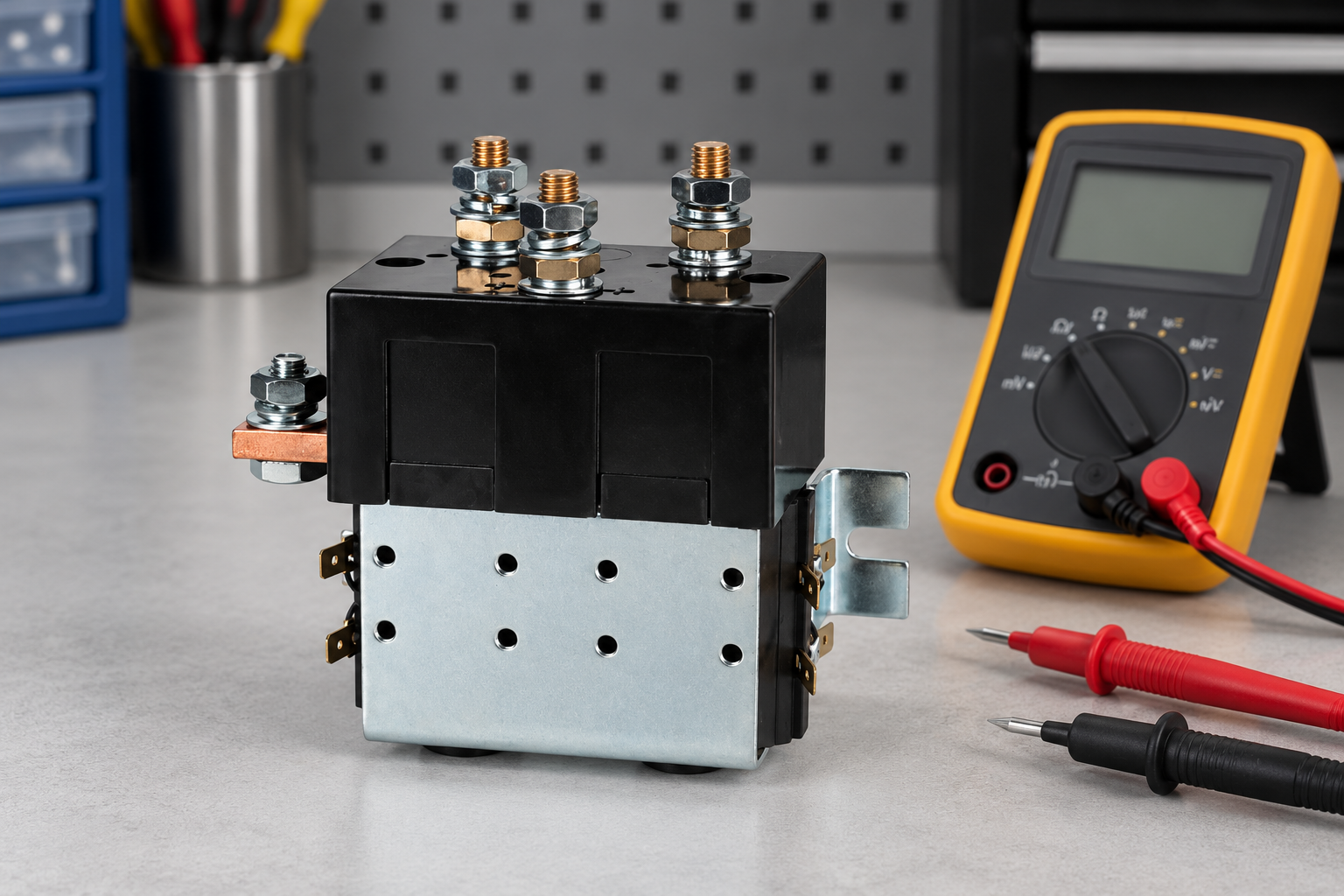
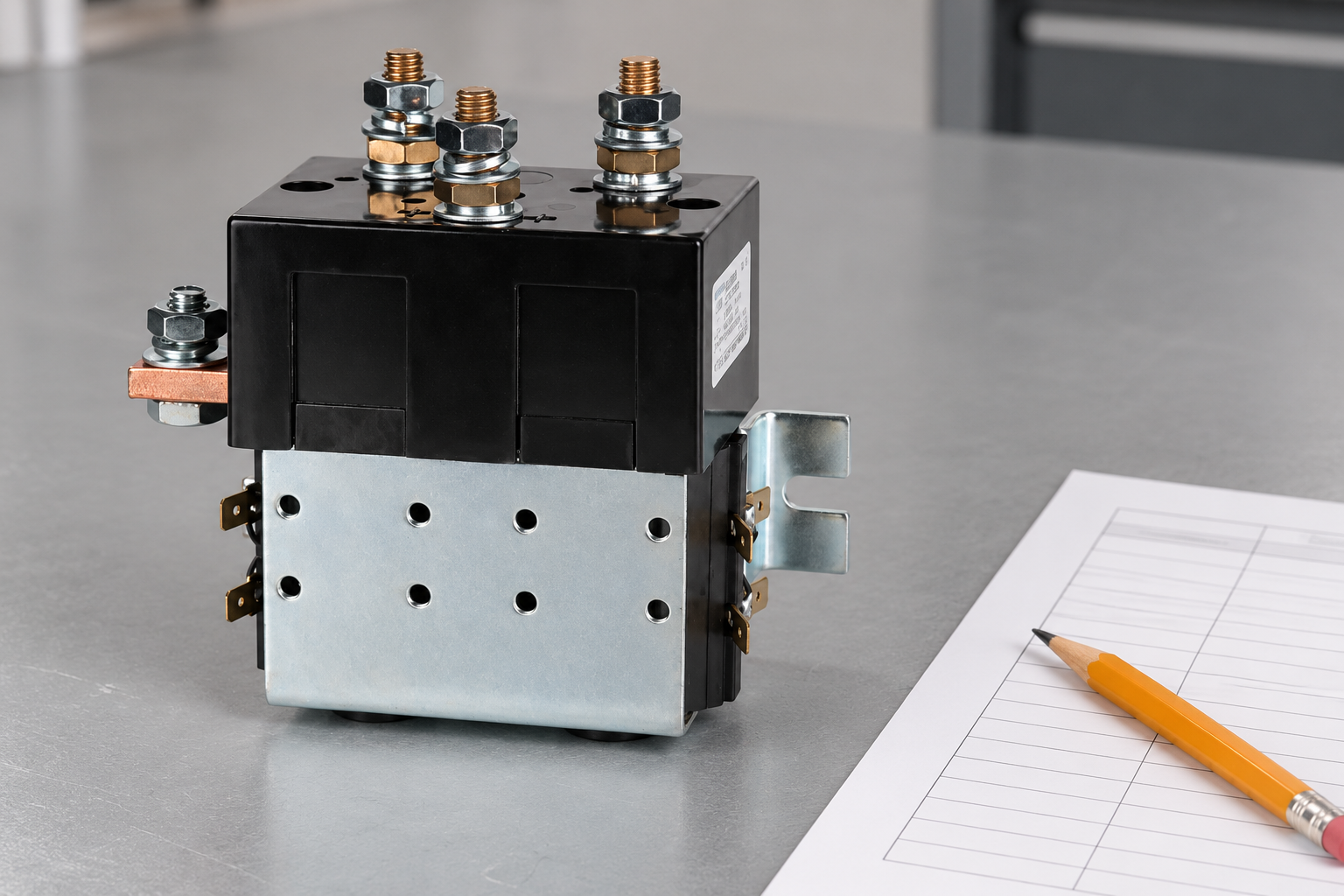
The CZWT200A DPDT Reversing DC Contactor shown here illustrates real Sayoon construction. The picture does not establish the expected noise level, coil voltage or suitability for your equipment. Provide the exact variant and event evidence when requesting support, and ask for the applicable installation and control information.
The coil-voltage selection hub helps organize control-supply questions, and the exact product instructions clarify the intended operating sequence. The investigation is complete when the cause is supported, the corrective action addresses it and controlled rechecking shows the expected sequence. A quieter contactor without a verified explanation is not sufficient evidence of a resolved electrical problem.
Educational video: understand the contact arrangement
The Electrician U explanation below introduces how a coil operates contactor contacts. Use it to understand the distinction between control and main circuits before reading an inspection drawing. It provides general education, rather than a test procedure or approval of the illustrated Sayoon model.
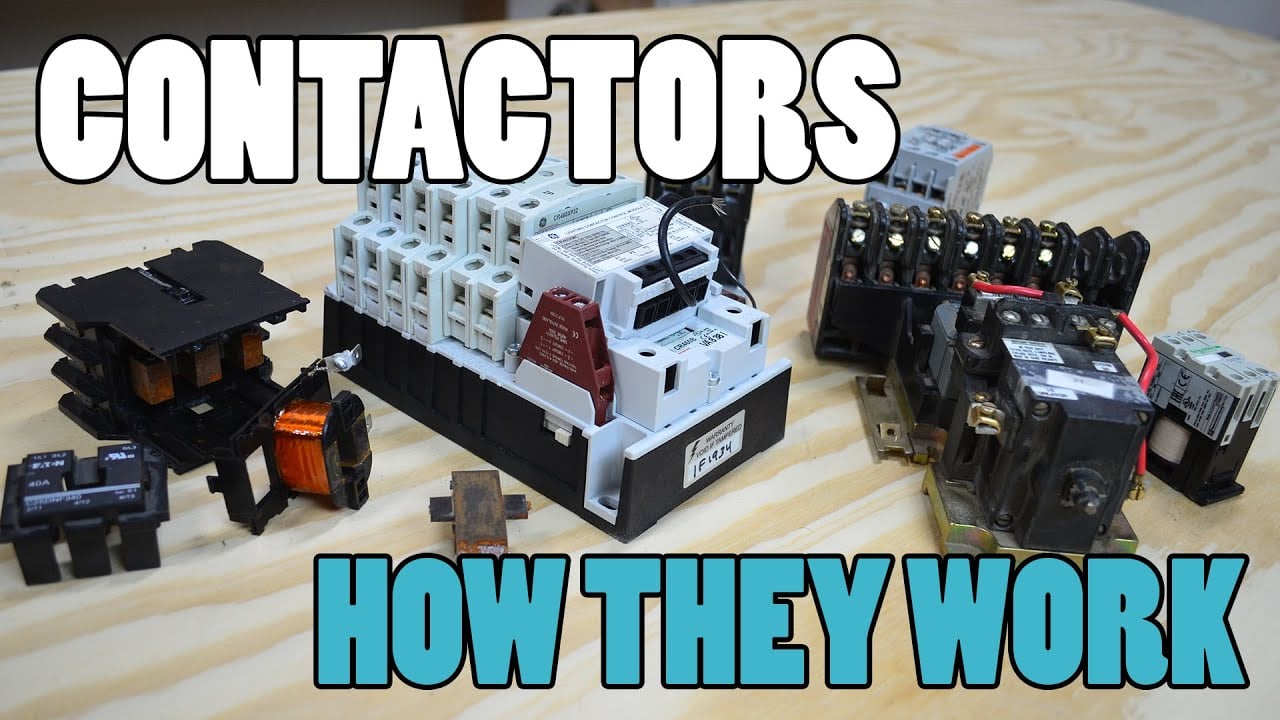
Watch the Electrician U educational explanation.
Frequently asked questions
Is one click when a DC contactor closes normal?
It can be a normal mechanical transition. Compare it with the intended command sequence and the exact equipment baseline.
Does repeated clicking prove that the coil has failed?
No. An unstable command, supply or driver response can also cause repeated operation. Gather evidence before replacing the unit.
Can I bypass an interlock to stop contactor chatter?
No. Do not defeat a protection or interlock to silence a symptom. Have the equipment control logic and fault evidence reviewed.
Does a click prove that the main contacts are healthy?
No. Sound alone does not establish the main-contact state, resistance, insulation condition or interruption capability.