DC contactor end-of-life signs can include failure to achieve the commanded state, suspected welded contacts, visible insulation or terminal damage, abnormal operating behavior and deterioration confirmed by an approved assessment. None of these observations supplies a universal remaining-life estimate. Secure the equipment, preserve the first event and compare evidence with the exact product and application requirements. A contactor that still clicks may be unsuitable for continued service, while one symptom may originate in its driver or installation. Use warning signs to trigger qualified disposition rather than repeatedly operating the unit until failure becomes unmistakable.
Separate a warning sign from a confirmed cause
A warning sign is an observation that requires a defined response. A confirmed cause needs evidence connecting the symptom with a mechanism or installation condition. Failure to close can result from the control path, a coil issue or mechanical damage. An unexpected release can follow a protection command or loss of holding energy without proving that the main contacts have reached their endurance limit.
This distinction matters when replacing a component. If the initiating problem remains in the circuit, a new contactor may experience the same stress. Preserve both the component condition and the system event record. Avoid giving every unusual sound or warm surface the same diagnosis; describe what happened before choosing the next authorized assessment.
Treat failure to open as an equipment safety issue
If the equipment indicates an open command but the required main-path state is not achieved, use the site procedure to secure it. Do not assume that a software indication, a click or an auxiliary contact proves that every main contact is open. Feedback describes the particular circuit and mechanism defined by the manufacturer and equipment designer.
Suspected welded contacts require an approved disposition. Do not repeatedly strike, force or cycle the assembly to restore operation, and do not treat a temporary recovery as proof of suitability. A contactor is not a substitute for a verified isolation procedure. The equipment may retain energy or have additional sources even when a contactor appears open.
Escalate visible damage without inventing a wear limit
Cracked insulating material, melted features, severe discoloration, damaged terminals or contamination can justify keeping equipment out of service pending qualified review. Record the as-found condition after safe access. 29 CFR 1910.333 provides a US workplace reference for applicable electrical work practices; the actual equipment procedure and local requirements determine the work.
Appearance does not supply a universal permissible crack, pit depth or discoloration limit. Compare the observation with explicit instructions and obtain supplier guidance when the acceptance basis is missing. The pitted or burned contact inspection guide addresses the narrower question of permitted access and contact-surface evidence. It does not authorize opening a sealed assembly.
Investigate abnormal operation in context
New chatter, delayed response, intermittent operation or an unexplained opening should be recorded with operating mode and timestamps. A command and coil record can help distinguish an external control disturbance from a mechanism problem. Do not bypass protective logic or increase the coil supply outside its requirements to make the symptom disappear.
Utiliza el intermittent-operation diagnostic guide for a successful-cycle versus failed-cycle comparison. A catalog intermittent-duty rating is a different concept from an unintended intermittent fault. State which problem is being investigated and retain unresolved conditions instead of calling the unit healthy after one successful restart.
Review duty and event history before judging age
Calendar age and operation count can inform the assessment only within a relevant documented basis. Electrical endurance depends on the assigned switching duty and test conditions; mechanical cycling is a different evidence category. A published endurance figure for another model or another load cannot be used to calculate the remaining life of the installed part.
Look for changes in actual duty, controller sequence, current direction, enclosure environment and protection behavior. An abnormal interruption may require disposition regardless of a low operation count. Conversely, a unit’s long service history does not establish that it is currently defective. Keep the actual observations, specified requirements and missing evidence separate in the review.
Organize warning signs by the decision they require
This table is a qualitative triage aid, with no universal numerical replacement limits. The site procedure governs immediate response, and the responsible technical authority determines assessment and release. Record which evidence supports the decision rather than treating the table as a standalone product acceptance standard.
| Verificar | Documentación requerida | Decisión o acta |
|---|---|---|
| Commanded opening not confirmed | Control sequence, main-path assessment and exact feedback design | Secure equipment and obtain qualified disposition; do not rely on a click. |
| Visible insulating or terminal damage | As-found photographs and applicable construction instructions | Keep unresolved damage on hold and preserve the unit. |
| Repeated chatter or intermittent behavior | Time-aligned command, driver and coil evidence | Investigate initiating conditions before assuming normal wear. |
| Changed electrical measurement | Approved method, conditions and exact acceptance basis | Review both the result and measurement limitations. |
| Abnormal interruption event | Available duty record and protection sequence | Assess possible damage even if the unit operates afterward. |
| Endurance boundary reached | Applicable supplier evidence and actual duty history | Use the approved replacement or escalation route. |
| Evidence missing | Exact identification and unresolved requirement | Request clarification; do not manufacture a pass decision. |
Use measurements as defined evidence
A closed-path resistance result, a coil measurement and a thermal observation answer different questions. None independently establishes all aspects of interruption capability, dielectric condition or remaining life. Select a measurement because it can resolve a specific assessment question, using the approved setup and acceptance basis for the actual variant.
La guía de trazabilidad metrológica de NIST explains the evidence behind a measurement result. Include method, instrument, temperature and other relevant conditions. A change from baseline is useful only when the comparison is meaningful; a changed test fixture or unrecorded operating condition can make a difference difficult to interpret.
Keep a serviceable-product decision separate from a sealed-product decision
Confirm whether the manufacturer permits any internal service for the exact product. A replaceable contact set, if explicitly supported, still needs its approved method, associated inspection and release requirements. Do not transfer a maintenance procedure from an open device to a sealed contactor simply because both use electromagnetic operation.
For a sealed or non-serviceable device, supplier analysis or replacement may be the appropriate disposition. Preserve identification and event evidence before shipping it. Do not cut, pry or drill the housing for an informal inspection. Those actions can destroy evidence, expose hazards and prevent the supplier from examining the original condition.
Define what qualifies the replacement
Record the full ordering code, coil and driver requirements, main-circuit duty, contact arrangement, feedback and installation interfaces. A higher carrying-current label is not proof of a compatible replacement. The assigned switching events and protection arrangement need a separate review, along with mounting and conductor requirements.
Do not use a replacement as a test instrument for an unresolved system fault. Correct or assess the initiating conditions before returning equipment to service. Where a changed product is proposed, define the evidence needed to release that configuration. Preserve the removed unit and its location record until any required technical or commercial investigation is complete.
Document the return-to-service basis
Record the identified cause where established, required corrective action, replacement details, verification conditions and release authority. State what the verification actually demonstrated. A successful start after replacement can support one functional observation, but it does not automatically close every protection, endurance or insulation requirement.
Retain unresolved limitations and assign the next action. If the evidence remains incomplete, say so in the service record. A useful closure explains why continued service or replacement was accepted for the actual equipment; it does not rely on a generic statement that contactors normally last a certain number of years.
Request product guidance with the exact identity
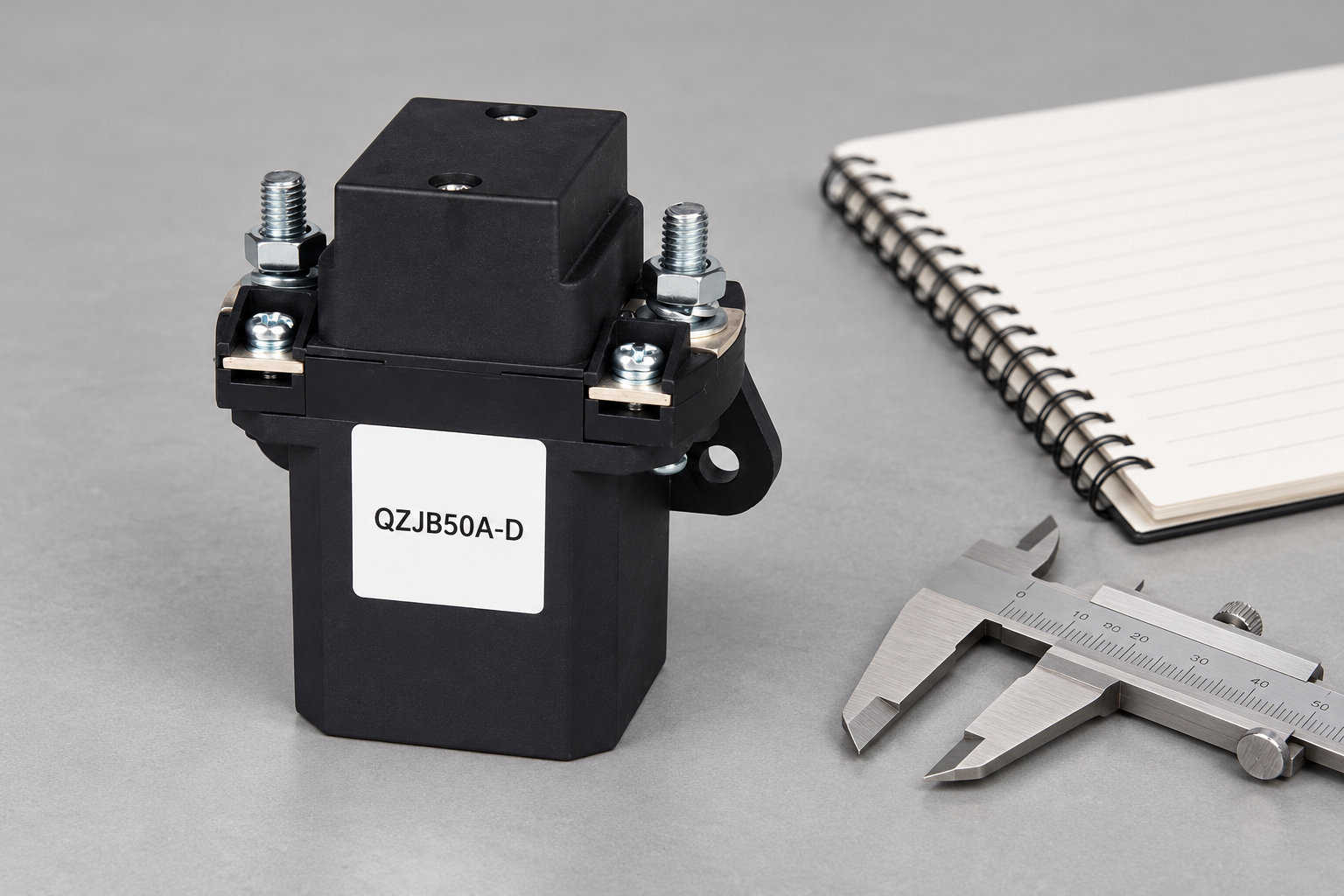
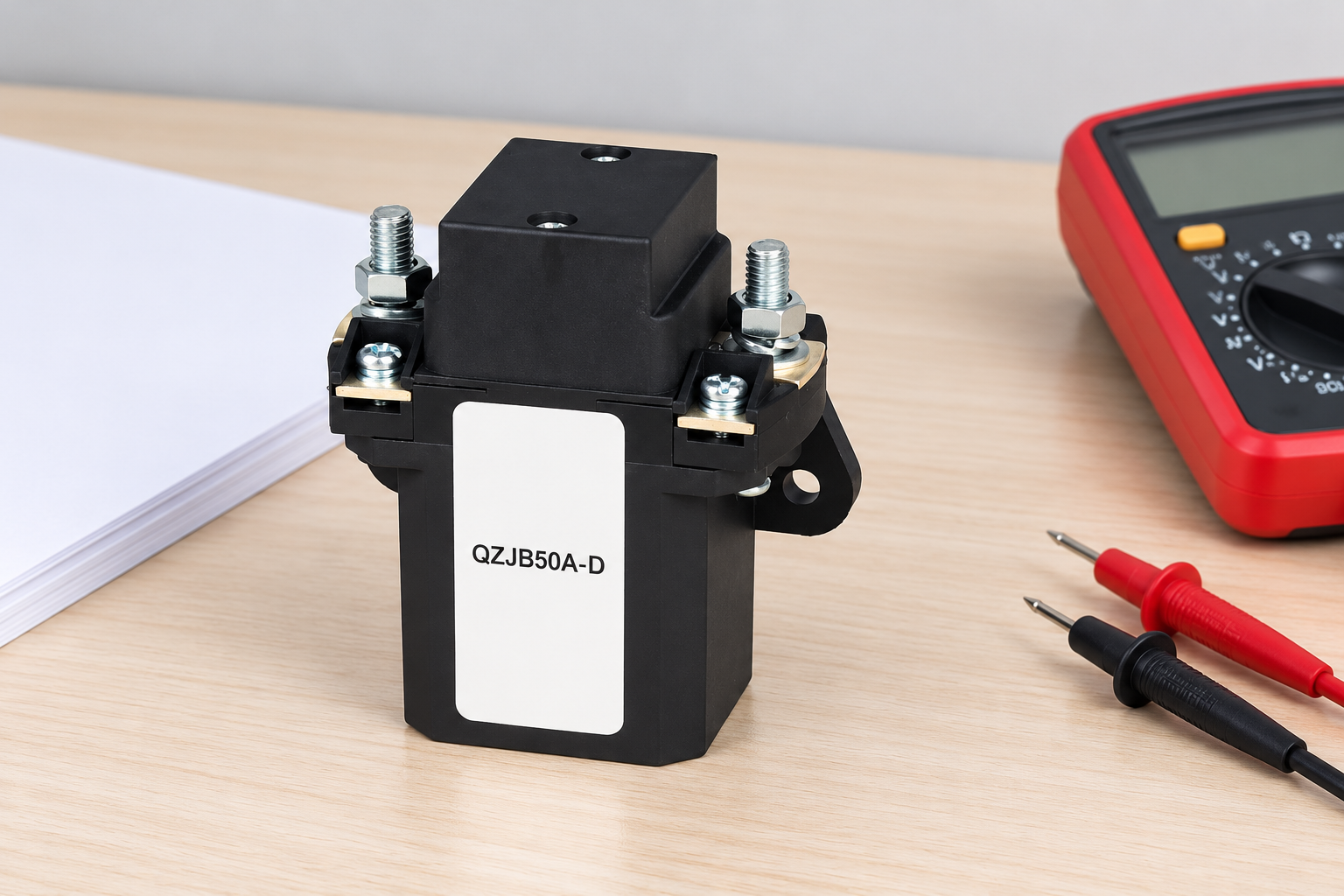
El Contactor de CC normalmente cerrado QZJB50A-D pictured here is intact external construction, not an example of a failed unit. Send Sayoon the exact label, drawing revision, duty and event record, photographs and completed assessments when requesting guidance. Ask which instructions and evidence apply to the ordered configuration.
Utiliza el Centro de selección de contactores DC to organize application inputs for a replacement discussion. Distinguish a request for a comparable product from a request for failure analysis. Keep equipment-level safety and release decisions with the responsible designer and authorized service personnel.
Vídeo educativo: Entender el sistema de contacto
La explicación del técnico eléctrico U a continuación explica cómo funciona la bobina y los contactos del contactor. Úsela para comprender la distinción entre los circuitos de control y los circuitos principales antes de leer el dibujo de inspección. Proporciona información general, en lugar de un procedimiento de prueba o la homologación del modelo ilustrado de Sayoon.
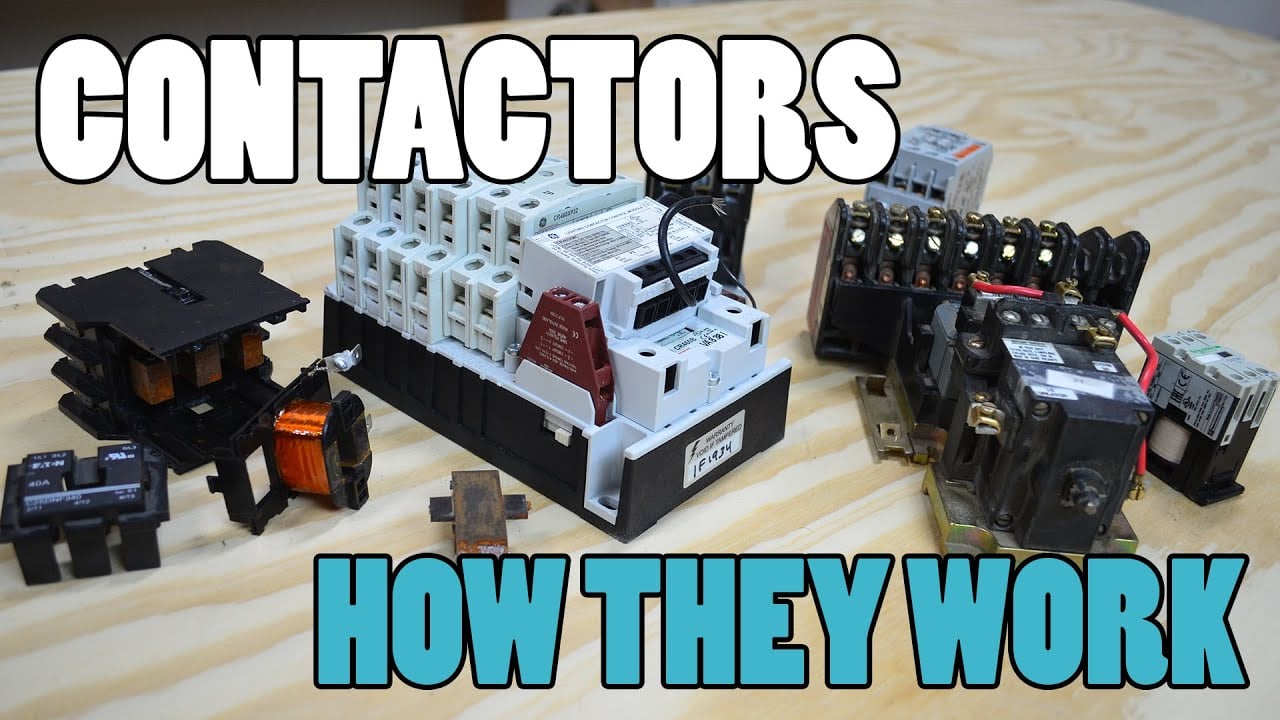
Consulte la explicación educativa del Electrician U.
Preguntas frecuentes
Does a click prove a contactor has useful life remaining?
No. A click does not establish main-contact condition, interruption capability, insulation condition or remaining life.
Does a high operation count always require replacement?
Use the applicable endurance evidence, actual duty and approved replacement criteria; no universal count is supplied here.
Should suspected welded contacts be forced apart for reuse?
No. Secure the equipment and obtain the manufacturer-approved disposition rather than forcing or repeatedly cycling the unit.
Do these images show actual failed contacts?
No. They show an intact unpowered external construction reference, not internal damage or an accepted wear limit.