To audit a DC contactor manufacturer, follow one exact ordering code from the approved specification through purchased materials, assembly, inspection, testing and shipment. Ask for records that connect the delivered product to controlled drawings, measurement results and release decisions. A factory tour or a quality certificate alone does not demonstrate that a particular contactor meets your DC switching duty. Start with your application requirements, select a representative production lot, and record each conclusion against objective evidence. Close unresolved findings before supplier approval, or define a controlled restriction with a named owner and deadline.
Define the audit decision before booking a visit
Decide whether you are approving a new supplier, reviewing a process change, investigating a failure or checking an established source. These decisions require different samples and records. An initial audit may examine the overall control system; a complaint investigation should follow the affected variant and production period. Explain the purpose to the supplier so appropriate engineering, production and quality staff are available.
Write the product scope using the complete ordering code, coil option, contact arrangement, accessories and drawing revision. Add the actual application requirements, including the main circuit and control circuit separately. An audit can assess whether controls exist and operate, but it cannot substitute for application qualification or prove a breaking rating that has never been tested. Identify which technical questions need separate evidence before the visit.
Build an evidence request around one real lot
Request the approved drawing, bill of materials or controlled equivalent, assembly instructions, inspection plan, routine test procedure and shipment release record for the selected lot. Where documents are confidential, agree a controlled review method that still lets you verify the requirement and record its revision. A blanket statement that everything is proprietary should not leave critical acceptance conditions unverifiable.
Choose the lot deliberately rather than letting the visit focus only on a specially prepared demonstration unit. Ask the supplier to retrieve a second record during the audit to check whether the system works beyond the first example. Record how the units were selected, which records were reviewed and any limits on access. Do not claim a broad conclusion from a single conveniently chosen sample.
Follow drawing control onto the production bench
Compare the engineering master drawing with the instruction actually used by the operator. Check revision identifiers, effective dates and how obsolete instructions are removed from use. Follow a recent approved change from authorization to affected stock and production records. A document system is useful only if the correct requirement reaches the place where work occurs.
Ask how terminals, insulating parts, springs, coil variants and mounting features are identified before assembly. Similar-looking components can belong to different variants. Look for a practical method that prevents an operator from relying on memory or an unlabeled tray. If electronic control circuitry is included, establish how its version is linked to the assembly and how changes are reviewed.
Use a checklist that ties observations to decisions
The following table is a qualitative example for an OEM supplier audit. It provides a structure for evidence collection, not universal acceptance thresholds or a claim that every factory must use the same process. Set project-specific criteria before issuing a finding, and distinguish a missing record from an observed product defect.
| Verificar | Documentación requerida | Decisión o acta |
|---|---|---|
| Configuration control | Approved ordering code, drawing revision and production instruction | Compare the actual unit and bench instruction; record any unexplained difference. |
| Material identity | Receiving record and internal lot linkage | Follow a selected critical component into the chosen finished lot. |
| Assembly control | Approved method, operator authorization and process record | Observe the actual sequence and compare it with controlled instructions. |
| Measurement fitness | Instrument identity, calibration evidence and relevant range | Check suitability for the specific tolerance or decision, not only a sticker date. |
| Test scope | Procedure, conditions, limits and exact variant identity | Separate routine production checks from qualification and certification evidence. |
| Nonconforming stock | Hold identification, inventory status and disposition authority | Verify that rejected or uncertain units cannot accidentally enter accepted shipment. |
| Release and change | Shipment release, approved changes and affected-lot review | Confirm the release owner and how the customer is informed when agreement requires it. |
Check whether measurements support the acceptance decision
Select a characteristic that matters to the drawing and follow one measurement from the instrument to the recorded result. Identify the instrument, method, fixture, applicable range and decision limit. Ask how borderline results are reviewed and how a failed or overdue instrument affects earlier inspections. A neat spreadsheet is insufficient if nobody can explain what was measured or under which conditions.
NIST describes metrological traceability in terms of a measurement result supported by a documented calibration chain, with uncertainty considered. Apply that distinction to the actual task. Calibration evidence does not automatically make an instrument suitable for a particular tolerance, and a general laboratory claim should not replace a check of the relevant measurement capability.
Separate production testing from qualification evidence
Routine tests may confirm specified production characteristics under controlled conditions. Qualification evaluates whether a design meets an agreed application or performance scope. Certification addresses the scope covered by the issuing scheme and evidence. Ask the supplier to identify each document by its purpose. A routine lot report marked pass should not be presented as proof of high-energy DC interruption or endurance.
For a report, examine the exact variant, procedure revision, setup, test conditions, results and issuing organization. Check whether the tested construction matches the proposed unit. The NIST NVLAP overview describes laboratory accreditation as a defined program; review the relevant scope rather than treating an accreditation logo as approval of every product or test. Use the DC contactor test-report review guide for the document-level questions.
Observe the process without improvising electrical tests
Watch how approved inspections and tests are performed, including the initial state, test settings and result recording. Ask the operator to explain what happens when a result is outside the limit. Compare that explanation with the actual hold and escalation process. If observation is restricted, record the limitation and obtain alternative evidence rather than inventing a positive result.
Do not connect a contactor to a battery or apply arbitrary test voltages during a visit to demonstrate that it works. A general contactor explanation is not a safe test instruction. High-energy switching and insulation testing require a suitable facility, controlled procedures and the exact product limitations. An auditor should verify the authorized process, not create an uncontrolled experiment on the factory floor.
Trace a defect through containment and corrective action
Select a real recent nonconformity and follow its history. Check how affected stock was identified, who made the disposition, how the cause was investigated and what evidence supports the corrective action. A statement that an operator was retrained is incomplete when a variant mix-up can still occur under the same working conditions.
Look for verification after the action was introduced. Was the revised method used on subsequent lots, and did the relevant failure recur? Ask how customer complaints connect to internal records without erasing the original findings. Preserve the distinction between immediate containment, correction of affected parts and a change that reduces recurrence. Each stage needs its own evidence and owner.
Review change notification and subcontracted operations
Ask which operations occur outside the audited site and how their outputs remain linked to the finished contactor. A supplier may buy coils, molded parts or other assemblies; the audit should examine the controls relevant to those inputs without assuming that every operation happens in-house. Document the responsibility for incoming acceptance and for resolving a subcontractor change.
Agree which changes require customer notice or approval under your purchasing arrangement. Examples might include a material, tooling, assembly location or control-circuit change, but the actual list belongs in your controlled agreement. Check one implemented change to see whether affected lots and customer decisions can be identified. Do not assume that unchanged external appearance means unchanged electrical performance.
Write findings that a supplier can close
A useful finding identifies the requirement, observed condition, evidence and consequence for the approval decision. Avoid vague conclusions such as poor quality when the actual issue is an instruction revision mismatch. Distinguish confirmed nonconformities, unresolved questions and improvement opportunities. Photograph evidence only under the agreed confidentiality rules and retain enough detail for another reviewer to understand the conclusion.
Assign an owner and due date, define the required closure evidence and state whether production or shipment is restricted. When the supplier responds, verify the result against the finding. A revised procedure may close a document gap but still require evidence of implementation. Record residual limits on your conclusion rather than changing the audit history to make every row appear passed.
Connect supplier approval to your product specification
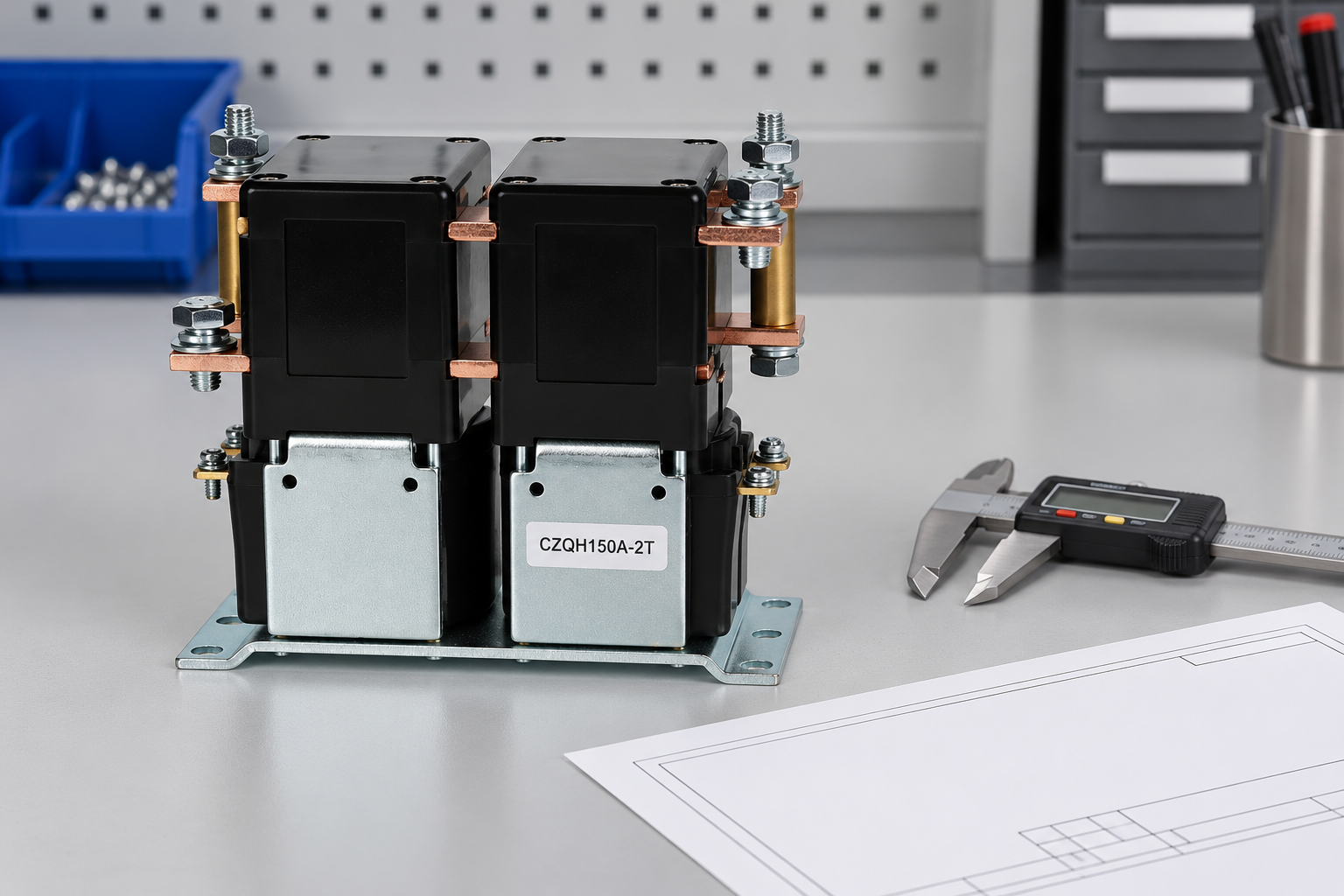
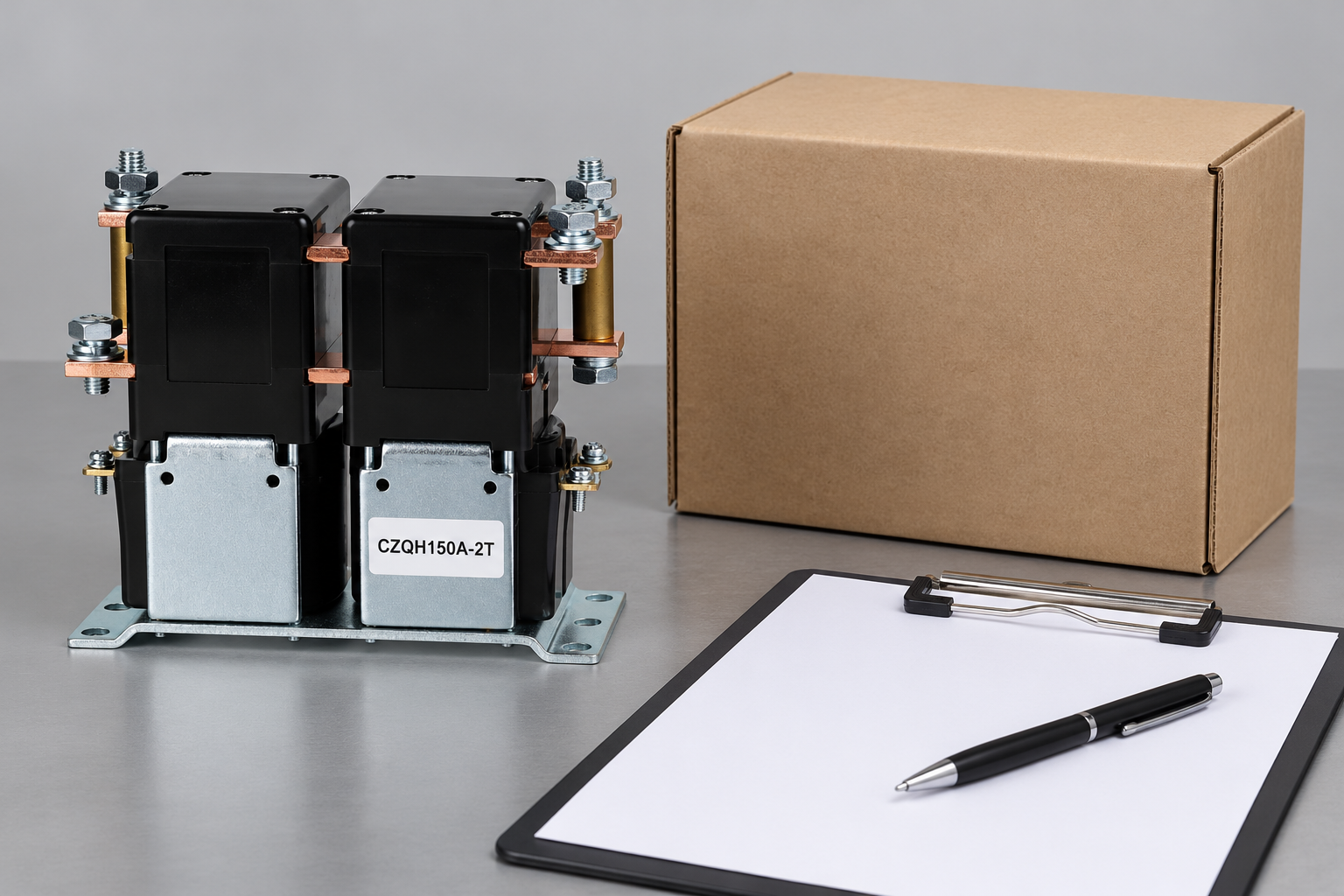
El Contactor de CC inversor DPDT CZQH150A-2T supplies the physical construction reference shown in these images. Its appearance does not establish the capability of an audited factory or approve it for a particular circuit. Ask Sayoon for the exact ordering information and applicable evidence before choosing a variant.
Utiliza el Centro de selección de contactores DC to organize application requirements, and keep the incoming inspection checklist separate from supplier approval. The lot traceability guide supports the record trail. An inquiry should include your variant requirements, expected evidence, audit scope and unresolved questions so the supplier can provide a specific response.
Vídeo educativo: Entender el sistema de contacto
La explicación del técnico eléctrico U a continuación explica cómo funciona la bobina y los contactos del contactor. Úsela para comprender la distinción entre los circuitos de control y los circuitos principales antes de leer el dibujo de inspección. Proporciona información general, en lugar de un procedimiento de prueba o la homologación del modelo ilustrado de Sayoon.
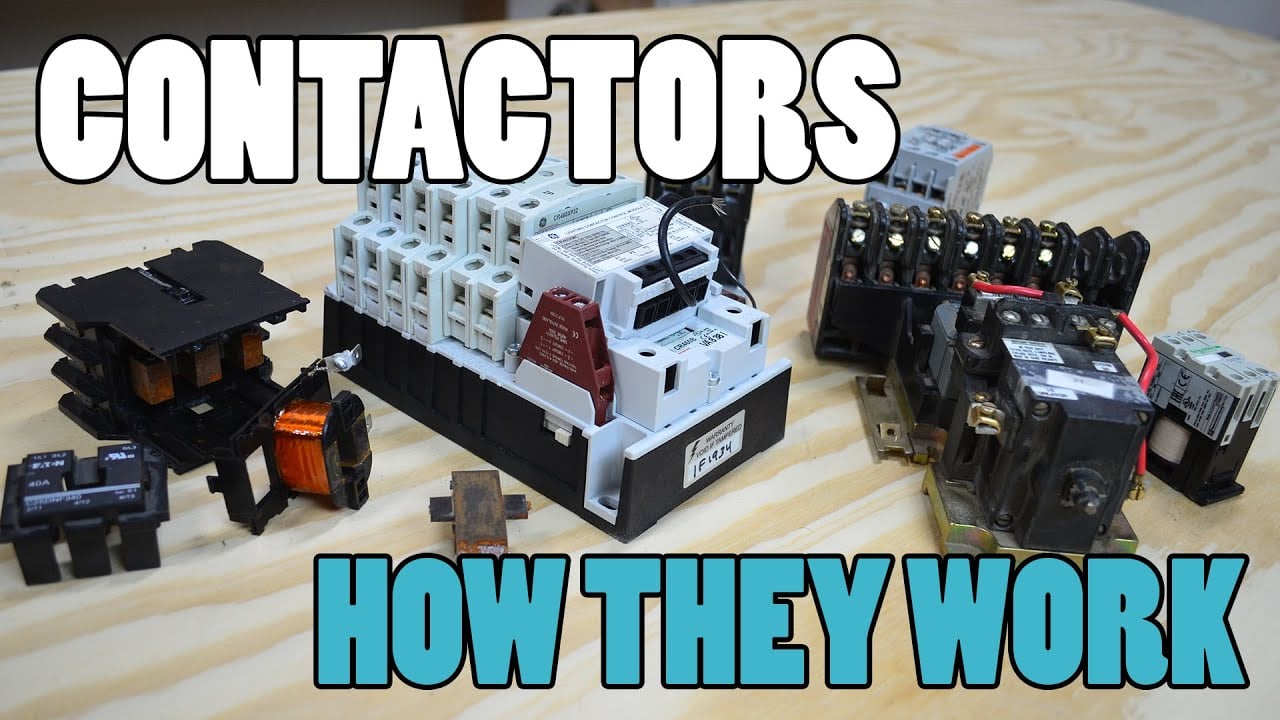
Consulte la explicación educativa del Electrician U.
Preguntas frecuentes
Does a factory audit prove a contactor breaking rating?
No. An audit assesses the controls and evidence within its scope. The exact DC interruption duty requires applicable technical evidence for the proposed variant.
Can a quality certificate replace production records?
No. Review the relevant certificate scope and also follow actual product records, instructions, inspection results and release decisions.
Should an auditor perform an improvised battery test?
No. Observe authorized procedures and request suitable evidence. High-energy testing needs a controlled setup and the exact product limitations.
What should an audit finding contain?
State the requirement, observation, evidence, responsible owner, closure evidence and any restriction on approval or shipment.