Common reasons for contactor coil failure start with supply mismatch, wrong duty mode, overheating, damaged terminals, and control wiring errors; confirm those against the installed model datasheet before replacing hardware or changing coil voltage. Use it to capture measurements and duty mode before replacing a coil assembly. It is a checklist for OEM and panel teams — not sizing or approval for reasons-for-contactor-coil-failure-oem-service-checklist.

Part 1. Start with symptoms, then isolate the coil circuit
OEM teams should separate no-pull-in, chatter, overheating, and open-coil symptoms before ordering a replacement. Reasons for contactor coil failure are often supply or duty errors. Swapping hardware first hides evidence.
Des équipes à la recherche de reasons for contactor coil failure généralement besoin d'une liste de contrôle de projet, pas d'un slogan de catalogue.
Service notes should preserve the failed unit identity so holding-coil and continuous-coil modes are not mixed in the replacement order.
Part 2. Verify coil voltage and polarity against the installed model
Compare the installed coil rating to the measured supply. Overvoltage cooks insulation; undervoltage causes incomplete pull-in and heating. Where the datasheet states polarity or pulse direction for holding coils, confirm the driver matches those notes.
| Symptom | First checks | Envoyer avec devis |
|---|---|---|
| No pull-in | Us at coil, polarity, open coil | Meter + photo |
| Chatter | Supply stability, mechanical bind | Waveform or observation |
| Overheating | Duty mode, ambient, continuous drive on hold coil | Thermal context |
| Intermittent open | Connector strain, contamination | Harness photo |
Part 3. Check duty mode: continuous versus holding pulse
A continuous coil left in the wrong drive mode, or a holding coil driven as if it were continuous, produces thermal and mechanical stress. Read the model family’s coil power and pulse duration fields before concluding the coil ‘just failed’.
Important : Do not raise coil voltage as a field workaround before measuring supply at the coil terminals and confirming duty mode. (Source: OEM service procedure / manufacturer datasheet coil notes.)
Part 4. Inspect terminals, harness strain, and contamination
Loose coil connectors, crushed insulation, and conductive dust create intermittent opens that mimic winding faults. Photograph terminal condition before disturbing the harness so warranty and root-cause discussions have evidence.

Part 5. Review ambient and neighboring heat sources
Coils derate in hot enclosures. If the contactor sits beside braking resistors or poorly ventilated trays, record ambient and duty cycle. Replacement with the same model without thermal mitigation often repeats the failure.
Part 6. Choose replacement routes only after the cause is named
When the failure mode is documented, discuss CZW-K magnetic holding or CZW normally open routes that match the verified duty. Do not raise coil voltage as a field fix for an undiagnosed supply or duty-mode fault.
| After cause named | Route SAYOON | Limite |
|---|---|---|
| Holding duty confirmed | CZW-K magnetic holding | Verify pulse notes |
| Continuous NO duty confirmed | CZW normally open | Verify coil Us |
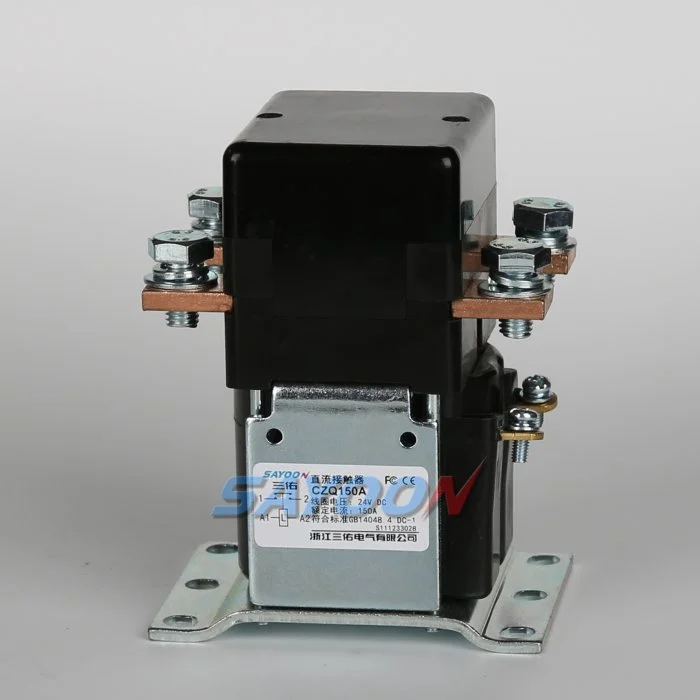
Les routes des produits sont acheminées après la documentation des entrées :
- Contacteur DC à maintien magnétique CZW50A-K — holding-coil mode review after failure analysis.
- CZW100A-K magnetic holding DC contactor — higher current holding route when datasheet fits.
- Contacteur DC normalement ouvert CZW100A — continuous coil NO route when holding mode is not required.
File the failure checklist against the Contacteur CC à maintien magnétique route, then contacter SAYOON with measurements and model identity.
Lectures complémentaires : Contacteur CC à maintien magnétique; holding coil contactor operation and maintenance; latching contactor versus standard DC contactor.
Part 7. Fit Boundary for coil-failure checklists
Fit Boundary: OEM service diagnosis checklist for coil circuits; not a root-cause certificate, warranty decision, or laboratory failure analysis report. Laboratory metallurgy and warranty adjudication require separate processes.
FAQ
What are common reasons for contactor coil failure?
Supply mismatch, wrong duty mode, overheating, damaged terminals, and control wiring defects are frequent starters for investigation.
Should the coil be replaced first?
Not before recording symptoms, measuring Us, and photographing terminals. Early replacement destroys evidence.
How do holding coils fail differently?
Incorrect pulse drive or continuous energization against holding-coil notes can overheat or leave the mechanism in the wrong state.
What belongs in an OEM service RFQ or replacement quote?
Symptom, measurements, ambient/duty context, photos, installed model identity, and Send with quote fields from the checklist.
When discuss CZW-K versus CZW NO after a failure?
Only after the required duty mode is confirmed; do not switch families to mask an undiagnosed supply fault.
Is this a warranty decision guide?
No. Warranty and lab analysis follow separate processes.