DC contactor welding is a failure symptom, not a selection specification. When contacts are suspected of staying closed, the useful next step is to review the real switching sequence: how the path closes, what demand exists at making, how it opens, and what control behaviour occurred around the event.
The steady-load label alone cannot answer those questions. A corrective decision needs the circuit drawing, the contactor model, the command information and a record of the observed condition before a replacement path is discussed.
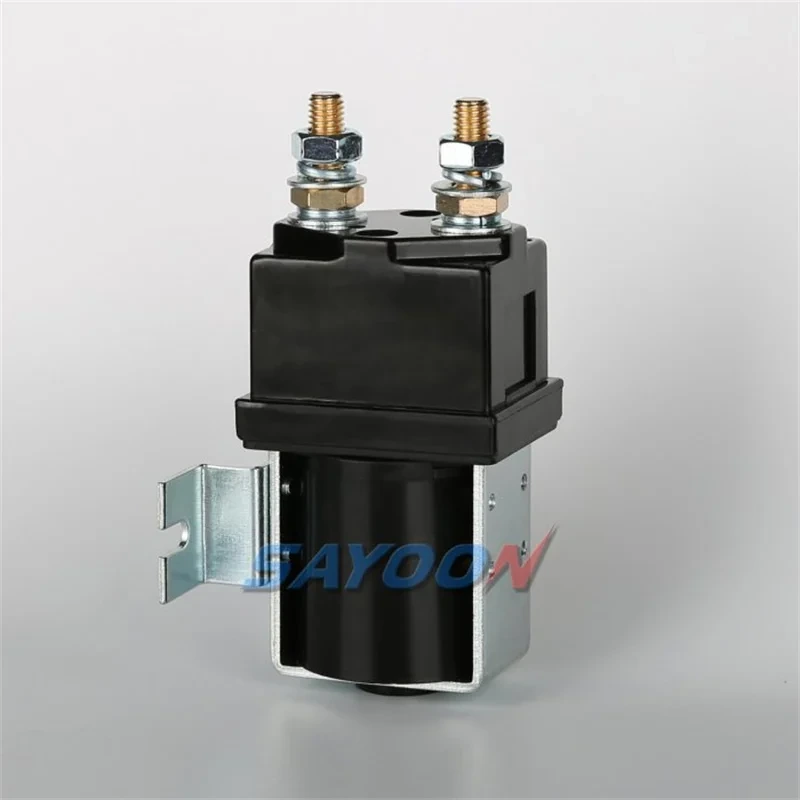
Part 1. What does a welded DC contactor symptom mean?
A suspected welded state means the intended open condition has not been demonstrated. It may be reported as a contactor that remains closed, a load path that does not release, or a state that disagrees with the circuit drawing. Treat it as a stop-and-investigate condition, not as a reason to increase the command voltage, force the mechanism, or resume service without a controlled review.
The first record should separate observation from diagnosis. Note the model marking, the circuit location, whether the device was commanded, the contact state expected by the drawing, and the evidence that led to the suspicion. Practitioner discussions use phrases such as repairing contactors, welded contacts because the release decision is often harder than the initial symptom. (Practical Machinist discussion)
Important : Inspecting or testing a suspected welded path begins with the site’s approved electrical safe-work and energy-control procedure. Do not rely on a control signal, handle position or enclosure state as proof that a circuit is safe. (Pratiques de travail électrique de l'OSHA)
Part 2. Which switching events deserve review first?
Review the events at both closure and opening. The key question is not only “what current normally flows?” but also “what does the circuit ask the contactor to establish or interrupt at that moment?” Siemens identifies inrush that exceeds a contactor’s making capability as a contact-welding cause category. That is a reason to examine the actual switching event rather than infer it from a nameplate alone. (Siemens support: reasons for contact welding)
The drawing and event record should show whether a sequence involves stored energy, a precharge stage, a main connection, a reversing arrangement, or another intentional transition. A design review can then ask whether the installed device and the circuit sequence are aligned, without claiming an unverified capacity for any particular product.
| Event to review | Evidence to capture | Pourquoi c'est important |
|---|---|---|
| Closing command | Command source, coil path and timing context | Distinguishes a deliberate closure from abnormal control behaviour. |
| Initial connection | Circuit topology and connected equipment state | Reveals demands that a steady-load description may omit. |
| Opening command | Intended release condition and load-path state | Shows what the contactor is expected to interrupt. |
| Repeated cycling | Event history and observed sequence | Helps a reviewer understand whether the symptom followed abnormal operation. |
Part 3. Why does the steady load label not tell the whole story?
Steady current describes only one operating condition. Switching duty also depends on what happens while the path is established or released, the control timing, the connected circuit and the actual application. That is why a product search filtered only by an amperage label can produce an incomplete replacement decision.
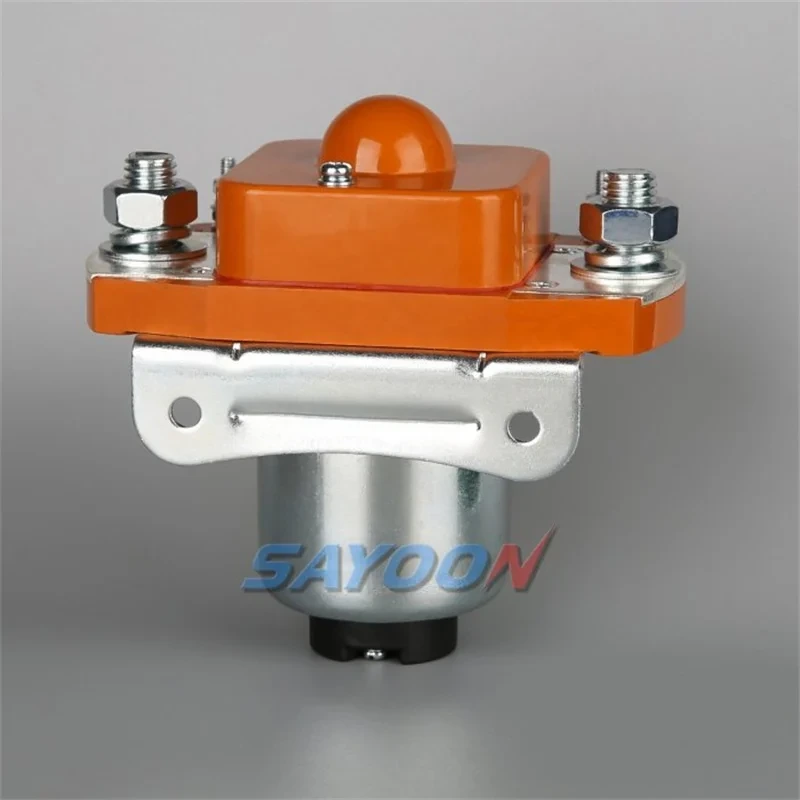
The review should also distinguish a coil/control problem from a main-contact problem. A control-side issue can affect how the device operates, while a welded-contact symptom concerns the condition observed in the switched path. For related control-path questions, use the separate coil-failure checks for OEM service teams rather than treating it as proof of a main-contact cause.
| Entrée | What it tells the reviewer | What it does not prove |
|---|---|---|
| Steady load description | The intended normal operating context | The full making or opening duty. |
| Contact arrangement | Whether the path is intended to be NO, NC, auxiliary or interlocked | The condition of the contact surface. |
| Event sequence | The order in which the circuit changes state | A model-specific acceptance decision. |
| Model marking | The correct documentation path | That an alternative model is interchangeable. |
Part 4. What evidence should be captured before a replacement decision?
Capture information while the circuit context is still clear. A useful package includes the model marking, circuit drawing, terminal identification, commanded state, observed state and the application description. If the site permits photographs, label them by location and test condition so that a reviewer can distinguish a product image from evidence of the installed system.
The record should also show what changed before the symptom appeared: a new load, different operating sequence, control modification, maintenance event or unexplained repeated cycling. This does not establish root cause on its own, but it prevents a replacement enquiry from being reduced to “send the same part again.”
Readers working with a staged high-voltage path can compare the design question with the existing explanation of precharge and main-contact sequencing. That article is supporting context, not evidence that a low-voltage or high-current device is automatically suitable for another circuit.
Part 5. Which corrective actions are unsafe shortcuts?
Do not force a suspected welded contact open, bridge a safety function, or continue cycling the contactor in the hope that the state will clear. Those actions can remove the evidence needed for diagnosis and can expose people or equipment to a condition that has not been evaluated.
Avoid selecting a replacement by physical appearance, terminal count or a single current label. A dependable correction must preserve the required contact form and use the actual circuit sequence, coil command and application information. If these inputs are incomplete, the correct next action is to obtain the documentation, not to infer the missing values.
Part 6. How should a high-current DC contactor enquiry be prepared?
SAYOON’s Gamme de produits de contacteurs CC includes the Gamme de contacteurs CC CZW et Ligne de contacteurs CC SZJ. Use those pages to identify a product family after the switching application is defined; they are not a substitute for project-level review.
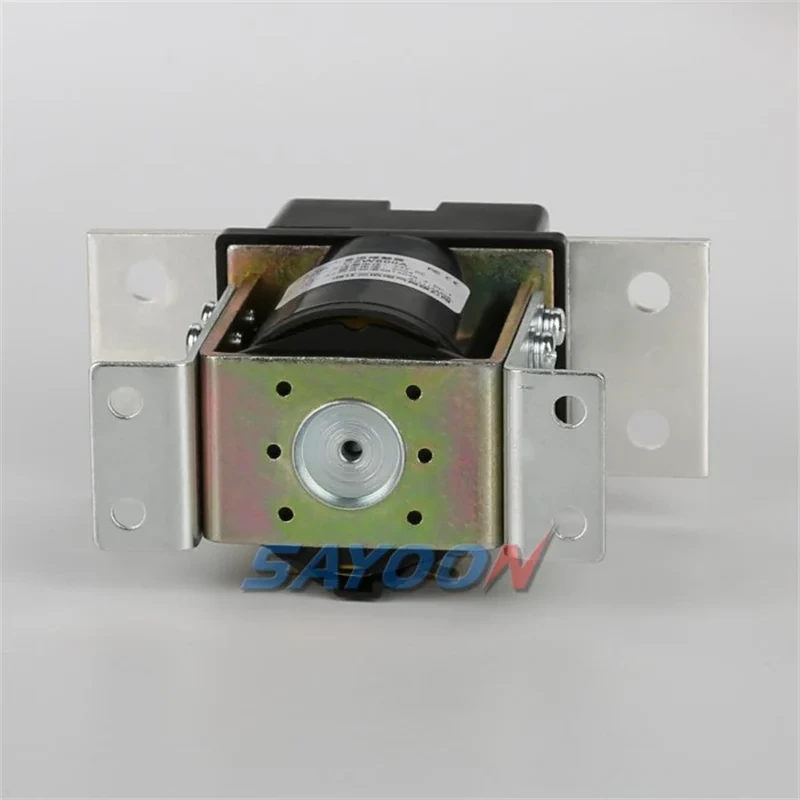
| Demande de devis / L'acheteur doit fournir | Pourquoi c'est important | Évitez ce raccourci |
|---|---|---|
| Model marking and terminal layout | Connects the inquiry to the installed contact form | Matching only the enclosure appearance. |
| Circuit drawing and switching sequence | Shows the real closure and opening context | Describing the duty only as a steady current. |
| Coil-command details and control logic | Identifies the actuator path and sequencing question | Assuming another coil option is equivalent. |
| Observed condition and event history | Lets a reviewer separate symptom from cause | Calling the symptom a proven root cause. |
The fit boundary is explicit: a welded-contact symptom and a steady-load label are not enough to select a replacement. When the application record is ready, send the switching application for review with the relevant circuit details.
Part 7. What should be monitored after the design review?
After the application is reviewed, keep the same evidence discipline during commissioning and service. Confirm that terminal identification, contact state, control logic and the documented switching sequence remain aligned with the approved design. If the equipment changes, update the record before treating an old result as still applicable.
For projects involving high current, the existing high-current integration considerations can help frame the broader integration conversation. It should be used with the project documentation, not as a generic rating claim.
FAQ
What causes DC contactor contacts to weld?
Contact welding is a failure topic that requires review of the actual switching event, including making demand, opening duty, circuit topology and control behaviour. A specific cause cannot be assigned from the symptom alone.
Can a welded contactor be put back into service?
Do not make that decision from an informal inspection or a single meter observation. Follow the site’s approved safety procedure and obtain a documented engineering or service review for the installed application.
Does steady load current identify the cause?
No. It describes one condition but does not explain what the circuit requires while closing, opening or changing state.
Why should inrush be reviewed?
Siemens identifies inrush exceeding making capability as a contact-welding cause category. The relevant question is the actual event and the exact product documentation, not an assumed generic limit.
What should be sent for selection review?
Include with the RFQ the model marking, terminal layout, circuit drawing, switching sequence, coil-command information, application description and observed event history.
Does a product-page link prove suitability?
No. A product-page link is a discovery path. Final selection still depends on verified application inputs and the relevant product documentation.