A DC contactor preventive maintenance schedule should follow the exact product instructions, equipment duty, environment and consequence of failure. Build separate triggers for calendar review, operating exposure, abnormal events and configuration changes. Assign each task an approved method, acceptance basis and responsible person. There is no single monthly or annual interval suitable for every DC contactor. A sealed device may need external inspection and replacement disposition rather than internal servicing. Start with the supplier and equipment requirements, then revise the schedule using documented inspection findings and operating history instead of copying an unrelated AC contactor checklist.
Separate the schedule from the work instruction
The schedule states when a review or task is due, why it is required and who owns it. The work instruction states how authorized personnel perform it safely and interpret the result. Keeping those documents linked makes changes easier to control: a revised inspection method should not leave the maintenance calendar pointing at an obsolete procedure.
This article focuses on planning intervals and triggers. The holding-coil operation and maintenance guide addresses a different operating context. Do not transfer its procedures to a magnetic-holding, electronically controlled or differently configured device without confirming applicability. Similar housings do not establish identical service requirements.
Build the equipment and part register
Give each installed position an equipment identifier and record the full contactor ordering code, coil option, drawing revision, contact arrangement and relevant accessories. Link installation and commissioning records, supplier instructions and any agreed replacement requirements. A maintenance instruction attached only to a broad family name may be ambiguous when several variants share the enclosure.
Record what the contactor is expected to do: carry current, switch normal load, open after current reduction or act within a defined protective sequence. Note current direction, controller and suppression arrangements. These records describe the duty to be reviewed; they do not authorize field switching experiments or establish the contactor’s fault-clearing capability.
Choose the first interval from an accountable basis
Begin with explicit supplier and equipment instructions. If they do not provide a usable interval for the actual duty, request clarification and have the responsible engineering team approve an interim basis. Record its assumptions and review date. A missing interval is a requirement to resolve, rather than permission to invent a universal service period.
Consider equipment criticality, access, environment, loading and operating exposure. Consequence affects the response required when evidence is missing or deteriorating. Exposure can include the nature of switching events as well as a cycle count. Two devices with the same number of operations can have very different electrical histories, so a counter alone should not be treated as a remaining-life measurement.
Distinguish calendar tasks from exposure triggers
Calendar reviews can catch document gaps, environmental changes and overdue inspections even when equipment runs infrequently. Exposure triggers can respond to accumulated operation or a documented duty boundary. Keep the two mechanisms explicit so a rarely used but aging installation does not disappear from the maintenance process.
An abnormal event belongs in its own route. A protection operation, suspected welding, overheating, water ingress, damaged insulation or unexplained release may require immediate assessment under the site procedure. Do not wait until the next calendar date or reset a counter after the event. Preserve the event record and identify who decides whether the unit remains out of service.
Use a schedule matrix with defined outcomes
The following matrix supplies planning categories rather than preset intervals. Populate it from the requirements for the actual installation. Every row should identify a trigger, applicable instruction, required record and decision owner, including what happens when the information needed for a decision is unavailable.
| Controlla | Documenti richiesti | Decisione o documento |
|---|---|---|
| Routine external review | Supplier instructions, environment and approved interval | Record accessible condition and escalate damage without unauthorized disassembly. |
| Connection assessment | Exact hardware instructions and approved method | Link findings to the installed position; do not use generic torque values. |
| Functional review | Approved control sequence and test authorization | Record the expected response and limitations of the check. |
| Operating exposure | Valid counter or service history and duty definition | Review against the applicable endurance and replacement basis. |
| Abnormal event | Fault log, isolation procedure and disposition authority | Preserve evidence and keep unresolved equipment on hold. |
| Configuration change | Drawing, driver, conductor or enclosure revision | Assess whether tasks, criteria or intervals need renewed approval. |
| Schedule review | Findings, repeat defects and missed tasks | Revise the controlled plan with reasons and a review date. |
Keep task scope compatible with the construction
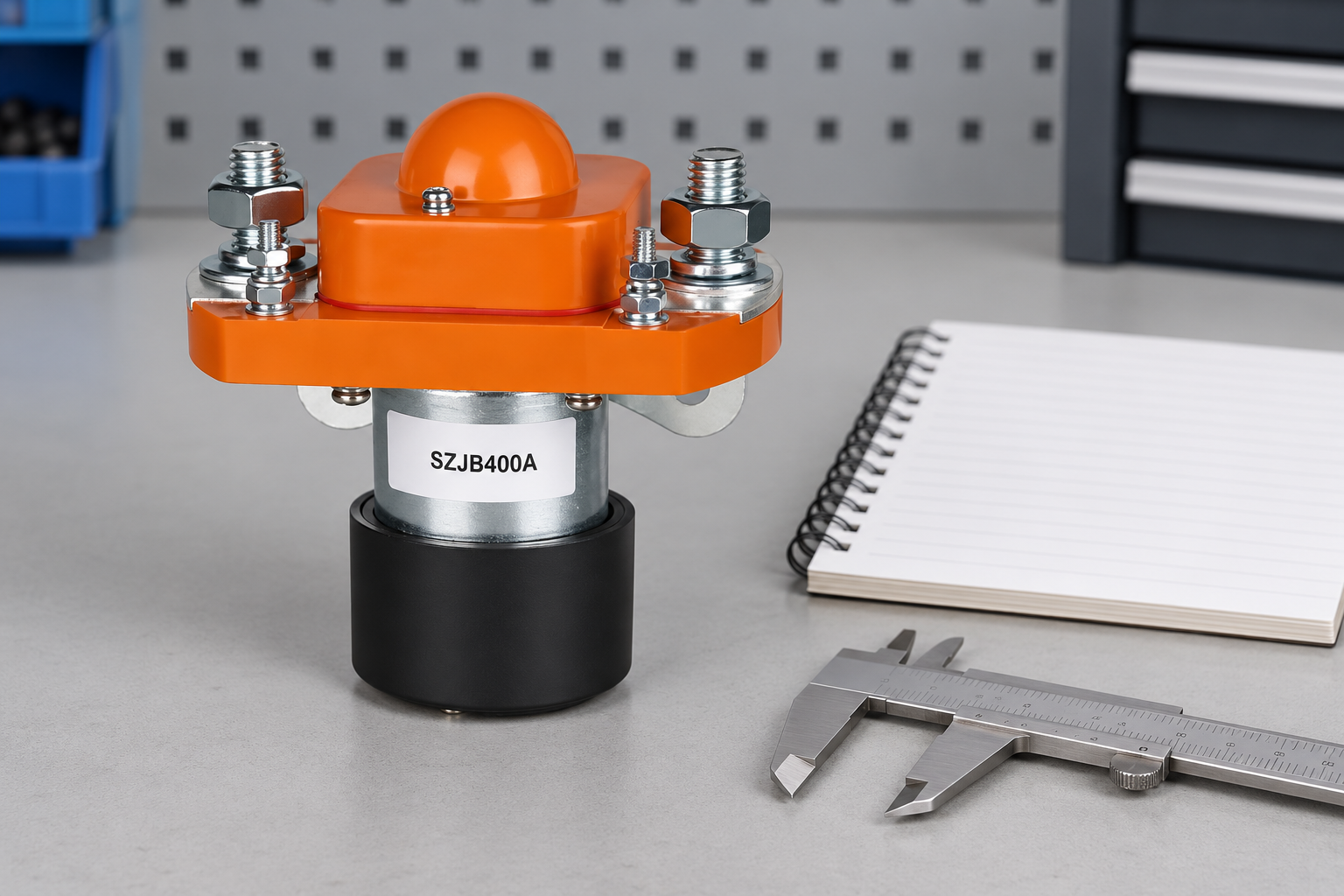
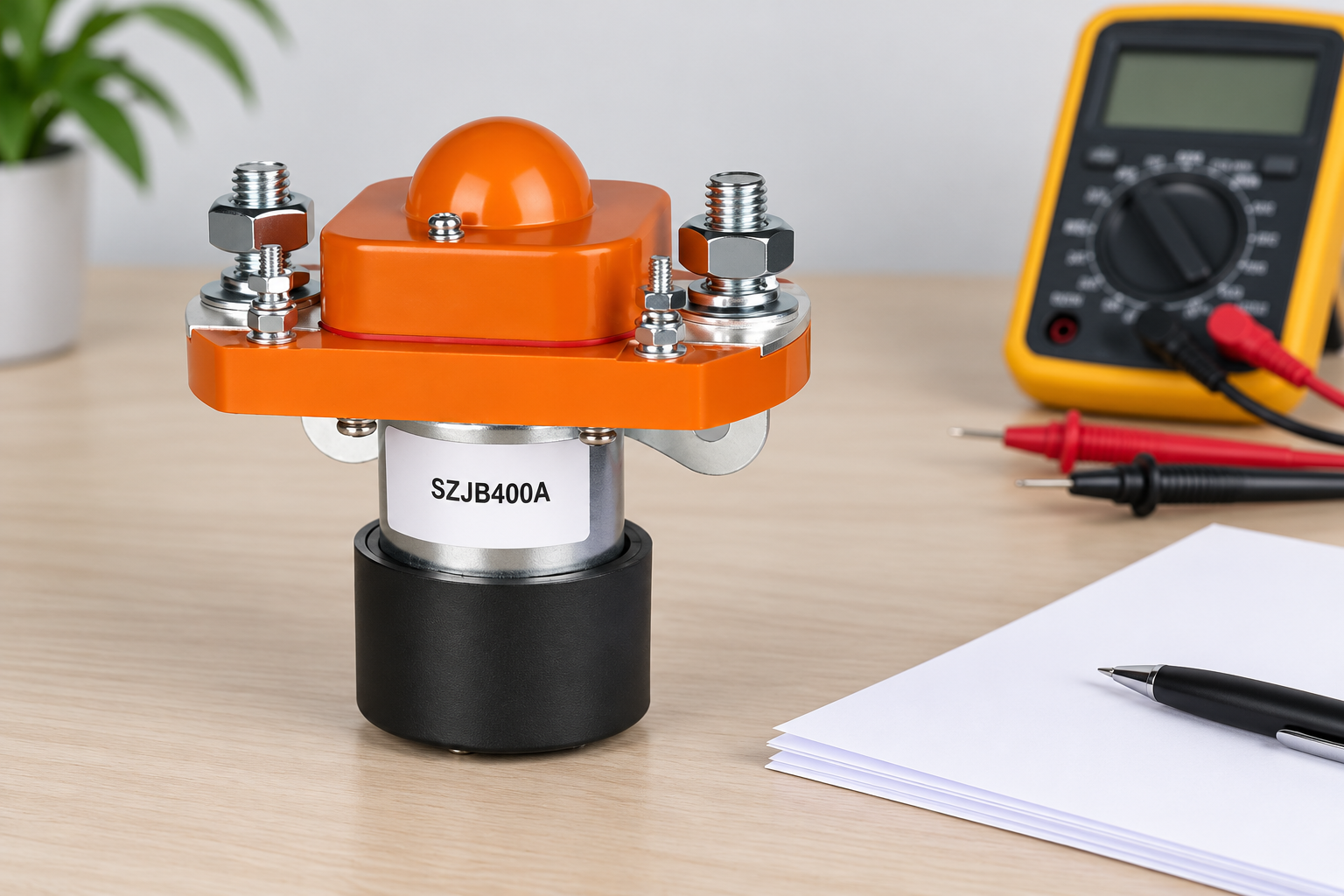
An external inspection does not automatically authorize contact-face access, lubrication, contact dressing or coil adjustment. Confirm whether the exact unit is serviceable and what the manufacturer permits. The Contattore DC normalmente chiuso SZJB400A pictured here illustrates external construction only; it supplies no maintenance interval or internal service permission.
For a sealed or non-serviceable assembly, the appropriate action may be a documented replacement or return-analysis decision. Do not open it to complete a generic checklist. Distinguish the work performed from the evidence obtained: an intact housing observation cannot establish hidden contact condition or renewed interruption capability.
Plan isolation and access with the work
Schedule the operational downtime and responsible staff required for safe access. A control command or open contactor is not sufficient evidence of safe isolation. Identify all relevant sources and stored energy, then use the procedure applicable to the equipment before touching connections or exposing internal areas.
29 CFR 1910.333 is a US workplace reference for applicable electrical work practices. Local requirements and the equipment instructions govern the actual task. When an observation requires energized equipment, it needs a separately justified and authorized method; the maintenance calendar is not authorization to improvise live testing.
Make results useful for the next interval review
Write findings in a consistent form: equipment identifier, task, date, operating condition, observation, acceptance basis, action and reviewer. Preserve photographs and the applicable procedure revision. A box marked satisfactory without identifying what was assessed provides little support for extending the interval or investigating a later failure.
If a measurement is part of an approved task, record instrument, setup and relevant conditions. Le linee guida NIST sulla tracciabilità metrologica helps frame the evidence behind results. A calibration label alone does not establish that an unsuitable measurement method can support a pass/fail decision or a longer maintenance interval.
Use trends without overstating what they prove
Compare findings under meaningfully similar conditions. A thermal image obtained at reduced load should not appear as proof of improvement over a full-duty image. A lower resistance result after changing the measurement setup may be a method difference. Keep those limitations visible when the maintenance team reviews the schedule.
Use the separate thermal-imaging inspection guide for that observation method and the Guida alla resistenza del contatto for the different electrical measurement question. The schedule should point to the correct approved task, rather than combining unrelated readings into one generic contactor health score.
Revise intervals through a controlled decision
Shorten or otherwise change the plan when findings, operating conditions or requirements justify it. A decision to extend an interval needs a documented basis and conditions for reconsideration. Repeatedly finding no visible damage is not proof that every hidden failure mechanism is absent. Record which risks the observations address and which remain controlled by other measures.
Review overdue tasks explicitly. If equipment cannot be made available, assign a responsible person to assess the consequence and approve the next action under the site process. Do not edit an old due date to make the record appear compliant. Preserve missed tasks, interim decisions and the actual completion date so the history remains useful.
Connect maintenance decisions with purchasing
Keep approved replacement ordering information available before an outage, including coil option, contact arrangement and drawing revision. Stock age, handling and storage condition should remain identifiable. A physically similar replacement may change control behavior, terminal access or switching capability and therefore needs its own application review.
Usa il Hub di selezione dei contattori DC to organize a replacement inquiry. Send Sayoon the actual duty and service findings, and ask which instructions apply to the exact order. Keep the calendar, work records and purchasing configuration connected so a replacement does not silently inherit an obsolete maintenance plan.
Video educativo: capire l'organizzazione del contatto
La spiegazione elettrica U di seguito illustra come funziona un circuito di contatto per un contattore. Utilizzatela per comprendere la distinzione tra il circuito di controllo e quello principale prima di leggere il disegno di ispezione. Offre una formazione generale, anziché una procedura di prova o l’approvazione del modello illustrato di Sayoon.
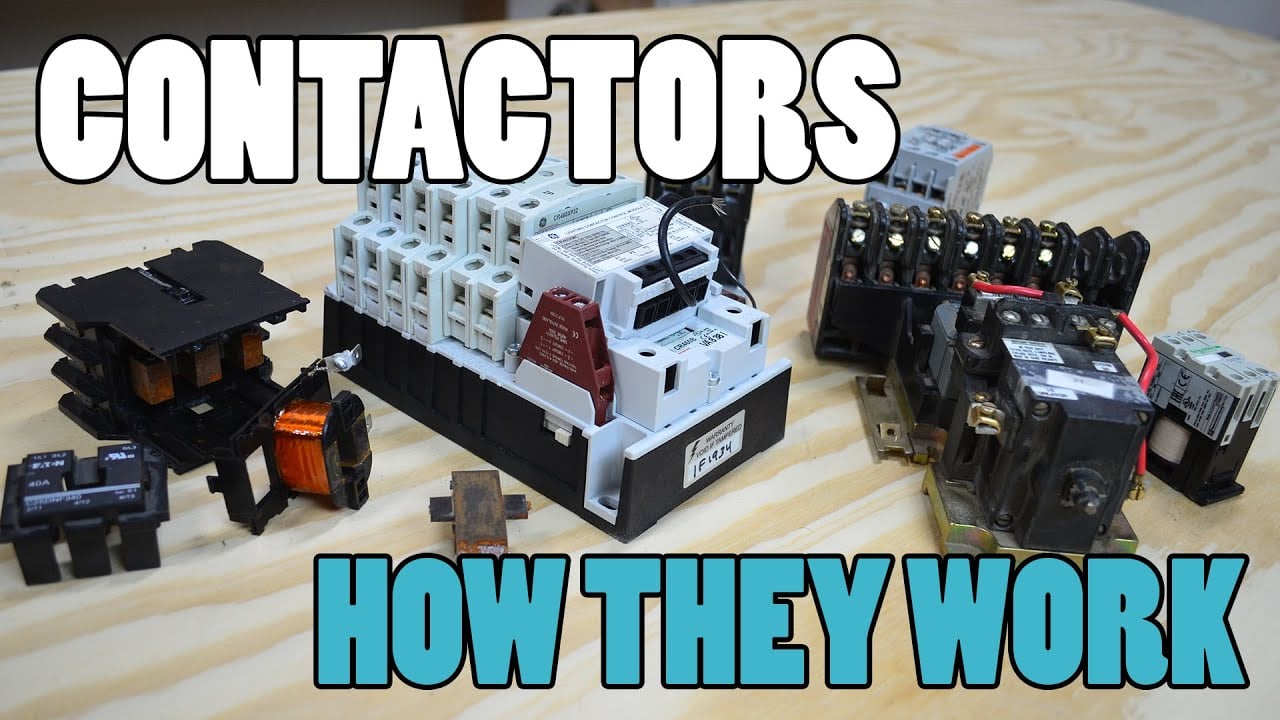
Guarda la spiegazione didattica dell'Elettricista U.
Domande frequenti
How often should a DC contactor be inspected?
Use the exact supplier and equipment requirements, duty, environment and approved risk assessment; no universal interval is provided here.
Can a calendar inspection replace an abnormal-event review?
No. An abnormal event follows its own assessment and disposition route and should not wait for the next routine date.
Should every contactor be opened and cleaned?
No. Confirm serviceability and explicit instructions for the exact construction before any internal access.
Can a maintenance history prove remaining service life?
It can inform decisions within its scope, but observations and cycle counts do not by themselves establish remaining electrical life.