Un IEC 60947-4-1 DC contactor review should establish the applicable standard edition, exact device configuration, documented operating ratings and supporting evaluation evidence. The standard reference alone does not identify a contactor’s permissible DC current, interruption duty or installation conditions. Begin with the equipment requirements, then ask the supplier to map its offered ordering code and evidence to those requirements. This guide explains a buyer’s review process; it does not reproduce the standard’s test limits or claim certification for an illustrated Sayoon product.
Use the licensed standard and the responsible engineering or conformity assessment process for clause-level decisions. Public publication summaries help identify scope and editions, but cannot substitute for the full requirements.
Confirm the publication and revision first
Il official IEC publication record identifies IEC 60947-4-1:2023, fifth edition, and states that its March 2026 corrigendum is included in the corrected copy. Record this information when obtaining the standard. Do not assume an older report has been evaluated against every later change.
The public scope includes electromechanical contactors and related equipment for circuits within specified low-voltage boundaries, including up to 1500V DC. That scope boundary is not the rating of every product covered by the standard. An individual device still needs its own operating and switching ratings.
Establish which edition the equipment project requires. A customer specification, assessment route or applicable equipment standard may determine the relevant edition. Resolve mismatches through the responsible reviewer rather than replacing the report’s date in a spreadsheet.
Identify the exact construction being offered
Obtain the full model and ordering code, coil supply option, contact arrangement, terminal configuration and accessories. Compare the drawing revision with the offered item. Similar housings can contain different contacts, arc-control arrangements or control circuits.
Ask whether the evidence covers the exact configuration or a family of configurations. If family coverage is claimed, request the applicable inclusion rules or an authorized confirmation. A picture of a related frame is not enough to establish that coverage.
Keep the model identity with each document. This makes later purchasing substitutions easier to assess. The purpose is not to accumulate paperwork but to preserve a clear link between the actual device and the evidence used to approve it.
Organize the review by evidence question
| Elemento di revisione | Input to record | Evidence or decision needed |
|---|---|---|
| Applicable publication | Edition, correction and project requirement | Record which standard text the project requires and which edition the submitted evidence actually uses before deciding whether a mismatch is acceptable. |
| Product identity | Full ordering code, coil option and accessories | Match offered hardware to drawings and covered configurations; a similar housing or shared family name is not sufficient identification. |
| Operating duty | Voltage, load characteristic and contact transitions | Request evidence for carrying, making and breaking separately, including normal opening and assigned abnormal operating events. |
| Insulation review | Ratings, environment and installed arrangement | Keep operating voltage distinct from withstand test values and identify spacing, barriers or environmental conditions needing assessment. |
| Thermal review | Ambient, conductors, enclosure and load profile | Compare the supporting conditions with the actual installation and document the responsible decision for any differences. |
| Control options | Supply range, suppression and feedback | Include exact accessories and electronic coil arrangements in the reviewed configuration and production purchasing instructions. |
| Protection coordination | Actual protective-device combination | Ask what the contactor carries, withstands or interrupts during the assigned fault sequence and require applicable combination evidence. |
| Evidence conclusion | Reports, declarations and certification scope | Keep each document linked to its purpose, exact model and revision; list unresolved deviations with a responsible owner. |
This review table lists procurement questions rather than mandatory clause limits. The responsible reviewer should map them to the applicable standard and equipment requirements. Leave unresolved fields visible until a named owner accepts the supporting evidence.
Distinguish rating fields and utilization duty
Ask for the documented main-circuit operating voltage and current under applicable load conditions. Keep carrying, making and breaking evidence separate. A current value derived from a closed-path thermal test does not independently establish interruption capability.
Where a utilization category is stated, identify it exactly and compare the represented duty with the intended equipment events. Do not translate an AC category into a DC application by matching amperage. Use the licensed standard and manufacturer’s evidence for the precise category meaning and test conditions.
Record normal operation and abnormal operation separately. If the control sequence reduces current before opening, state that condition. If emergency opening or loss of control supply can occur at a different current, include the event in the application review.
Check insulation without confusing test and use
Operating voltage, insulation-related ratings and withstand tests answer different questions. Keep them in separate fields. A higher dielectric test voltage is not permission to switch a circuit at that voltage.
Review the intended environment, mounting, terminal spacing and barriers against the documented configuration. Altitude or contamination conditions may require further assessment. Do not substitute a larger frame as a universal solution to an insulation question.
Request thermal evidence with installation conditions
Ask which ambient temperature, conductors, mounting and operating duration support the carrying rating. Compare those conditions with the enclosure and current profile. A free-air result can be useful evidence while still requiring evaluation for a hotter enclosed installation.
For an installed thermal check, agree on a procedure that identifies measurement points, load, stabilization and acceptance criteria. Keep the product-specific requirements with the results. An arbitrary temperature threshold taken from another contactor is not a justified acceptance limit.
Review control options and release behavior
Document coil voltage separately from the main circuit. Include supply range, pickup demand, holding demand, suppression and economizer options where relevant. Ask what the offered variant does during control voltage loss and restoration.
Accessories should appear on the evaluated configuration list. A changed auxiliary contact or suppression arrangement may matter to the equipment’s control sequence. Record such options in the purchase order instead of assuming every accessory is interchangeable.
Ask how fault protection is coordinated
Identify the protective device and prospective fault conditions. The contactor’s normal connection duty does not automatically make it a fault-clearing device. Ask what it must withstand or interrupt while the specified protection operates.
Review the actual combination, not isolated component headlines. If the equipment uses a different fuse, conductor or protective arrangement from the supporting evidence, refer the difference to the responsible engineer. Keep inspection and replacement requirements after abnormal events with the operating instructions.
Keep test reports, certificates and declarations distinct
A test report records a defined evaluation and its results. A certificate belongs to a particular assessment route and covered scope. A supplier declaration states the supplier’s claim. Request each document for the question it is intended to answer rather than treating all three as equivalent.
Il NIST description of laboratory accreditation illustrates another useful distinction: laboratory accreditation is not product certification. A laboratory logo does not enlarge the scope of the test reported.
For a claimed UL certification route, use the official UL Product iQ information resource and match the exact product. IEC standard wording in a report is not itself proof of a UL certification claim.
Resolve deviations before ordering production quantities
Prepare a short deviation list: required condition, supplied evidence, difference, owner and decision. Examples include a different coil option, hotter ambient, another conductor arrangement or an opening event not represented in the test. Keep the list attached to the approval.
A successful demonstration under one condition does not automatically resolve every deviation. Decide whether documentary clarification, a supplier engineering assessment or additional qualified testing is needed. The action should address the specific uncertainty rather than repeat a generic function test.
Maintain traceability through the RFQ and reorder
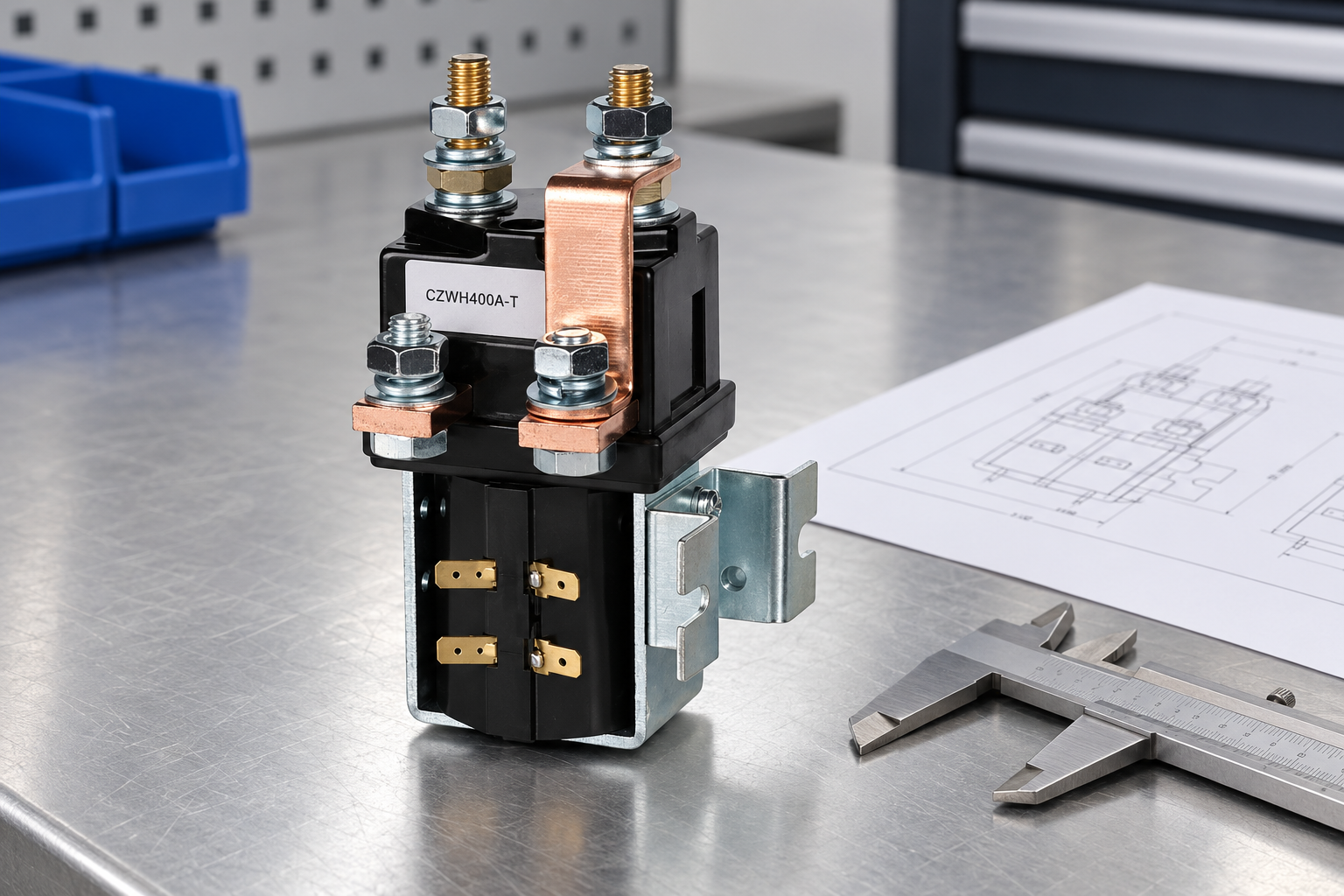
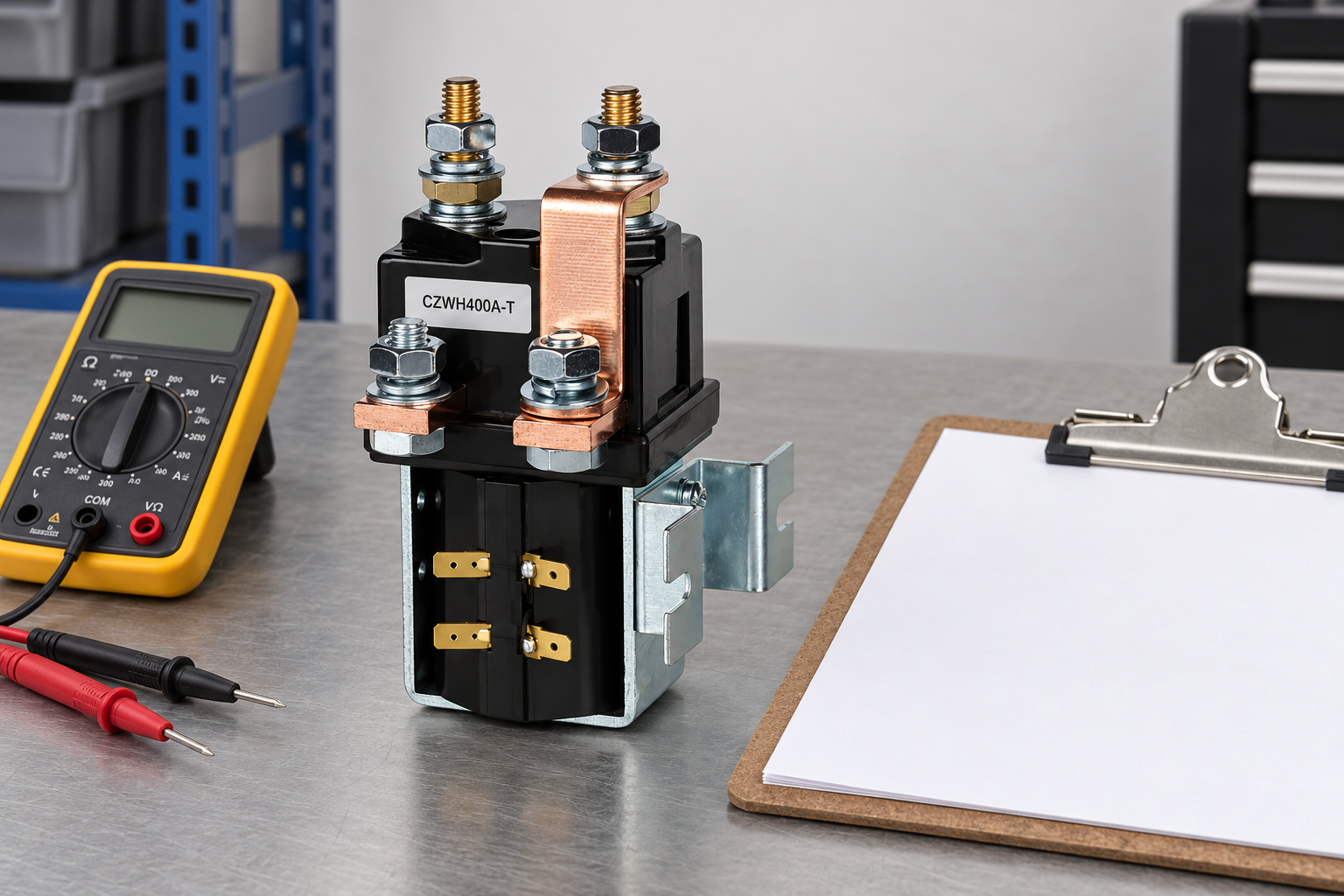
Provide Sayoon with the equipment duty, required assessment route, applicable edition, load profile, voltage, installation and requested evidence. Ask for an exact ordering code and written exceptions. The Contattore DC SPDT CZWH400A-T illustrated here shows construction only; no IEC certification or application qualification is claimed for it by this article.
Usa il DC contactor current-selection hub, il temperature review guide e il altitude guide to prepare complementary inputs. Preserve document revisions and approved alternatives for future reorders.
Educational video: mechanism and control
The following educational video explains how contactors operate. It does not reproduce IEC test requirements or supply conformity evidence for any model. Use it for mechanism background while keeping qualification decisions tied to the relevant documents.
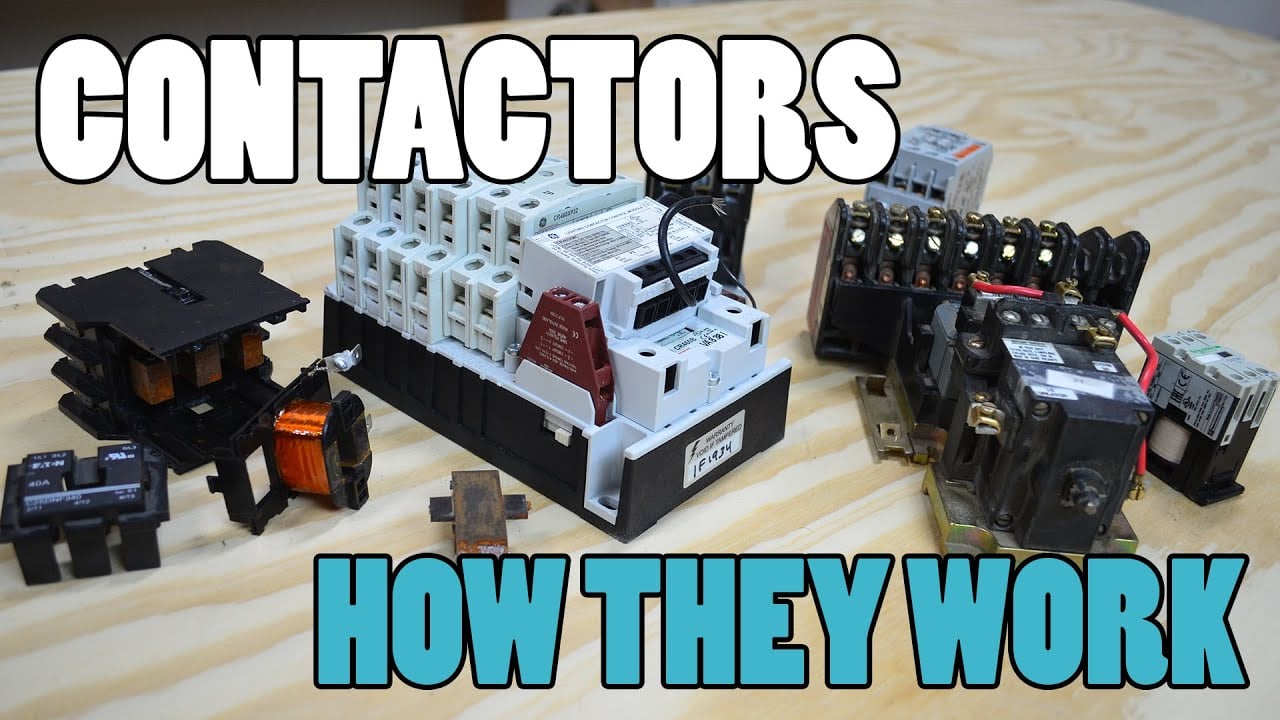
Watch the Electrician U educational explanation on YouTube.
Domande frequenti
Does IEC 60947-4-1 mean every contactor is rated for 1500V DC?
No. A standard scope boundary is not an individual product rating. Verify the exact operating and switching ratings.
Can a public summary replace the full standard?
No. Use the licensed applicable edition for clause-level requirements and the responsible evaluation process.
Is a laboratory accreditation logo product certification?
No. Laboratory accreditation and product certification are distinct, and the report scope must be checked.
What should accompany an RFQ?
Provide the exact equipment duty, voltage, current profile, installation conditions, required assessment route and requested evidence.