A BESS contactor replacement record should preserve what happened before anyone decides what failed. The useful record identifies the observed state, the circuit condition, the command context, and the installed device; it does not turn a symptom into a replacement specification.
When a BESS path behaves unexpectedly, the best evidence is often lost by repeated cycling, unlabelled photographs, or a request that only says “replace the contactor.” Capture the context first, then send a defined record for engineering review.
Part 1. What should happen before a BESS contactor is inspected?
Begin with the site’s approved energy-control and electrical safe-work process. A suspected abnormal state in a BESS path does not make the equipment safe to inspect, and an inactive command signal is not evidence that every source or stored-energy path has been controlled. OSHA’s energy-control and electrical-work-practice rules provide the safety context; the site remains responsible for its procedure, authorization, and competent-person requirements. (Управление опасными факторами OSHA, Правила OSHA по электробезопасности при проведении работ)
Define the boundary before recording details. Note the equipment location, the circuit drawing revision available to the team, and which condition led to the investigation. This creates a usable starting point without asking a reviewer to reconstruct the event from a later memory.
Важно: Do not use handle position, enclosure condition, or a control indication as proof that a BESS circuit is safe. Follow the approved isolation and verification process before inspection. Source: OSHA safety requirements listed in References.
Part 2. What belongs in the first event record?
The first record is an observation log, not a fault report. Its job is to make the event reviewable by someone who was not present. Start with the observed state, then add the condition that existed immediately before and after the event.
| Записать элемент | What to capture | Why it helps the next reviewer |
|---|---|---|
| Observed state | What the circuit or indication showed, and when it was seen | Keeps the initial symptom separate from a later conclusion. |
| Последовательность событий | The command or operating event that preceded the observation | Provides context for how the state developed. |
| Расположение схемы | The drawing reference and contactor position in the system | Connects the note to the correct path. |
| Источник доказательств | Labelled photos, alarm history, or test record permitted by the site | Lets a reviewer understand where each statement came from. |
Avoid changing several variables while trying to “clear” an event. A record that says which command was present, what was seen, and what changed afterward is much more useful than a claim that the contactor simply failed.
Part 3. Why separate the observed state from the assumed cause?
An observed state can be specific without proving its cause. For example, a path that did not release, an indication that disagreed with the drawing, or an unexpected sequence can each justify a controlled review. They do not establish whether the mechanism, command path, connected circuit, or another condition caused the result.
Practitioner discussions about a проверка залипшего контактора show why this distinction matters: users often need to decide whether a reading or position is enough for a release decision. (Обсуждение EEVblog) Write “observed closed state after the event” rather than “contacts welded” unless the cause has been established through the applicable engineering process.
This separation also helps procurement teams. A supplier can evaluate an application record, while a one-line diagnosis may invite an unsupported like-for-like request.
Part 4. Which switching context changes a replacement review?
The replacement review needs the sequence, not only a steady-load description. Capture what the circuit was expected to do when the path closed, opened, or changed state, along with any relevant control behavior recorded by the system. Reviewing the actual making event keeps the record connected to the condition under investigation rather than reducing the application to one normal-load label.
| Switching context | Запишите это как | Не делайте выводов |
|---|---|---|
| Closure event | Command sequence and connected-system condition | That normal load describes the making demand. |
| Opening event | Intended release condition and any relevant state record | That a single symptom proves an opening-duty cause. |
| Repeated operation | Time order of the observations | That cycling will restore a safe state. |
| Configuration change | What was changed before the event, if known | That the change alone identifies the root cause. |
For a broader system design discussion, the related Контрольный список интеграции контактора высокого напряжения постоянного тока (HVDC) provides context. It does not prove that a particular installed unit is suitable for another BESS path.
Part 5. Which identification details keep the record usable?
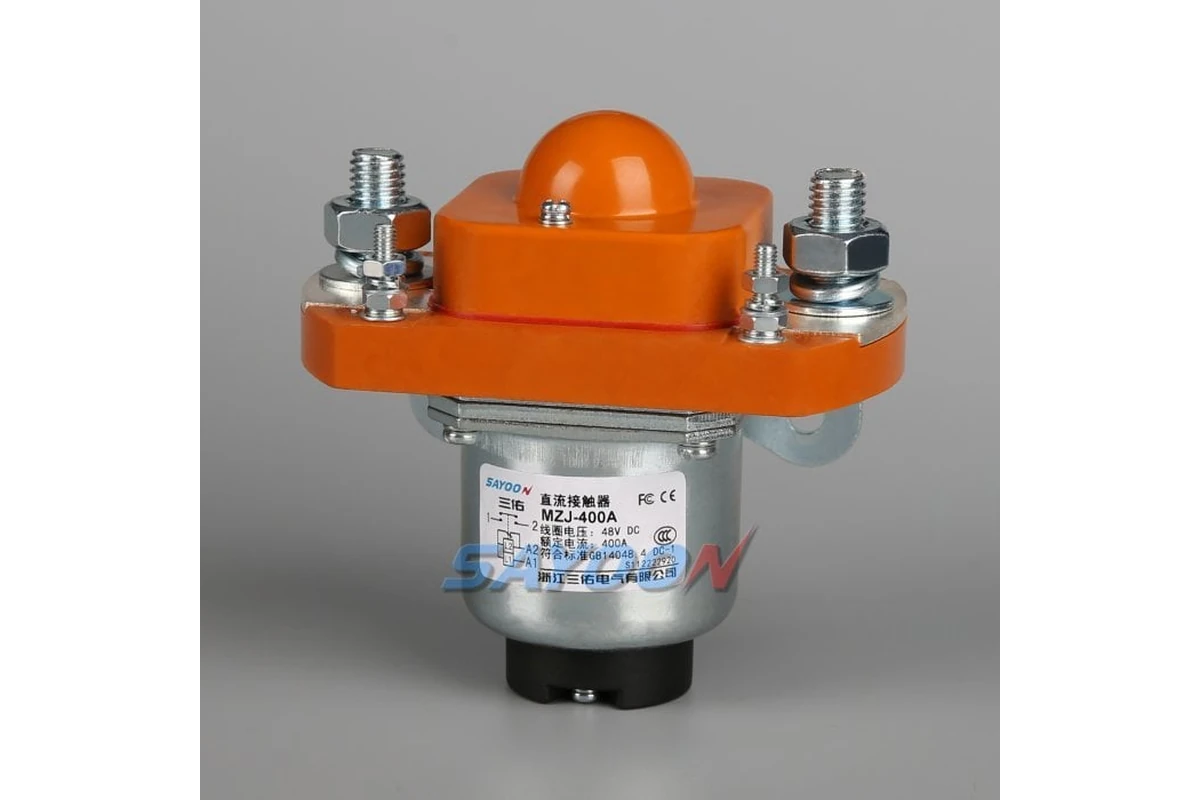
Keep the installed-device information tied to the event. Record the visible model marking, terminal identifiers, contact arrangement required by the drawing, and the location of the device in the BESS assembly. Where site rules allow photographs, label them by location and condition rather than treating a product image as system evidence.
The circuit drawing should also identify the command source and the intended state of the relevant path. That context prevents a reviewer from confusing an auxiliary indication with the main contact function or reading an unlabelled terminal image as a complete wiring record.
Readers who are investigating the contact condition itself can also review SAYOON’s DC contactor welding review. The two articles are complementary: this page organizes the event handoff, while the other page frames the switching-risk question.
Part 6. When should the record stop short of a replacement decision?
Stop short when the available evidence is only a symptom, a photo, a steady-load label, or a single meter observation. Those items can start a review, but they do not identify a compatible contactor, establish a model-specific cause, or confirm that a replacement will address the event.
Do not choose a replacement from appearance or terminal count alone. The requested contact form, command arrangement, circuit sequence, application description, and the relevant product documentation all need to be considered together.
For a controlled diagnostic sequence before collecting the record, see the related последовательность испытаний безопасного контактора постоянного тока. It should be followed only within the site’s approved procedure and does not replace project-level review.
Part 7. How can an OEM send the record for product review?
Once the evidence is organized, SAYOON’s Линейка продукции контакторов постоянного тока can help identify an appropriate product family for discussion, including the Линия контакторов постоянного тока CZW и Линия контакторов постоянного тока SZJ. These pages are discovery links, not a model recommendation.
| Запрос коммерческого предложения: исходные данные / Покупатель должен предоставить | Почему это важно | Избегайте этого сокращения |
|---|---|---|
| Timestamped event summary | Gives the reviewer the sequence rather than a generic symptom | Sending only “faulty contactor.” |
| BESS circuit position and drawing reference | Shows where the device sits in the intended path | Using an unlabelled product photo as the wiring record. |
| Installed marking and terminal images | Connects the request to the device under review | Matching an online image by appearance. |
| Command and system-state evidence | Frames the control and switching question | Describing the application as steady current only. |
The fit boundary is clear: an event record supports an engineering review, but it does not choose a replacement by itself. When the record is ready, send the BESS application record for review with the relevant project information.
ЧЗВ
Does a stuck state prove the root cause?
No. It is an observation that can justify a controlled review, but the circuit sequence, command context, and relevant product documentation are needed before assigning a cause.
Should a suspected contactor be repeatedly cycled?
Do not repeatedly cycle it in an attempt to clear the condition. Follow the approved safety process, preserve the event evidence, and let the responsible engineering or service process determine the next action.
Why is steady load not enough for review?
Steady load describes one operating condition. A replacement review also needs the closure, opening, control, and circuit context that existed around the observed event.
Which photos are useful for a replacement review?
Where permitted by the site, use clear labelled photos of the installed marking, terminal identification, and circuit location. Record the condition and location for each image so it is not mistaken for generic product imagery.
Can a product-page link identify the replacement?
No. A product page can help find a family for discussion, but final selection requires the application record and the relevant product documentation.
Что должно быть включено в запрос котировок (RFQ)?
Include with the RFQ the timestamped event summary, circuit position, drawing reference, installed marking, terminal images, and the command and system-state evidence available for review.
Ссылки
- OSHA energy-control rule provides the hazardous-energy safety context cited in Part 1.
- OSHA electrical-work practices provide the electrical safe-work context cited in Part 1.
- EEVblog discussion of welded-contactor testing поставки вопрос практикующего только язык.