RoHS DC contactor compliance review should begin with document control, not a conclusion. Match the requested product or family, document type, issuer, revision, scope, and evidence request before a supplier or internal team interprets what the file supports.
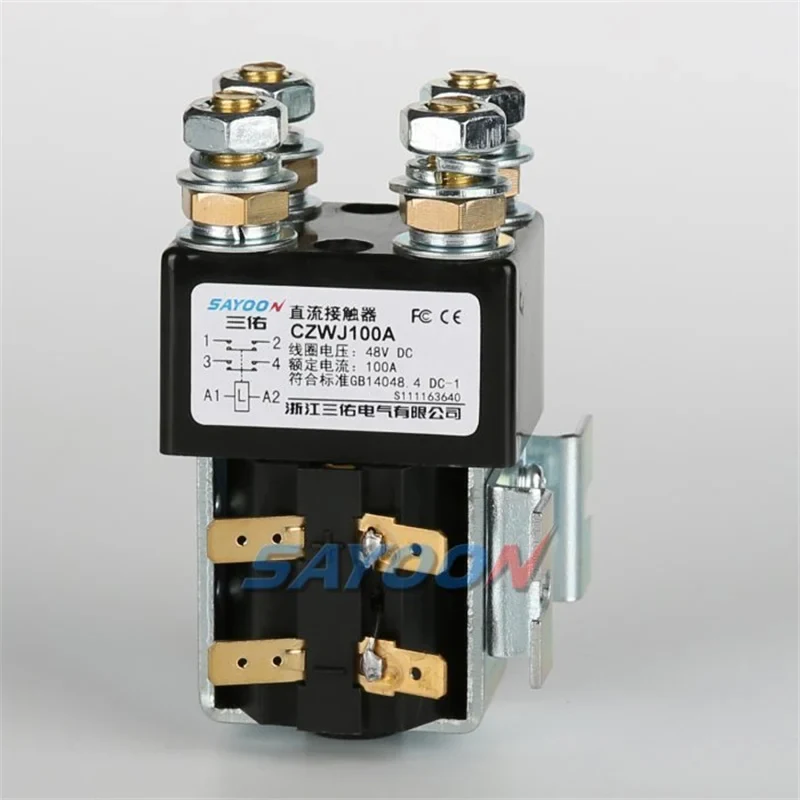
That distinction matters in an export RFQ. A declaration, test report, certificate, or material statement may serve a different purpose, and a product photograph cannot establish any of those document scopes.
Part 1. What is a compliance-document review?
A document review asks whether the supplied file can be connected to the enquiry item and the requested evidence type. It does not automatically decide legal status, certificate validity, or product suitability.
Use the approved site process before handling or inspecting equipment related to the request. OSHA energy-control and electrical-work references provide a general work boundary; local procedures govern the actual task. (OSHA energy control, OSHA electrical work practices)
Important: Do not treat a readable label or downloaded file as permission to handle equipment or as proof of a compliance result. Record the document evidence and request scope confirmation. Safety context: OSHA electrical-work practice material, with energy-control references reviewed separately.
Part 2. Which identity fields should be checked?
Start with the fields that connect the file to the buyer’s request. Record the exact product or family wording, document title, issuer, issue date or revision, and any reference number shown.
| Identity field | Capture | Review value |
|---|---|---|
| Subject | Product, family, or material named | Prevents a family file being treated as a model file. |
| Document type | Declaration, report, certificate, or statement | Preserves what the file actually is. |
| Issuer | Named organization and contact reference | Supports traceability. |
| Revision | Date, version, or reference number | Shows which copy was reviewed. |
Do not fill a missing field from memory. Mark it as an evidence request instead.
Part 3. How should scope and revision be recorded?
Record the scope exactly as written and compare it with the RFQ wording. Note whether the document identifies a model, a family, a material, or another defined subject. A revision change should trigger a new comparison, not an assumption that both files are equivalent.
The specification-field review and installed-device record guide help connect paperwork to an identified enquiry item.
Part 4. What is the difference between evidence and assumption?
An evidence line says what the document states. An assumption adds meaning that has not been confirmed. Keep those lines separate in the review record.
| Record wording | Pair it with | Avoid |
|---|---|---|
| “The file names this family” | Exact document field and revision | “Every model is covered.” |
| “The issuer is shown” | Issuer field and contact evidence | “The legal scope is proven.” |
| “A declaration was supplied” | Document type and subject | “A certificate was supplied.” |
| “A gap remains” | Specific requested field | Quietly completing it from an image. |
The application-context guide can provide the project context, but it does not replace the compliance document itself.
Part 5. Which export context belongs in the enquiry?
State the destination program, buyer document requirement, requested product identity, and the decision the file must support. Keep the context factual; do not convert a market label into a claim about certification or legal acceptance.
If the buyer requires a particular declaration format, revision date, or supporting file, list that request explicitly. The supplier can then confirm which document and scope apply.
Part 6. When is a document insufficient?
Request clarification when the product identity, issuer, revision, scope, or document type is missing or inconsistent with the RFQ. A document is also insufficient when it is unreadable, incomplete, or supplied without the context needed to match it.
Use the gap as a controlled question. Do not treat a missing field as evidence that a product fails or passes a requirement.
Part 7. How should the request move to supplier review?
After the evidence record is organized, the DC contactor product range and CZW DC contactor line can be used as discovery routes. They do not establish the scope of a compliance document or recommend a model.
| RFQ input / Buyer should provide | Why it matters | Avoid this shortcut |
|---|---|---|
| Exact product or family identity | Matches the document subject | Sending a generic product photo. |
| Requested document type and scope | Defines the evidence needed | Calling every file a certificate. |
| Issuer, revision, and reference | Preserves traceability | Using an undated copy without comment. |
| Destination requirement and open question | Lets the supplier answer the right request | Asking for an unbounded compliance promise. |
When ready, send the compliance enquiry for review with the controlled document fields.
ЧЗВ
What does RoHS compliance mean for a contactor?
It is a requirement or evidence topic concerning restricted substances, but the applicable product, document, scope, and buyer requirement must be confirmed from the relevant files.
What should a declaration include?
Record the subject, issuer, document type, revision, stated scope, and any reference or limitation shown in the supplied declaration.
Is a declaration the same as a certificate?
Not automatically. Keep the document type exactly as supplied and ask the responsible party to confirm what the file supports.
How do buyers match a document to a product?
Compare the named product or family, revision, reference, and scope with the RFQ item and its supporting device or product records.
Why check revisions?
Revisions identify which copy was reviewed. A changed revision may require a fresh scope and identity comparison.
What should be included with the compliance RFQ?
Include with the RFQ the product or family identity, requested document type, required scope, issuer or reference information, revision expectations, destination context, and open question.
References
- The OSHA energy-control standard is the Part 1 isolation reference.
- Part 1 also points to OSHA electrical-work practice guidance for the inspection boundary.