Hoist contactors switch and often reverse the motors used for lifting, lowering, trolley travel or a low-voltage DC winch. The correct device depends first on the machine architecture: an industrial three-phase crane hoist normally uses an interlocked AC reversing assembly, while a battery-powered winch may use a purpose-built DC reversing contactor or control pack. These products are not interchangeable. Buyers must verify motor voltage, phases, current, utilization duty, jogging frequency, coil/control voltage, pole arrangement, interlocking, auxiliary contacts, enclosure and the hoist manufacturer’s approved circuit before selecting a replacement.
Граница безопасности: A hoist is load-handling machinery. Contactor selection or replacement must be approved by qualified personnel using the machine wiring diagram, manufacturer instructions and the applicable inspection and energy-isolation procedures. This article is a selection guide, not a wiring instruction.
What buyers mean when they search for hoist contactors
The Google results for this phrase mix several different products: industrial reversing contactor assemblies for overhead hoists, model-specific crane replacement parts, AC contactor controls, and 12/24 V winch control packs. The common purpose is to command motor power, but the electrical conditions are very different. An overhead crane may use a three-phase motor at 208, 230, 460 or 575 VAC with a low-voltage control transformer. A vehicle-mounted winch may use a 12 or 24 V battery and a high-current DC motor.
A page that treats all of these as one generic contactor category gives the buyer a false sense of interchangeability. Start by identifying which of the following systems is actually installed.
| Hoist system | Typical switching arrangement | Critical selection evidence | Sayoon relevance |
|---|---|---|---|
| Industrial AC overhead hoist | Two mechanically/electrically interlocked multi-pole AC contactors for raise/lower | Line voltage, phases, motor rating, utilization duty, control voltage, interlock and approvals | Generally outside Sayoon’s DC product scope |
| Battery winch or small DC hoist | DC reversing contactor/control pack or paired DC contactors | Battery voltage, motor current, reversing circuit, duty cycle, breaking requirement and environment | Potential engineering discussion for low-voltage DC applications |
| Hoist with variable-frequency drive | Drive controls motor speed; contactors may perform isolation or other manufacturer-defined roles | Drive manufacturer topology, sequencing and restrictions on output-side switching | Application-specific; never substitute from current alone |
Why reversing duty is different from ordinary on/off control
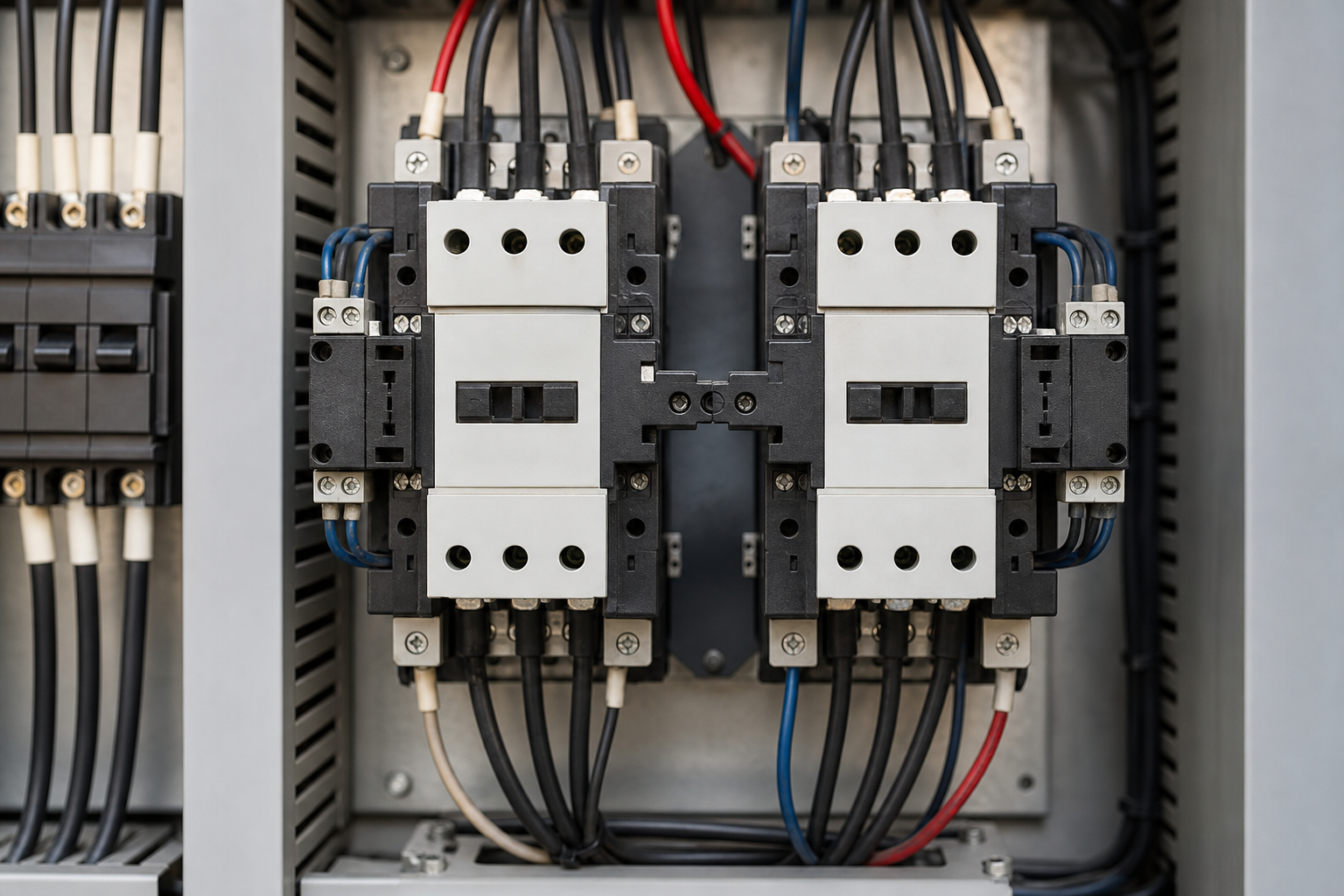
Raising and lowering an AC motor usually requires changing phase sequence. Traditional hoist controls accomplish this with a forward and reverse contactor pair. The control system must prevent both contactors from closing at the same time. A proper design commonly combines mechanical interlocking with electrical interlocking through auxiliary contacts. The interlocking arrangement is part of the machine safety and control design; it cannot be recreated by simply placing two general-purpose contactors next to each other.
Hoists also experience jogging: repeated short commands used to position a load. That operating pattern can create more frequent making operations and mechanical cycles than a fan or pump that starts a few times per day. The selected contactor must have a documented rating for the actual motor duty and operating frequency. Do not use a resistive-ampere rating as a substitute for motor switching data.
Collect the machine data before choosing a replacement
The hoist nameplate alone is not enough. Record the complete equipment model and serial number, motor voltage, phases, full-load current, horsepower or kilowatts, lifting speed, duty class and control voltage. Obtain the wiring diagram that matches the serial-number range. Then identify the existing contactor’s poles, normally open and normally closed auxiliary contacts, coil voltage and frequency, terminal arrangement, mounting, mechanical interlock and overload-relay relationship.
For a model-specific service part, the lowest-risk path is normally the hoist manufacturer’s approved replacement. A general contactor should not be installed merely because the frame fits. Auxiliary-contact timing, coil suppression, control-transformer loading and mechanical linkage can affect the rest of the control circuit.
| Поле | Почему это важно | Evidence to retain |
|---|---|---|
| Power circuit | Defines AC/DC, voltage, phases and required making/breaking duty | Machine schematic and motor nameplate |
| Цепь управления | The contactor coil must match the actual control transformer or battery circuit | Measured control voltage and coil identification |
| Interlocking | Prevents opposing commands and phase conflict | Mechanical link, auxiliary-contact logic and functional test record |
| Duty and operations | Jogging, starts per hour and load cycle affect thermal and mechanical life | Hoist duty data and operating profile |
| Окружающая среда | Dust, moisture, vibration, heat and corrosive exposure affect enclosure and materials | Panel rating, site conditions and inspection history |
Do not confuse line voltage with control voltage
An industrial hoist can have a high line voltage at the motor and a much lower voltage at the pendant and contactor coils. Columbus McKinnon’s hoist-selection guidance notes that control transformers are commonly used so the pendant does not carry full motor line voltage. A replacement coil must match the actual control circuit, including AC frequency where applicable. Choosing a 24 V coil because the pendant is described as “low voltage,” or choosing a 460 V coil because the motor is 460 V, can both be wrong.
Use the machine schematic and measure only under an approved procedure. Never infer coil voltage from wire color. A coil with the wrong voltage may fail to pull in, chatter, overheat or damage the control transformer.
AC crane contactors and DC winch contactors are not substitutes
AC contactors rely on an AC-rated magnetic system and ratings tied to AC motor utilization. DC motor circuits require contact systems designed to control a persistent DC arc and the actual battery voltage. A two-contactor three-phase reversing assembly cannot be replaced with a low-voltage DC winch contactor. Likewise, a compact DC reversing contactor is not an alternative for a 480 VAC crane panel.
Sayoon manufactures DC contactors. For a battery-powered winch or low-voltage DC hoist, the SDC Series DC contactor range may provide a starting point for an engineering discussion. The SDC15-200A starter contactor is relevant only when its voltage, current, duty, contact arrangement and mechanical design match the documented DC application. It is not offered as a replacement for an AC crane hoist contactor or as a complete reversing assembly.
Safety functions remain outside the contactor alone
A contactor is one element of the control system; it is not the complete hoist safety system. Limit switches, overload protection, brakes, emergency stops, disconnecting means and the machine control logic must all operate as designed. OSHA 1910.179 includes electrical requirements for overhead and gantry cranes, including disconnecting provisions and an overtravel limit switch for the hoisting motion of electric traveling cranes. Construction installations are addressed separately in OSHA 1926.406.
Those rules do not turn a component selection article into a compliance determination. The applicable standard, equipment listing, local rules and manufacturer instructions must be reviewed for the actual site and machine.
Inspection and replacement workflow
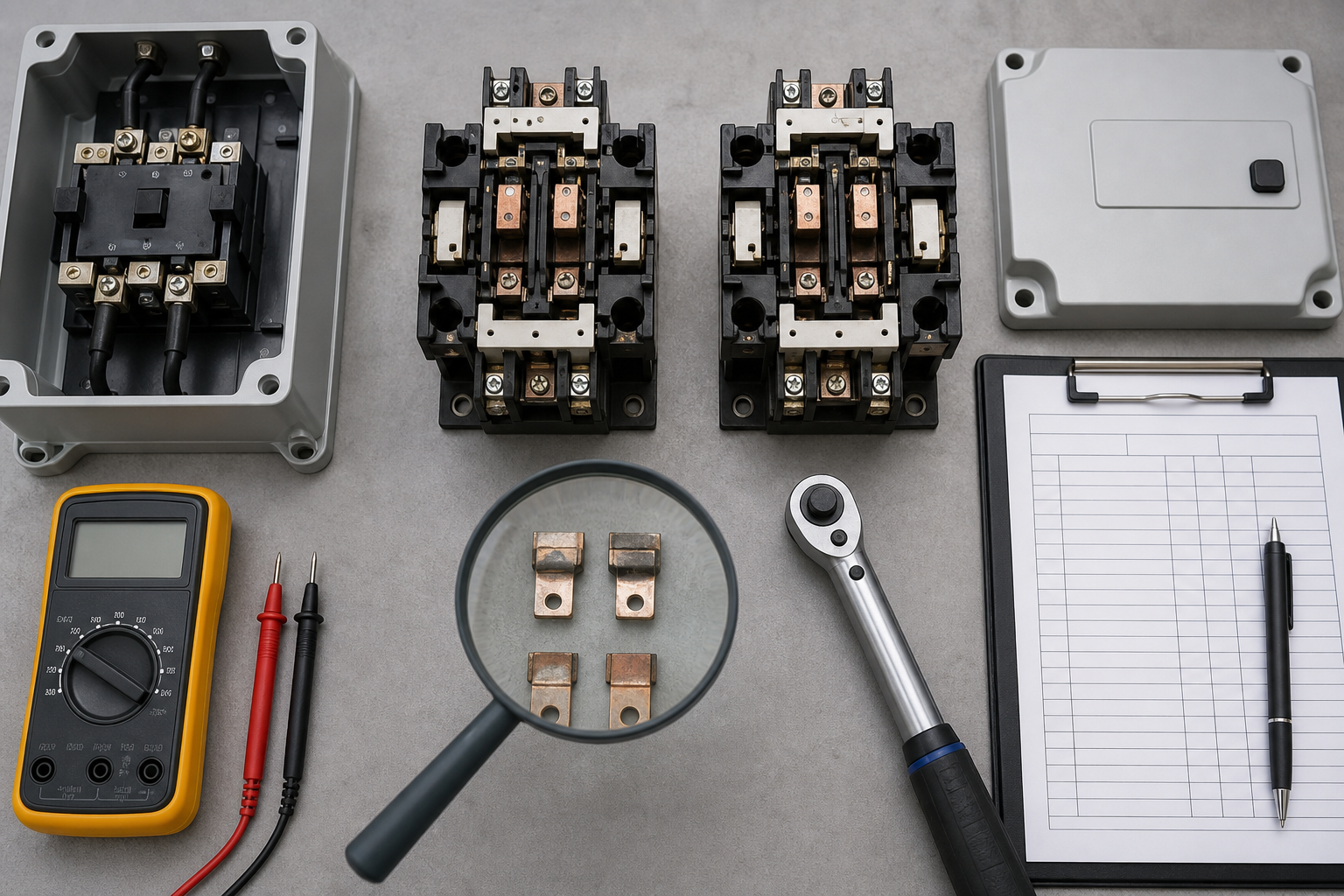
Before opening a control cabinet, follow the facility’s hazardous-energy procedure and verify the electrically safe condition using approved methods. Photograph and label connections only after isolation. Inspect for loose terminals, discoloration, cracked housings, coil damage, mechanical binding, worn interlocks and contamination. Contact wear must be evaluated using the manufacturer’s criteria; filing or dressing contacts may be prohibited for a particular device.
The old contactor may be the symptom rather than the cause. Chattering can result from low control voltage, a failing transformer, loose connections or a damaged interlock. Repeated welded contacts may indicate an incorrect utilization rating, overload problem, excessive jogging or a brake/motor issue. Diagnose the system before installing another component.
Acceptance tests after an approved replacement
Qualified personnel should first verify the installation against the approved drawing: coil identity, terminal tightness, auxiliary-contact state, interlock movement, barriers, clearances and grounding. A controlled functional test should confirm that only the commanded direction can energize, the opposite contactor is inhibited, stop and emergency functions work, and limit devices operate as intended. Restore guards and covers before returning the hoist to service.
Keep the part number, drawing revision, torque record, functional test results and approver with the maintenance history. The CMCO maintenance material in the Google results emphasizes systematic inspection, cleaning and replacement of worn or faulty contactors; the machine-specific manual remains the controlling source.
RFQ checklist for a DC hoist or winch application
For a genuinely DC-powered hoist or winch, send the supplier the battery voltage range, motor current during lifting and lowering, peak and stall current, maximum run time, operations per hour, reversing sequence, whether the contactor must interrupt current, coil-control method, ambient temperature, ingress exposure, vibration and mounting constraints. Include the complete control diagram and identify whether a single reversing assembly or separate contactors are required.
Related Sayoon resources include the DC reversing contactor selection guide, руководство по using a contactor nameplate during replacement review, and the article on testing a DC contactor safely.
Video: how a contactor operates
This neutral educational video explains the basic coil, armature and contact mechanism. It helps clarify the component vocabulary but does not cover hoist-specific interlocking, machine safety or replacement approval.
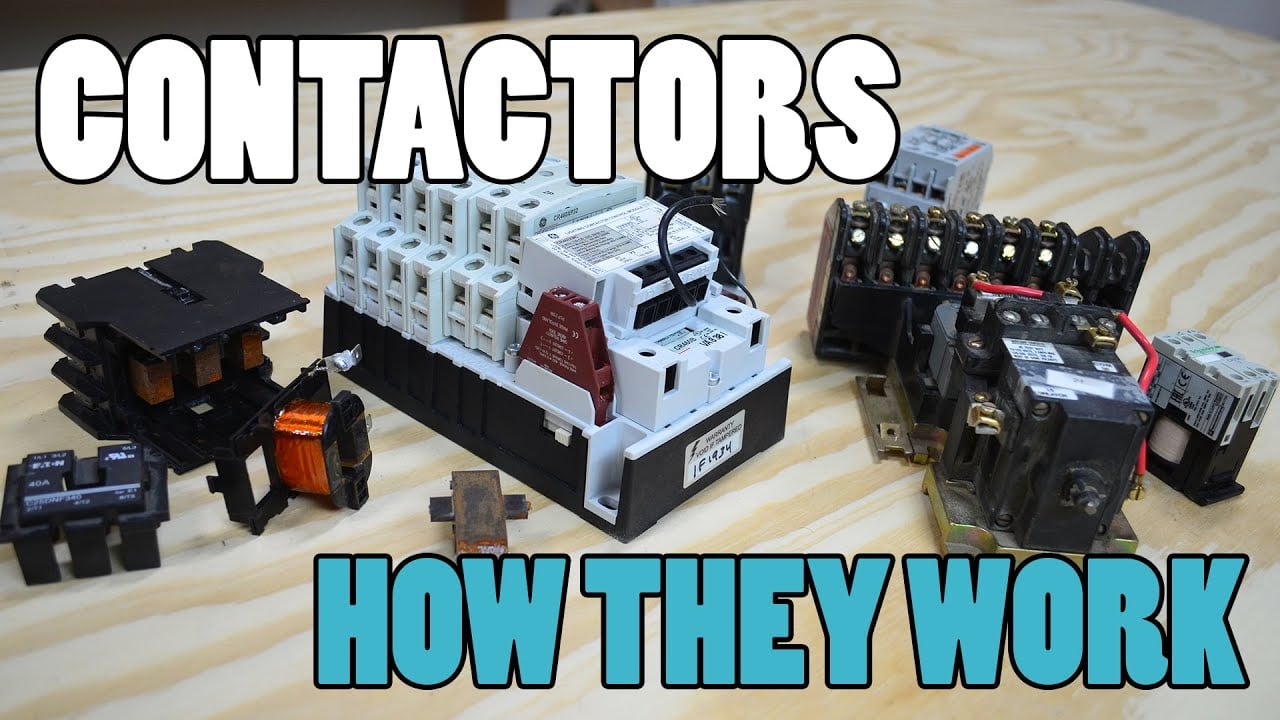
Watch on YouTube: What is a Contactor and How Does it Work? — Electrician U
Часто задаваемые вопросы
Are hoist contactors always reversing contactors?
Many raise/lower motor controls use an interlocked reversing pair, but the exact arrangement depends on the motor, drive and machine design. Use the serial-number-specific wiring diagram.
Can a standard motor contactor be used for a hoist?
Only if the manufacturer and responsible engineer confirm the ratings, jogging duty, interlock, auxiliary contacts, control circuit and mechanical integration for that hoist.
Can a DC contactor replace an AC hoist contactor?
No. AC and DC switching systems have different magnetic, arc-control and utilization requirements. A Sayoon DC contactor should only be evaluated for a documented DC application.
Why do hoists use two contactors?
Traditional AC reversing controls use one contactor for each direction. Electrical and mechanical interlocking prevents simultaneous closure.
What information is needed to quote a DC winch contactor?
Provide battery voltage range, current and duty, reversing diagram, breaking requirement, environmental conditions, terminal and mounting constraints, and the required validation tests.