A 600V DC contactor requirement lands outside every SAYOON low-voltage family — CZW classes publish contact voltage up to ≤80 V, SZJ ≤60 V, QZJ ≤150 V — so the published answer is the sealed electromagnetic families: SEV models publish a 5–1000 V contact span and HEV models publish 200 V and 1000 V class codes, and the RFQ must freeze the class code, DC-1 current, and sealing rows from the exact SKU table.
These voltage class notes are for system designers whose DC bus lands in the hundreds of volts and who need the catalog geography before any SKU debate. The low-voltage reference point is the Контактеры постоянного тока серии CZW pillar; the 600 V answer lives in the sealed families above it.
Part 1. What does a 600V DC contactor requirement actually specify?
A 600V DC contactor requirement names a contact voltage class, and that class must cover the real bus — nominal voltage plus every charge and transient excursion the system sees. A 600 V nominal battery that charges above nominal needs the class review done on the maximum, not the label.
Voltage class is also the fastest catalog filter that exists. One published line — contact voltage — sorts every family into possible and impossible before current, coil, or price enters the debate.
| Specification element | What it means for the class review | Где это опубликовано |
|---|---|---|
| Nominal bus voltage | Starting point only | System design documents |
| Maximum charge / transient voltage | The number the class must cover | System design + review |
| Contact voltage line | The published device class | SKU table row |
| Sealing and ambient rows | Environment survival at class | SKU table rows |
Part 2. Why do low voltage DC contactor families stop at 80 V?
DC arcs do not extinguish at natural current zeros, so interruption capability is engineered per class — and the LV families publish exactly where their class ends. On this site those ceilings are explicit table rows.
| LV family | Published contact voltage cap | Example SKU rows |
|---|---|---|
| CZW series | ≤80 V (several classes ≤60 V) | CZW100A ≤80 V; CZW600A ≤60 V |
| SZJ series | ≤60 В | SZJ100A / SZJ600A ≤60 V |
| QZJ series | ≤150 В | QZJ100A / QZJ600A ≤150 V |
The stretch myth dies here. No derating trick turns an ≤80 V published class into a 600 V device; the published cap is the engineering boundary, and everything above it belongs to families built for high voltage DC interruption.
Part 3. Which published families cover the 600 V class?
Two sealed electromagnetic families publish classes that contain 600 V. The SEV family publishes a contact voltage span of 5–1000 В on its SKU tables, and the HEV family publishes explicit class codes — 1 -200V; 7 -1000V — inside its model implication tables.

| Published family answer | Class evidence | Example SKUs to audit |
|---|---|---|
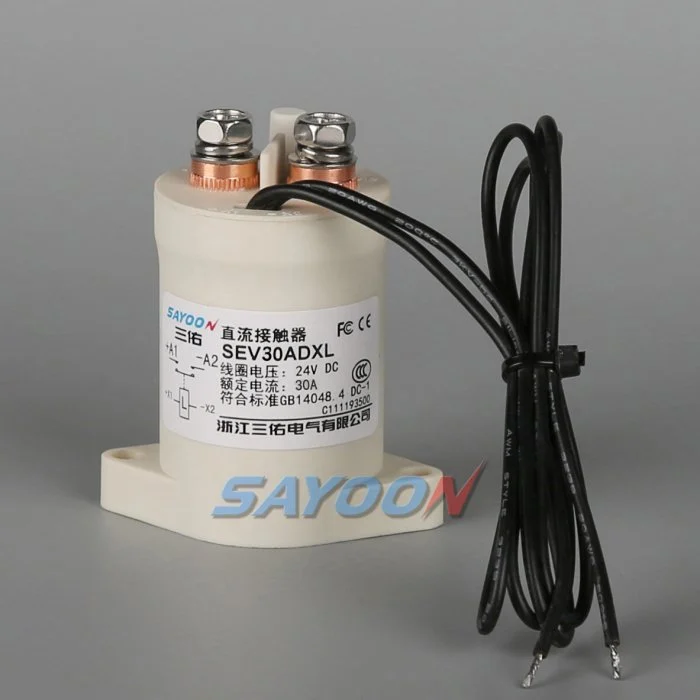
| SEV series | Contact voltage 5–1000 V rows | SEV30AD (30 A), SEV200AH (200 A), SEV800AH (800 A) |
| HEV series | Class codes 200 V / 1000 V | HEV30, HEV100, HEV150 |
Both families pair the class with sealing rows — IP68 and ambient -40 to +85 C on the cited SKUs — which is why 600 V class devices are typically sealed: the construction that interrupts high-voltage DC also isolates the arc chamber from the environment. Deeper sealing context lives in the epoxy resin sealed contactor use cases статья.
Part 4. How should designers read voltage rows on published tables?
Fast table reading causes the most 600 V mistakes, because two different voltage lists sit near each other on every SKU page.
- Coil rated voltage lists control-side options — 6 V, 12 V, 24 V up to 220 V on many SKUs. This is the electromagnet supply, not the load class.
- Напряжение прикосновения states the load-side class — the row that must cover 600 V.
- Electric strength / insulation rows describe test conditions, not operating classes.
| Table row | Side of the device | 600 V relevance |
|---|---|---|
| Coil rated voltage (DC V) | Control input | None — pick to match the control net |
| Напряжение прикосновения (постоянное напряжение, В) | Load path | The class gate for 600 V |
| Электрическая прочность на сопротивление | Условие теста | Context only |
| Rated load current (DC-1) | Load path | Second gate after class |
The spec-field discipline that wraps around this reading rule is covered in HV DC contactor specification fields.
Part 5. Which system architectures put 600 V in front of designers?
Three architecture waves keep generating 600 V class requirements. Battery systems between the 400 V and 800 V platform poles frequently traverse 600 V during charge; PV legacy designs standardized 600 V string ceilings; and industrial BESS containers stack strings into buses that live in the same band.
In every case the class question repeats: what is the maximum voltage the switch point sees, and which published family contains it. The HV contactor selection for EV battery disconnect guide carries the EV-specific version of this review.
| Architecture | Why 600 V appears | Class consequence |
|---|---|---|
| EV / mobility packs | Charge excursions between platform poles | Class review on maximum, not nominal |
| PV strings | Legacy 600 V ceilings | Sealed class parts at combiner points |
| BESS containers | Stacked string buses | 5–1000 V span or 1000 V class codes |
Part 6. Which SAYOON models anchor a 600 V class RFQ?
Рекомендация продукта: anchor 600 V class RFQs on the Высоковольтный контактор постоянного тока SEV200AH в герметичном корпусе из эпоксидной смолы — its published 5–1000 V span contains the class, the 200 A DC-1 line fits mainstream strings, and the economizer coil row (H: Start 30–50, Keep 1.5–5 W) answers long-closed duty budgets.
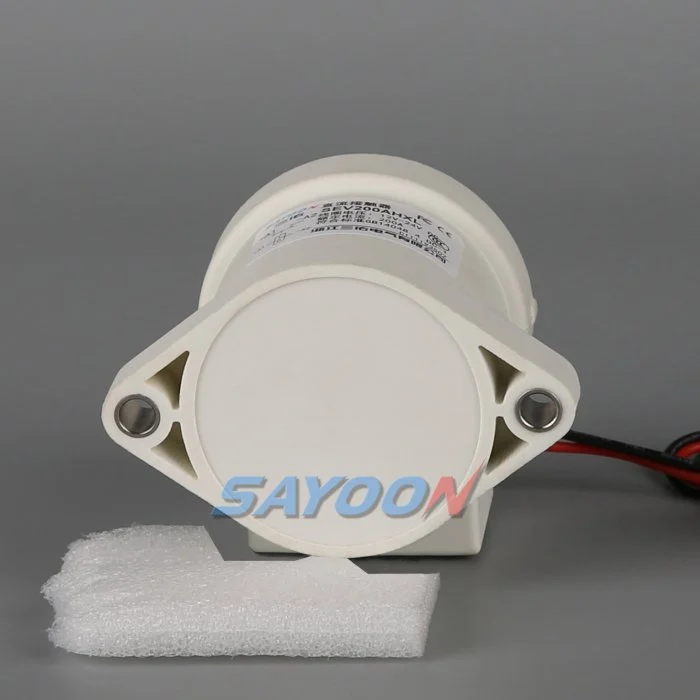
Почему бы не другие строки без отзыва: это Высоковольтный контактор постоянного тока HEV100 в эпоксидном герметичном корпусе fits programs standardized on HEV class codes when 100 A suffices; SEV30AD covers small 600 V class branches; every LV family SKU is excluded by its published cap, whatever its amp line says.
Подогнать по границе: these anchors are not AC switching devices, not protection devices, and not valid when continuous current exceeds their published DC-1 lines — current class is the second gate after voltage class.
To confirm a class mapping, send your bus voltage worksheet with nominal and maximum voltages, current profile, and sealing needs.
Part 7. What voltage-class mistakes derail system designs?
- Reviewing the class against nominal voltage and ignoring charge overshoot.
- Trying to derate an ≤80 V LV part upward instead of changing family.
- Reading the coil voltage list as if it were the contact class.
- Passing the voltage gate and forgetting the DC-1 current gate.
- Ignoring sealing rows on outdoor or washdown 600 V installs.
- Treating electric-strength test rows as operating ratings.
- Assigning fault-clearing duty to the contactor instead of breakers.
Ссылки
Часто задаваемые вопросы
What counts as a high voltage DC contactor?
On this catalog, the sealed families whose published contact classes reach far above the LV caps: SEV models publish 5–1000 V spans and HEV models publish 200 V and 1000 V class codes.
Can a 48 V class contactor be derated upward for 600 V?
No. Published contact voltage caps are engineering boundaries, and the LV families stop at ≤80 V, ≤60 V, or ≤150 V. A 600 V bus changes family, not derating math.
Which SAYOON families publish 600 V capable classes?
The SEV family (contact voltage 5–1000 V on cited SKUs) and the HEV family (published class codes 1 -200V; 7 -1000V). Confirm the exact SKU row before RFQ.
What is the difference between coil voltage and contact voltage?
Coil voltage is the control-side electromagnet supply, published as an options list. Contact voltage is the load-side class the switch actually interrupts — the row a 600 V review gates on.
What headroom questions belong in a 600 V review?
Record nominal voltage, maximum charge voltage, and transient excursions, then require the published class to contain the maximum. The review documents numbers, not rules of thumb.
Why are 600 V class contactors sealed?
The cited SEV and HEV SKUs pair their high-voltage classes with IP68 sealed chambers and -40 to +85 C ambient rows — construction that manages high-voltage DC arcs also isolates the chamber.
Where should a 600 V class RFQ start on this site?
Start from the SEV and HEV product pages, gate by published contact class and DC-1 current, then send the bus voltage worksheet through the contact page.