Seventy-two-volt systems appear in AGVs, larger motive platforms, and some industrial DC buses where 48V is insufficient but full automotive high voltage is unnecessary. A 72v dc contactor must handle regen overshoot, BMS interlocks, and frequent auto-connect cycles. This guide focuses on AGV and medium-traction integration—not generic ampacity tables—so engineers can align contactor class with real bus behavior. This guide focuses on practical evaluation steps for U.S. industrial and commercial buyers—measurement, documentation, and lifecycle support—not generic marketing claims. Where equipment selection is involved, cross-check public specifications on sayoon-dc.com and confirm coil voltage, duty cycle, and utilization category with your application engineer. Section checklists can be reused as RFQ attachments and commissioning handover outlines. Compare vendor datasheets at the same test voltage and category before shortlisting finalists.
72V Bus Behavior in AGV and Traction Designs
AGV traction controllers often see rapid acceleration/deceleration profiles; regen pushes bus voltage above 72V nominal for short intervals.
Battery management may require a contactor to open on fault while capacitors on the DC link discharge through bleed resistors—coordinate timing with BMS fault outputs.
Wireless charging or opportunity charging adds another connect/disconnect path; some architectures use separate contactors for charge and drive.
Industrial buyers should match continuous current to real duty cycle—not peak inrush alone—when comparing contactor datasheets.
Request electrical and mechanical life curves tested at your operating voltage class, not only at nominal catalog conditions.
Cross-check SAYOON DC contactor catalog for series that cover your voltage and ampacity before substituting part numbers.
Capture coil voltage, continuous current duty, and expected daily switching count in the RFQ so suppliers size contacts and categories correctly.
Verify utilization category (IEC DC-1 vs DC-3) against your load type—motor branches need different breaking duty than resistive battery connect.
Define acceptance tests before shipment—coil hold voltage, contact resistance, and dielectric checks—so commissioning disputes are less likely.
| Platform | Bus note | Contactor role |
|---|---|---|
| Warehouse AGV | 72V Li-ion, frequent cycling | Main battery connect |
| Outdoor AGV | Regen + slope loads | Main + optional precharge path |
| Industrial tug | Shared battery fleet | Service disconnect + main |
Sizing Checklist: Current, Breaking, and Category
Match IEC utilization category to load: resistive battery connect (DC-1) vs motor-like branches (DC-3) changes breaking duty requirements.
Continuous current should reflect worst-case sustained drive on grade, not level-floor test data alone.
Include margin for auxiliary loads that remain on the same contactor-fed bus during travel.
IEC 60947-4-1 utilization categories DC-1 and DC-3 describe resistive versus motor-like breaking duty—misapplication shortens contact life.
For forklift and AGV programs, compare CZW low-voltage DC contactor series compact form factors against available panel space and vibration ratings.
Bidirectional energy flow (regen or charge/discharge) may require a bidirectional contactor—confirm topology before ordering unidirectional parts.
Capture coil voltage, continuous current duty, and expected daily switching count in the RFQ so suppliers size contacts and categories correctly.
Verify utilization category (IEC DC-1 vs DC-3) against your load type—motor branches need different breaking duty than resistive battery connect.
Define acceptance tests before shipment—coil hold voltage, contact resistance, and dielectric checks—so commissioning disputes are less likely.
| Parameter | AGV/traction note | Risk if ignored |
|---|---|---|
| Vmax | Include regen peak | Arc erosion, early failure |
| I continuous | Grade + payload | Thermal trip, welded contacts |
| Switching/day | Auto cycles >> manual | Mechanical life exhaustion |
| Coil hold | Always-on during mission | Thermal rise in enclosure |
Wiring, Interlocks, and BMS Coordination
AGV safety PLCs often require dual-channel monitoring of contactor auxiliary feedback—confirm auxiliary contact availability and rating.
Precharge sequences may use a separate resistor path before main contactor closure on capacitive inverters; document sequence in OEM manuals.
Ground-fault or insulation monitoring may force open contactors—verify coil suppression and flyback diodes do not conflict with BMS fault latching.
Post-installation, log contact resistance trends and coil voltage at terminals during routine PM intervals.
Explore OEM/ODM services when standard catalog coils, brackets, or labels need customization for export programs.
See SAYOON application solutions for forklift, EV, UPS, and marine use cases.
Capture coil voltage, continuous current duty, and expected daily switching count in the RFQ so suppliers size contacts and categories correctly.
Verify utilization category (IEC DC-1 vs DC-3) against your load type—motor branches need different breaking duty than resistive battery connect.
Define acceptance tests before shipment—coil hold voltage, contact resistance, and dielectric checks—so commissioning disputes are less likely.
Procurement and Qualification for AGV Programs
Request mechanical life data at your operating voltage and category, plus vibration test summaries if the contactor mounts on the mobile frame.
Standardize coil voltage across a fleet to reduce spare inventory—document exceptions in the BOM.
Post-installation, log contact resistance trends and coil voltage at terminals during routine PM intervals.
Explore OEM/ODM services when standard catalog coils, brackets, or labels need customization for export programs.
See SAYOON application solutions for forklift, EV, UPS, and marine use cases.
| Qual test | Purpose | Owner |
|---|---|---|
| Coil hold at Vmin | Verify pull-in under weak battery | OEM QA |
| Contact R trend | Wear monitoring | Field service |
| Dielectric | Safety acceptance | Commissioning |
Operations: Monitoring and Replacement Triggers
Trend contact resistance and coil terminal voltage during scheduled AGV PM windows.
Replace contact kits when mechanical life counter approaches rating or when contact bounce increases noticeably in feedback signals.
Post-installation, log contact resistance trends and coil voltage at terminals during routine PM intervals.
Explore OEM/ODM services when standard catalog coils, brackets, or labels need customization for export programs.
See SAYOON application solutions for forklift, EV, UPS, and marine use cases.
Review nameplate data, environmental limits, and switching duty annually or after any major load change on the feeder.
Document as-built coil driver circuits and fuse sizes so future retrofits do not undervoltage the coil under peak plant load.
Recommended SAYOON Products
For project support, explore our related product line, solution options, and OEM/ODM capabilities on sayoon-dc.com.
FAQ
What is a 72v dc contactor used for?
A 72v dc contactor switches high-current DC power paths under remote control—common in battery systems, traction drives, and industrial DC distribution where manual disconnect is impractical.
How do I size a 72v dc contactor?
Match continuous current to your duty cycle, select coil voltage to match the control circuit, and choose IEC utilization category (DC-1 vs DC-3) based on load type. Include margin for inrush on motor branches.
Can I use an AC contactor for this DC load?
No. DC arcs sustain without zero-crossing; AC-rated devices risk contact welding. Use a DC-rated contactor with appropriate contact gap and arc management.
What coil voltage options exist?
Industrial designs commonly use 12V, 24V, 48V, or 110V DC coils (or AC coils on separate control feeds). Verify hold power and temperature rise for continuously energized applications.
How is a 72v dc contactor different from a relay?
Contactors are built for higher continuous currents and frequent switching in power circuits; relays suit lower-power control. Main battery or traction paths typically require contactor-class devices.
Does SAYOON supply 72v dc contactor options?
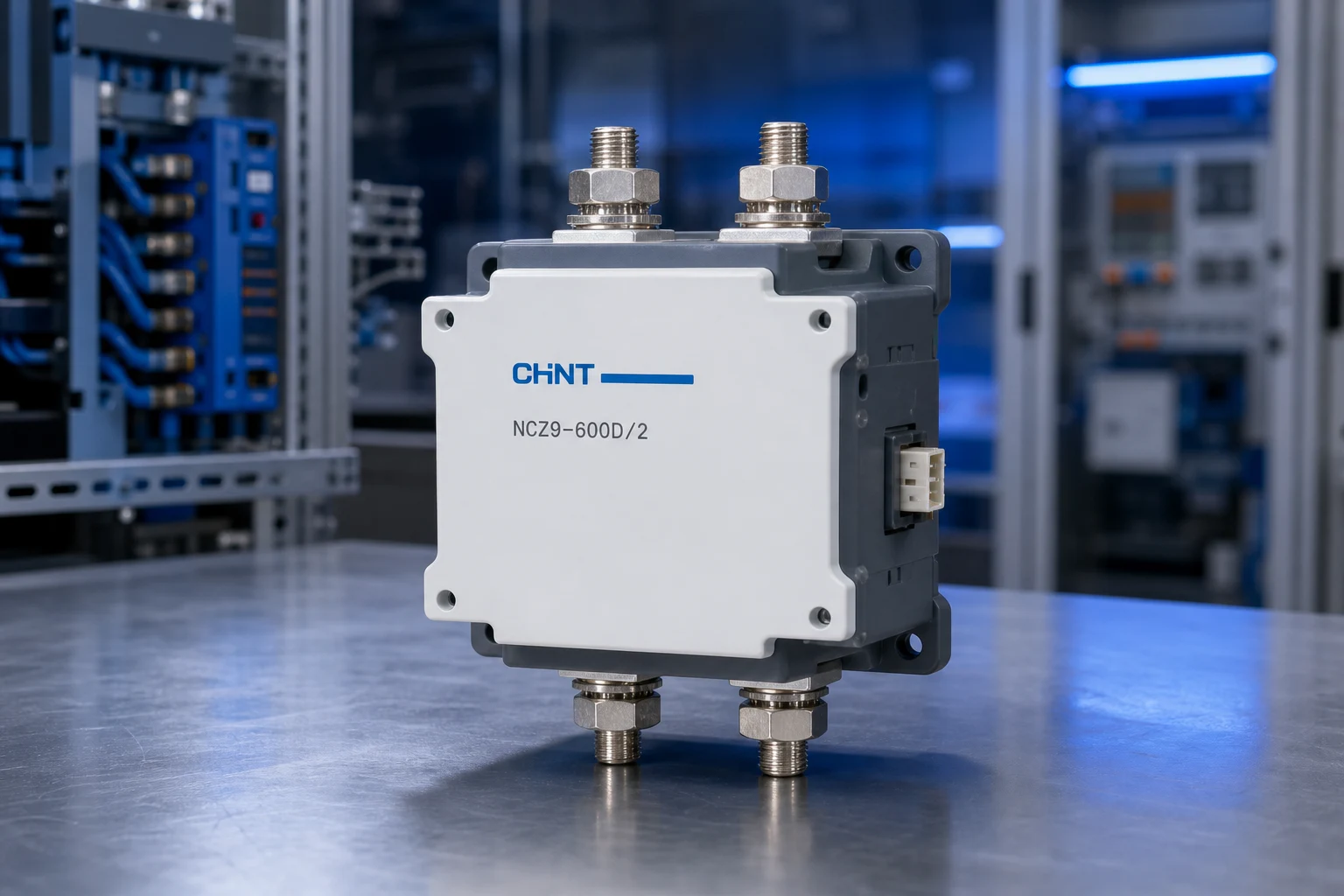
SAYOON publishes CZW, SZJ, SEV, and HEV DC contactor series on sayoon-dc.com with OEM/ODM support. Confirm exact ratings and terminals against your datasheet before purchase.
References
- IEC 60947-4-1 — Contactors and motor-starters
- Schaltbau — DC contactor selection criteria
- VIOX — AC vs DC contactors
- SAYOON — DC contactor product lines
Ready to discuss your project? Contact SAYOON engineering support with your project parameters and technical requirements.