A DC reversing contactor is a project-defined reversing contact arrangement for a documented motor path: confirm pole form, coil supply, interlocks, voltage/current class, and wiring notes against the datasheet before treating a catalog photo as approved design. Use it to keep reversing pole form separate from single-pole NO purchases on traction paths. It is a checklist for OEM and panel teams — not sizing or approval for dc-reversing-contactor-selection-agv-forklift-motor-paths.

Part 1. Separate reversing pole form from a single NO path
Write whether the motor path needs a documented DPDT reversing arrangement or a different pole form. A single normally open DC contactor may isolate a branch, but it does not automatically reverse a traction motor. Treat the reversing label as a document question tied to the schematic, not as a marketing synonym for any DC contactor.
Teams searching for dc reversing contactor usually need a project checklist, not a catalog slogan.
Reversing RFQs also need clear ownership of mechanical versus electrical interlocking so quotation reviews do not assume silent protection.
Part 2. Capture motor-path inputs before comparing models
Record system voltage class, continuous current, peak or stall context if the drawing states it, coil supply, ambient, and mounting orientation. Those inputs decide whether a CZWH-2T, CZWT, or CZQH-2T reversing route is even eligible for discussion. Missing stall or interlock notes should stay on the open-item list.
| Input | What to record | Send with quote |
|---|---|---|
| Pole form | DPDT reversing vs other documented form | Schematic excerpt |
| Voltage/current | System class and continuous current with source | Drawing reference |
| Coil supply | Rated coil voltage required | Control supply note |
| Interlocks | Forward/reverse prevention method owner | Control narrative owner |
| Environment | Ambient and mounting attitude | Layout constraint |
Part 3. Review interlocks and simultaneous-close risks
Reversing reviews should ask how forward and reverse poles are prevented from creating a shorted path. Interlock logic belongs to the approved control design. The contactor datasheet explains contact form and ratings; it does not replace the project’s interlocking scheme.
Important: Do not energize a reversing arrangement without documented forward/reverse interlocking ownership on the approved control design. (Source: project control documents / IEC 60947 product-family context.)
Part 4. Confirm coil supply and terminal notes on the datasheet
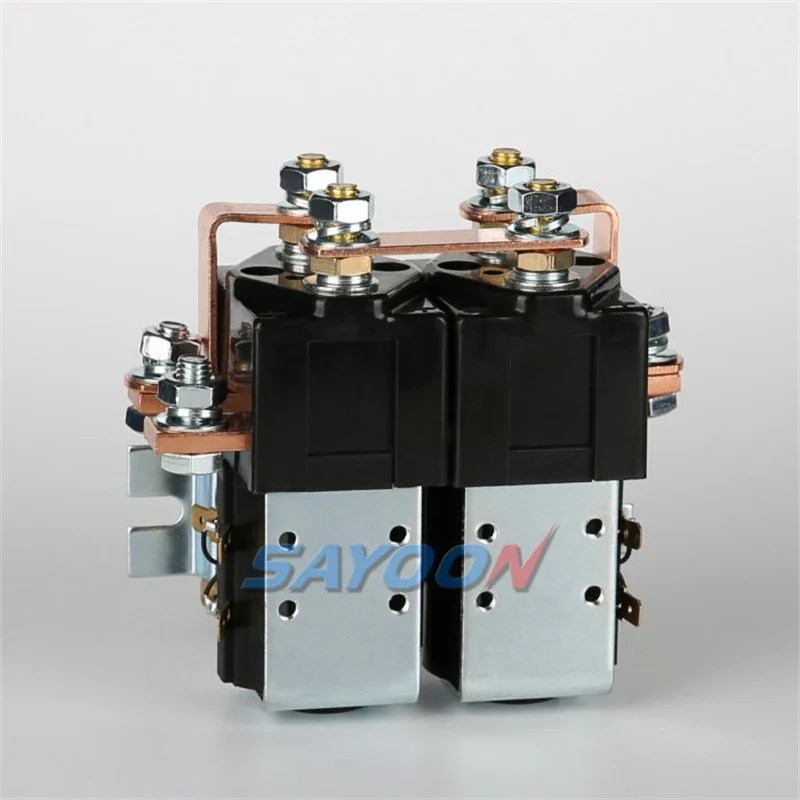
Match coil rated voltage options and terminal type to the control drawing. If the datasheet lists multiple coil voltages, the RFQ must state which one is required. Terminal photos help identification but do not authorize field improvisation.
Part 5. Map AGV and forklift context without inventing vehicle approval
AGV and forklift programs often share 36–80 V class language, yet duty cycles and enclosure constraints differ. Keep vehicle-level approval outside this article. Use the published solution and product pages only as route discussion after the path is documented.
Part 6. Which SAYOON reversing routes fit a documented inquiry?
When pole form and duty are written, discuss CZWH-2T, CZWT, or CZQH-2T reversing products against their datasheets. Selection still requires model-specific verification. Do not substitute a single-pole normally open DC contactor for a documented reversing pole form without a redesign review.
| Documented need | SAYOON route | Verify on datasheet |
|---|---|---|
| 100A-class reversing discussion | CZWH100A-2T | Ratings and coil options |
| 200A-class reversing discussion | CZWT200A / CZWH200A-2T | Form and terminal notes |
| Alternate reversing form | CZQH150A-2T | Contact form match |
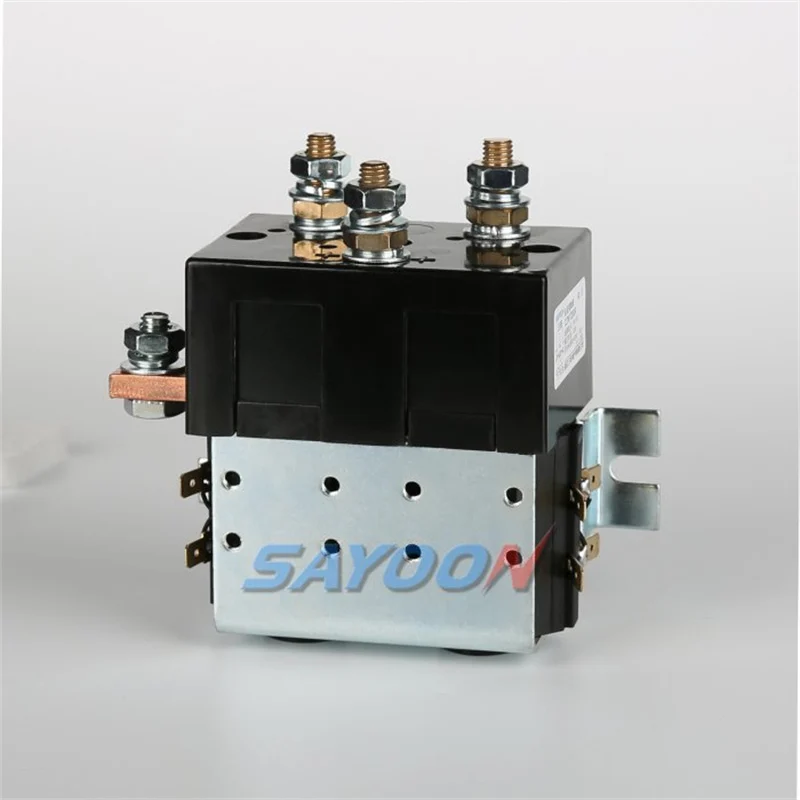
Product routes after inputs are documented:
- CZWH100A-2T DPDT reversing DC contactor — documented reversing path discussion.
- CZWT200A DPDT reversing DC contactor — higher-current reversing route after duty is written.
- CZQH150A-2T DPDT reversing DC contactor — alternate reversing form when datasheet matches.
Continue reversing-path review via the CZW Series DC Contactor, then contact SAYOON with pole-form and interlock notes attached.
Related reading: CZW Series DC Contactor; magnetic holding DC contactor for forklift traction; 48V DC contactor applications in forklifts.
Part 7. Fit Boundary for reversing inquiries
Fit Boundary: AGV/forklift motor reversing paths with documented duty; not a generic AC motor starter substitute and not certification of any vehicle program. Final installation, testing, and acceptance remain with the responsible project team and verified manufacturer data.
FAQ
What is a DC reversing contactor in project terms?
It is a contactor arrangement selected for a documented reversing motor path, with pole form and ratings verified on the datasheet rather than assumed from a catalog title.
Can a single NO DC contactor reverse a forklift motor?
Only if the approved design creates reversing another way. A single NO device does not by itself define a reversing pole form.
What belongs in a reversing contactor RFQ?
Pole form, voltage/current with sources, coil supply, interlock ownership, environment, and required documents.
Do SAYOON CZWH-2T products replace control interlocks?
No. Interlocks belong to the control design; the contactor provides the contact form and ratings stated on its datasheet.
Is an AGV voltage class enough to pick a model?
No. Current, coil supply, mounting, and pole form still need documentation.
Does this article approve a vehicle program?
No. Vehicle approval and testing remain with the responsible program team.