A definite purpose dc contactors search often lands on catalog pages that sound precise, yet the label alone does not prove duty class, utilization category, or model-level DC performance. On an OEM path, treat “definite purpose” as a bounded application story—useful after you have written down how the load makes, carries, and breaks current. This article walks through when that label helps, when it misleads procurement, and which datasheet fields should replace it as the primary filter.
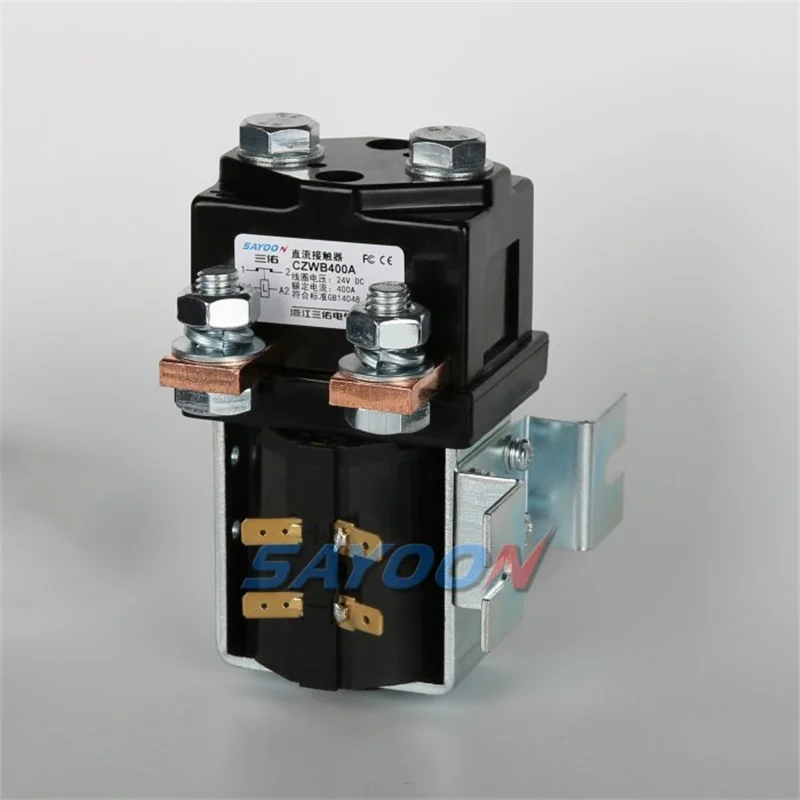
What “Definite Purpose” Signals—and What It Omits on a DC BOM
Short answer: The phrase marks a contactor family positioned for a specific duty, not a free pass to skip utilization-category proof.
In many distribution catalogs, “definite-purpose” grew up around application-specific motor-control lines—often HVAC and refrigeration—where the vendor publishes a narrower duty story than a broad general-purpose contactor table. Those lines are frequently rated around motor full-load amps (FLA) with locked-rotor amps (LRA) / inrush limits, and they are commonly discussed alongside UL Recognized vs Listed certification pathways that affect how an OEM assembly is documented.
None of that removes the OEM’s job on a DC machine. A DC bus, battery disconnect, or traction auxiliary still needs:
- DC-appropriate interruption behavior for the voltage class you are actually switching
- A utilization category that matches make/break severity (resistive vs motor duty with plugging or inching)
- Coil service that matches your control supply without overheating the winding
Important: Forum discussions of definite-purpose contactors often center on UL Recognized components used inside an engineered assembly, compared with UL Listed devices that fit more smoothly into a component-driven panel build. That distinction affects documentation and integration friction; it is not a substitute for reading the selected model’s datasheet. See the DigiKey TechForum comparison.
If your RFQ title stops at a definite-purpose DC contactor line item without duty proof, you have named a marketing lane—not a verified duty class.
Why Duty Class and Utilization Category Outrank the Marketing Label
Short answer: IEC utilization categories describe electrical stress during make and break; the catalog label does not.
Wikipedia’s utilization-category overview groups switchgear by the load and duty cycle. For DC discussions, three DC utilization category rows appear repeatedly in OEM conversations:
| Category | Typical load behavior | OEM question it answers |
|---|---|---|
| DC-1 | Non-inductive or slightly inductive loads such as resistance furnaces and heaters | Is this a steady resistive bus or heater path? |
| DC-3 | Shunt motors: starting, plugging, inching, dynamic braking | Will the contactor see motor make/break beyond a simple on/off? |
| DC-5 | Series motors with more severe breaking conditions | Is breaking stress closer to plug/reverse service? |
Professional buyers use the category language in internal reviews so procurement does not collapse “50 A” from unrelated tables. Plain-language version: the category tells you how violent switching is allowed to be, while the marketing label only hints that someone once sized the part for a named application.
When a competitor page lists “definite purpose” beside a current number, ask which category row supports that number. AC definite-purpose traditions even use locked-rotor multipliers that do not transfer to your DC bus without a DC table row.
DC Load Behavior That Rewrites the Selection Conversation
Short answer: DC paths add arc persistence and coil-heating constraints that a catalog adjective does not resolve.
DC has no natural current zero crossing. That is why DC contactor datasheets emphasize arc control features and why application guides warn against assuming an AC-rated device can switch your DC load. Your OEM path should document:
- Voltage class across the main contacts, including worst-case recovery voltage during interrupt
- Make and break current versus steady-state carry current
- Operating frequency—continuous carry with occasional disconnect is not the same as repeated inching
- Coil supply type and duty—a control voltage that works on paper can overheat a winding sized for a different service
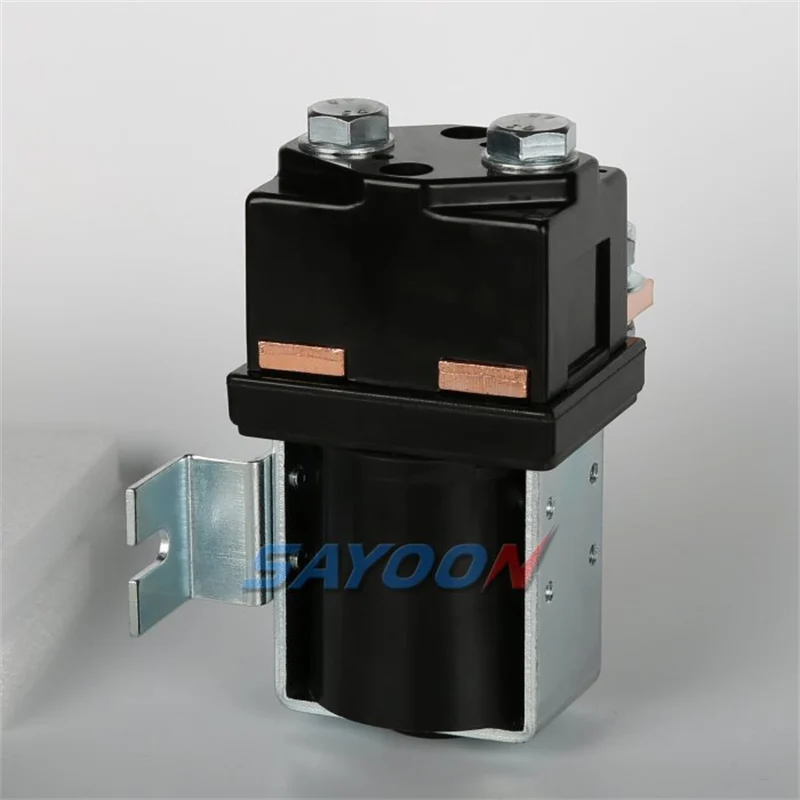
Field threads on replacing contactors stress like-for-like duty: a “definite purpose” replacement is not an invitation to upgrade by ampacity alone when coil impedance, voltage class, or form factor differ. That discipline matters twice on DC projects where a mismatched coil or arc gap shows up as nuisance trips or welded contacts.
When a Definite-Purpose Label Still Fits an OEM DC Path
Short answer: Keep the label when your machine duty is already bounded and a vendor publishes matching DC proof.
The label earns its place after you can narrate a single machine story in one paragraph: what energizes, how long contacts carry, how often they open under load, and what maintenance interval the OEM supports. Refrigeration and traction-adjacent histories used definite-purpose lines because life could be predicted from a narrow duty—similar thinking applies when a DC OEM publishes a repeating cycle (for example, a scheduled disconnect on a known bus voltage).
Use the label as a search shortcut, then immediately pivot to:
- Utilization category fit
- Published make/break rows for your voltage
- Mechanical form factor and contact arrangement (NO, NC, auxiliary needs)
If those proofs exist on the model page, the label saved you time. If not, demote the label and search by duty class instead.
When the Same Label Sends Procurement Down the Wrong Aisle
Short answer: The label misleads when teams substitute ampacity for duty proof or certification context.
Three recurring OEM failure modes show up in public discussions and application papers:
- Amp-only substitution. A shared ampacity number on one family does not equal switchable stress in another when locked-rotor or inrush rules differ.
- AC label on a DC BOM line. HVAC definite-purpose explainers dominate search results; a buyer may attach AC selection habits to a DC schematic.
- Certification shorthand. Treating “definite purpose” as “approved for any panel” skips the assembly-level story Recognized components expect.
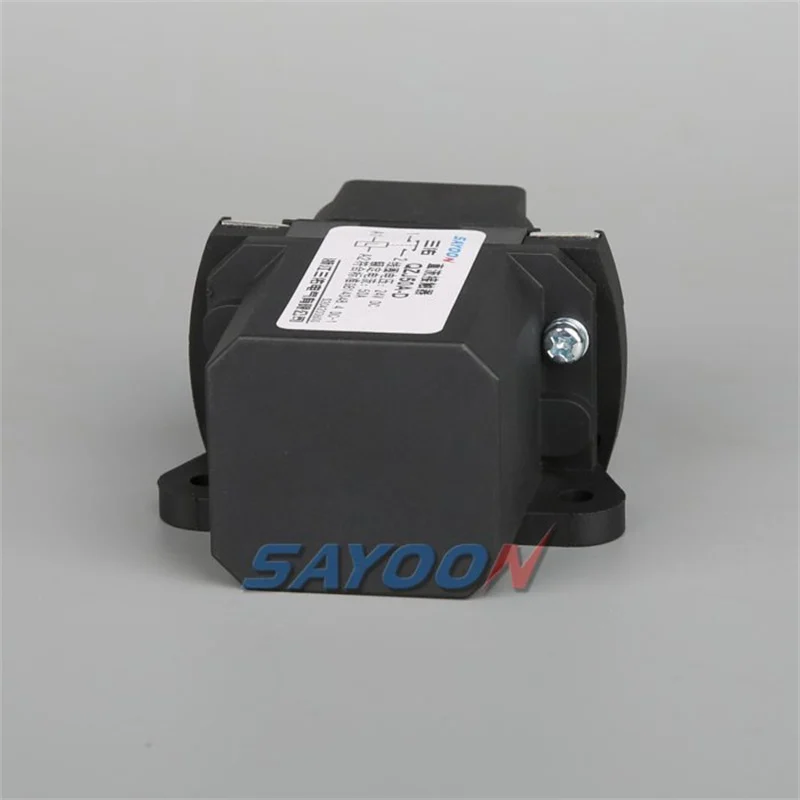
Procurement can help by rejecting RFQs that lack utilization category, coil voltage, expected operations per hour, and the target standard or listing context for the finished machine. Engineering should answer those fields before the label appears in the item description.
Datasheet Fields OEM Teams Should Lock Before BOM Release
Short answer: Replace the label with duty class / duty cycle, FLA / rated load current, LRA / inrush limits, and the other verified fields on the selected model.
| Field | Why it matters on a DC OEM path |
|---|---|
| Contact form (NO/NC/changeover) | Defines de-energized main-path state; use make/break language from the product drawing when reading schematics |
| Rated load current for a stated utilization row | Ties amps to a duty class such as DC-1, not to a slogan |
| Contact voltage limit | Prevents silent over-voltage use |
| Coil rated voltage and duty | Avoids thermal damage from wrong control supply |
| Work specification (continuous vs intermittent) | Matches carry time to thermal reality; documents duty class on the OEM path |
| Published electrical/mechanical life where available | Supports warranty and service-interval decisions |
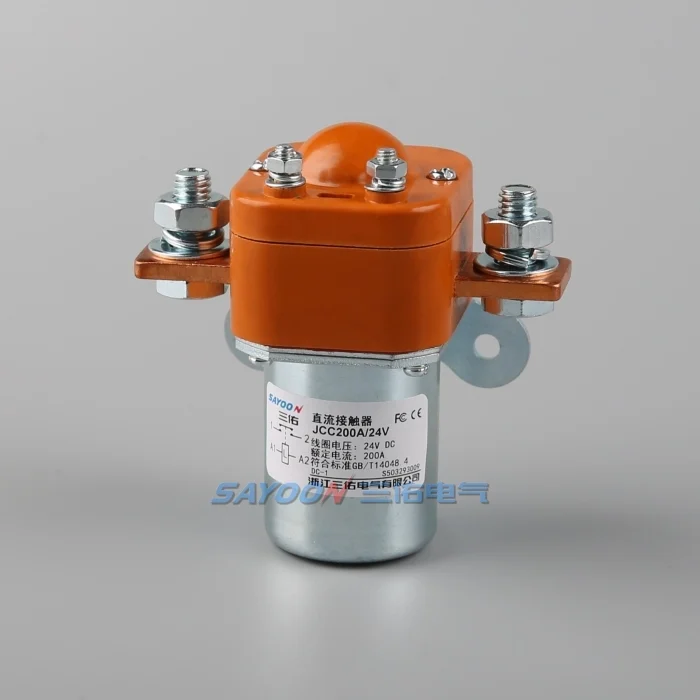
On a live model page, the CZW152A normally open DC contactor illustrates the pattern: it states a 1 NO contact form, publishes a DC-1 rated load current row for a defined voltage condition, and lists continuous or intermittent work specification. That is model-level proof for the SAYOON CZW152A – scoped to CZW152A only – not a universal rule for every CZW variant.
A Model-Level DC Contactor Path After Duty Class Is Defined
Short answer: Navigate from duty proof to a family hub, then to one model page and drawing review.
After duty class is written down:
- Open the SAYOON products pillar to locate the DC family that matches voltage class and form factor.
- Use the CZW series DC contactor hub when your path needs a normally open industrial DC line in the published CZW range.
- Compare the selected model’s installation drawing, load curve, and coil options against your schematic before you freeze the BOM.
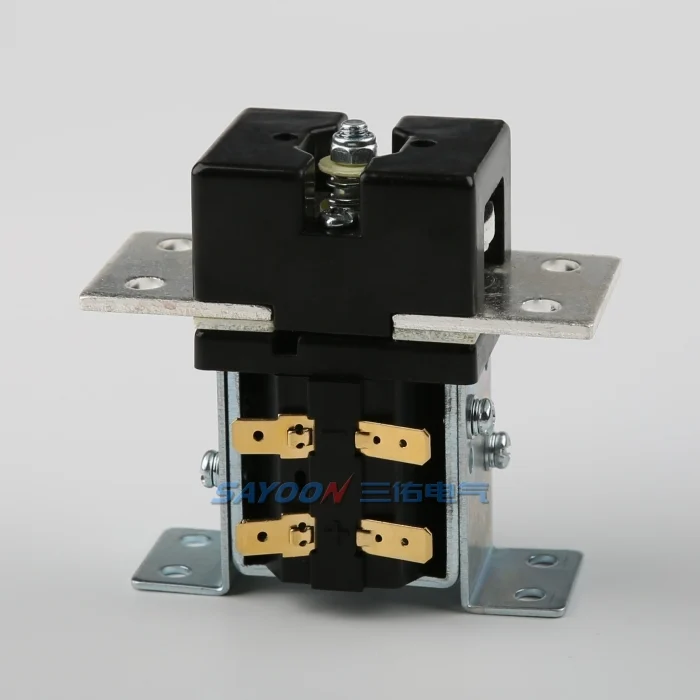
When the schematic calls for a normally open main path and the published DC-1 row matches your documented bus conditions, the CZW152A normally open DC contactor is a concrete next page—not because the words “definite purpose” appeared in a catalog, but because the model fields align with the duty story you already approved. If the path needs a normally closed main contact, a different contact form, or a higher voltage class, stay on the family hub and repeat the same field-by-field review on another model page.
FAQ
What does “definite purpose” mean on a contactor?
It signals a vendor positioned the part for a specific application duty—often with a narrower rating story than a general-purpose line. It is not, by itself, proof that the part matches your DC utilization category or finished-machine certification plan.
Is a definite-purpose label enough for DC selection?
No. You still need DC voltage class, utilization category, coil service, and make/break duty on the exact model. AC HVAC definite-purpose guides are common in search results; they do not replace a DC datasheet row.
What is the difference between DC-1 and DC-3?
DC-1 covers non-inductive or slightly inductive loads such as heaters and resistive buses. DC-3 covers shunt motor duty with starting, plugging, inching, or dynamic braking—higher make/break stress. Pick the category that matches actual switching, not the catalog adjective.
Are definite-purpose contactors UL listed?
Public discussions often describe definite-purpose lines as UL Recognized components used inside an engineered assembly, while many general-purpose IEC contactors are UL Listed for a component-driven panel path. Listing class affects integration documentation; it does not replace your model datasheet review.
Can I substitute another contactor with the same amp rating?
Only after you match utilization category, voltage class, coil supply, contact form, and the vendor’s make/break rows. Field replacement threads treat “definite purpose” as like-for-like discipline, not a generic upgrade path.
What should an OEM send to procurement after defining duty class?
Send model number or family, utilization category, coil voltage, contact form, expected operations per hour, and the datasheet rows you used. Add the finished-machine certification context if Recognized components are in play.
When is “definite-purpose” the wrong primary filter?
When your DC path still has open questions about motor plugging, precharge sequencing, coil heating, or panel certification—and the only shared attribute is a marketing label. Demote the label until those fields are answered on a named model page.
References
- Wikipedia contributors. Utilization categories. Accessed August 22, 2026.
- Dahlen, A. Beyond Current Rating: Choosing Between IEC and Definite-Purpose Contactors. DigiKey TechForum. August 17, 2026.