A DC contactor and a circuit breaker may both appear on a battery or energy-storage path, but a shared location does not make them interchangeable. Start with the job the circuit must perform: a commanded switching action, a protective interruption function, or both. The approved design—not a component name—assigns those functions.
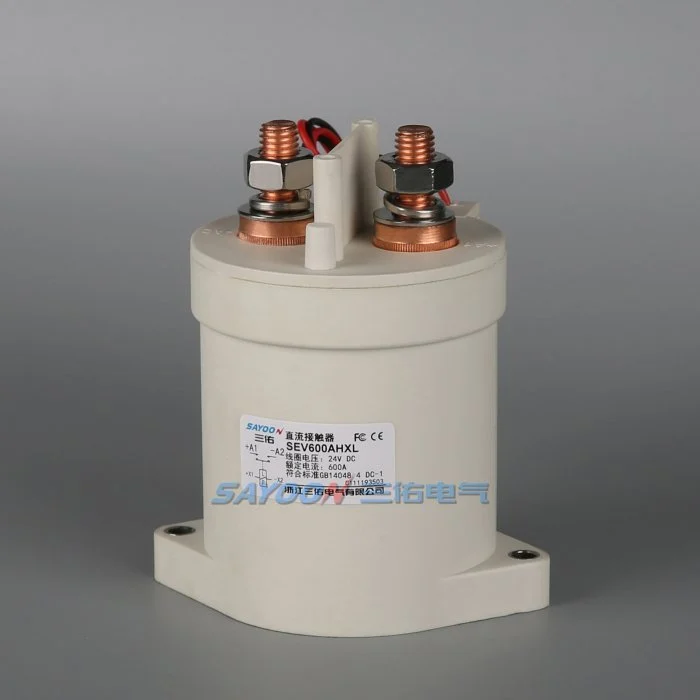
This first-party SEV800AH product photo gives component context only. It does not show a BESS installation or establish a protective function for a particular system.
Compare functions, not product names
| Review question | Controlled switching discussion | Protective-interruption discussion |
|---|---|---|
| What must initiate the action? | A defined command, controller or interlock | A documented abnormal-event requirement |
| What must the review confirm? | Required operating state and control sequence | The project’s protective design and responsibility |
| What must not be assumed? | That every contactor has the same duty | That every breaker arrangement is transferable |
This table is a way to organise the review, not a circuit design. A BESS can have more than one required function in the same path. Do not collapse them into a request that says only “contactor” or “breaker.”
Map the two decisions before selecting a device
- Describe the normal operating action. State what has to open or close, who commands it, and what state is required when the control input is absent.
- Identify the protective decision. Record the abnormal event the approved project design requires the circuit to address and who owns that protection decision.
- Attach the governing evidence. Include the one-line diagram, drawing revision, control sequence and relevant device documentation.
- Keep a replacement request honest. Add the existing device label, but do not treat a partial label as proof that the prior function is unchanged.
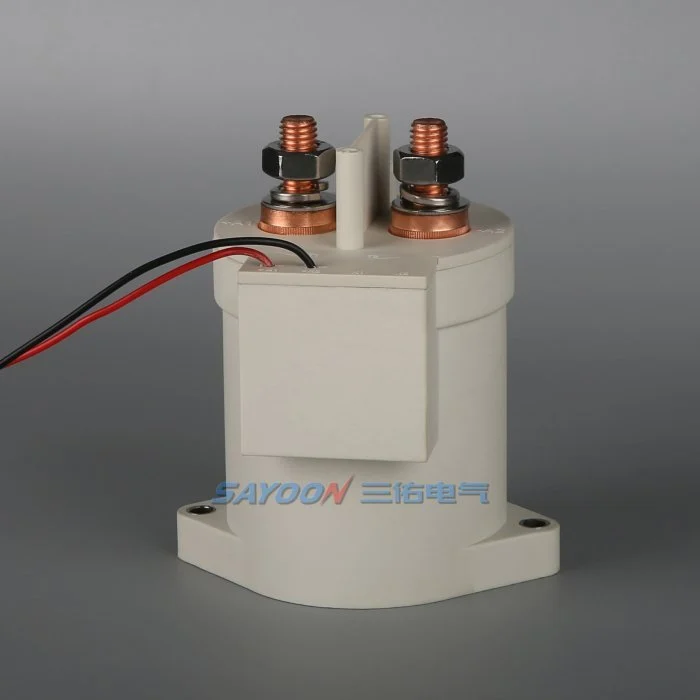
A physical product view can help identify the component under discussion; the drawing and documentation still define its role in the circuit.
The HVDC contactor integration checklist for BESS main paths is a useful next read when the controlled-switching portion of the path needs a more focused review. For broader classification before an enquiry, see types of DC contactors used in OEM and integrator projects.
Use the BESS context without implying product fit
SAYOON’s UPS & Energy Storage solution page provides application context, but it does not prove a complete protective arrangement or the fit of a particular model. Treat the BESS context as one input to the design record alongside the actual circuit, control sequence and project requirements.
Continue with a documented contactor path
After the controlled-switching requirement is clear, the SAYOON SEV Series HV DC Contactor page is a product-document route for a relevant contactor enquiry. It is not a statement that every SEV model replaces a circuit breaker or fits a particular battery, BESS or isolation path. Ask the technical team to compare the documented requirement with the offered product information.
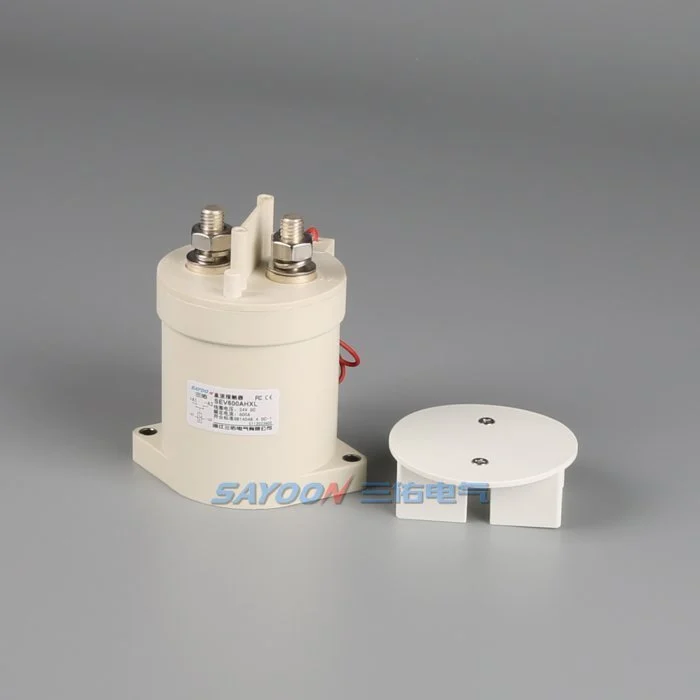
First-party SEV800AH media supports the product-document route only; it does not imply rating, protection coordination or system approval.