Especifique un contactor de CC de 600A a partir de sus filas publicadas, no de su etiqueta de amperaje: tanto el CZW600A como el SZJ600A publican 600 A CC-1 a 48 V con el voltaje de contacto limitado a ≤60 V, por lo que los buses por encima de esa clase deben pasar a familias con diferente clasificación, como el QZJ600A de ≤150 V, y el archivo de ingeniería debe congelar el hardware de los terminales, los vatios de la bobina y las líneas de ruptura de fallas de la tabla exacta de SKU antes de la liberación del PO.
Estas notas son para ingenieros de OEM y constructores de paneles que manejan conmutación de CC de clase de 600 A a través de la revisión del diseño. La clase se encuentra dentro de la Serie CZW de contactores de CC pilar en este sitio, y cada número a continuación es una fila de tabla publicada que puede auditar.
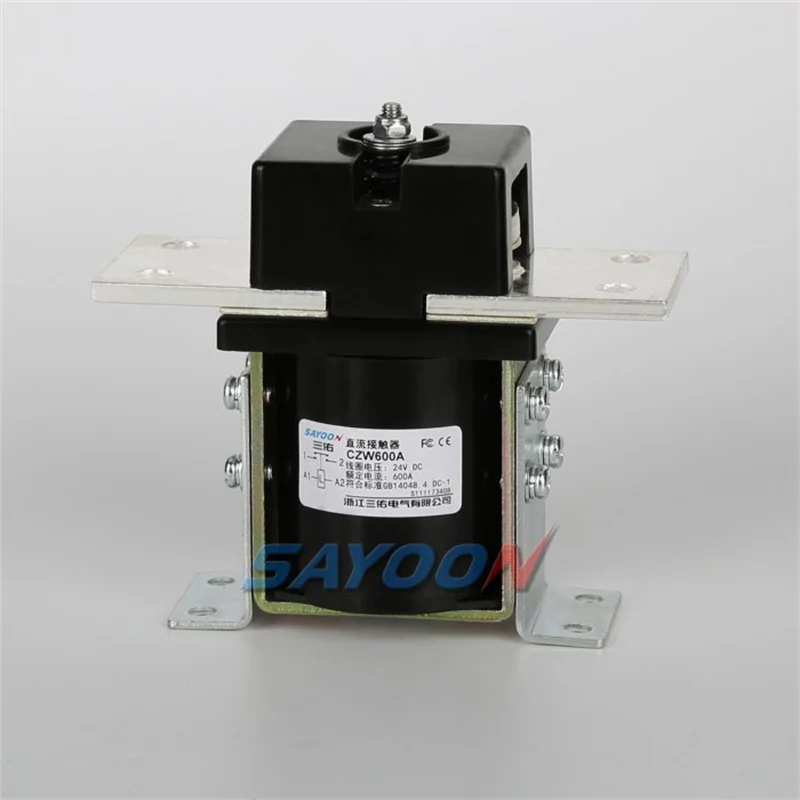
Parte 1. ¿Dónde encaja un contactor de CC de 600 A en cargas de CC industriales pesadas?
A Contactor de 600A CC aparece donde la corriente continua continua supera las clases de 400–500 A pero aún no justifica el hardware de kiloamperios. Los hogares típicos son galvanoplastia salidas rectificadas, derivaciones de motores de CC de alta potencia, bancos de pruebas de baterías y distribución de CC a nivel de contenedor.
La pregunta de la clase es térmica y mecánica a la vez. Seiscientos amperios continuos castigan cada junta suelta y cada barra de conexión subdimensionada, por lo que la elección del dispositivo y el plan de instalación deben diseñarse juntos en lugar de secuencialmente.
| Uso industrial pesado | Por qué aparece la clase 600 | Primera fila para auditar |
|---|---|---|
| Salida del rectificador de galvanoplastia | Procesar ejecuciones continuamente | 600 A DC-1 línea de carga |
| Rama de motor pesada | Motor más margen supera 500 A | Perfil de trabajo vs. línea continua |
| cuadro de distribución de CC | Agregación de alimentadores | Hardware de terminal fila |
| Prueba de batería / formación | Bloques largos de carga-descarga | Vatios de espiral y filas ambientales |
Las clases vecinas ya están cubiertas en este sitio; ver Notas de ingeniería del contactor de 500A DC y las Consideraciones para un contactor de CC de 1000 amperios cuando la carga se asienta en esos bordes.
Parte 2. ¿Qué líneas de voltaje y corriente publicadas delimitan la clase de 600 A?
El número de amperios nunca viaja solo. Ambos SKU de LV 600 A limitan el voltaje de contacto a ≤60 V, que es la única línea que más se pierde en esta clase.
| Campo publicado | CZW600A | SZJ600A | QZJ600A |
|---|---|---|---|
| Voltaje de contacto (CC) | ≤60 V | ≤60 V | ≤150 V |
| Load current (DC-1 at 48 V) | 600 A | 600 A | 600 A |
| Línea de alimentación de la bobina | 20–45 W | Start: 120–170, Keep: 6–13 | Start: 35–65, Keep: 4–10 |
| Cargar terminal | 2-M8 screws | M12 screw | M12 screw |
| Línea de ruptura de falla | 1800 A / 5 ms at 48 V DC | 2000 A / 5 ms a 48 V CC | 2000 A / 5 ms a 48 V CC |
Reading rule one: a 72 V or 80 V bus disqualifies the ≤60 V SKUs regardless of how comfortable the amp line looks — the ≤150 V QZJ600A class is the published escalation path. Reading rule two: the DC-1 line is a 48 V circuit figure, so document your own bus and duty context on the RFQ.
Parte 3. ¿Cómo deben los ingenieros planificar terminales y hardware de barra colectora a 600 A?
Terminal hardware is a published field, not a shop-floor improvisation. The CZW600A page lists 2-M8 load terminals with tightening torque ≤9.0 N.m appropriate, while SZJ600A lists a single M12 stud at ≤30.0 N.m appropriate — two different busbar drilling and torque-tool plans.
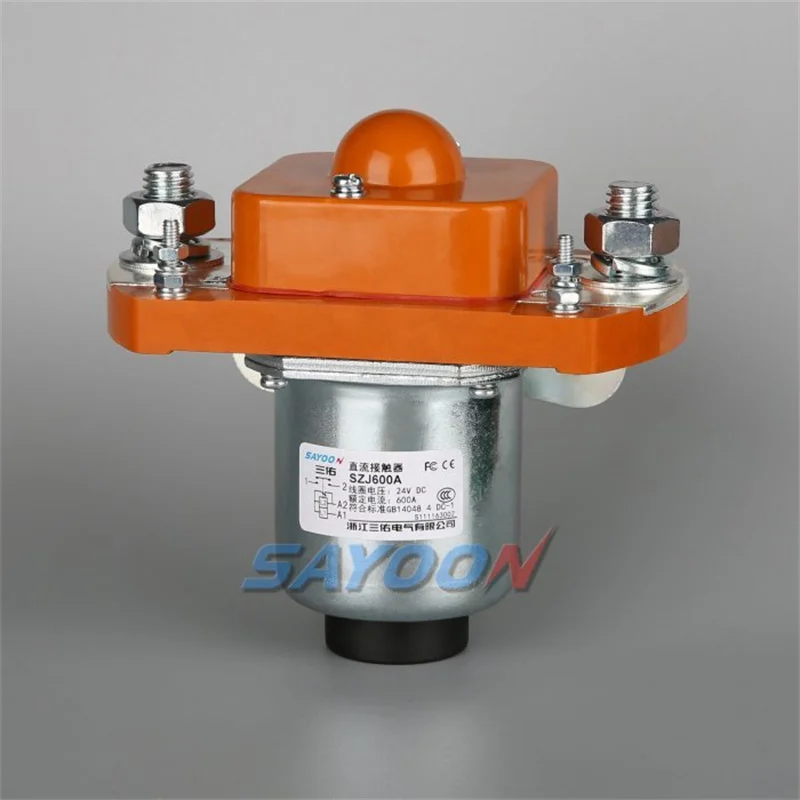
Hardware planning checklist
- Match busbar drilling to the published terminal pattern before purchasing copper.
- Put the published torque values on the work instruction, with the coil-lead torque listed separately.
- Size busbar cross-section and contact area for continuous 600 A, then re-check panel airflow.
- Log ambient at the mounting point against the published -25 to +70 C band.
- Confirm mounting bracket code (2L two vertical default on CZW600A) matches the panel layout.
Forum threads about terminal overheating at this class almost always trace to skipped torque audits or busbar contact area — mechanical discipline, not device defects.
Parte 4. ¿Qué planificación de potencia de bobina demanda la clase de 600 A?
Coil architecture differs sharply between the two ≤60 V SKUs. CZW600A publishes a flat 20–45 W coil band, while SZJ600A publishes a two-stage line — Start: 120–170 W, Keep: 6–13 W — meaning a strong pull-in stage followed by economized holding.
Panel consequences follow directly. A flat-band coil sizes the control supply once; a Start/Keep coil needs the supply to survive the start surge while the steady-state budget enjoys the low keep watts, and multi-contactor panels must stagger close commands accordingly.
| Coil planning question | CZW600A answer | SZJ600A answer |
|---|---|---|
| Control supply sizing | 20–45 W continuous band | Survive 120–170 W start surge |
| Presupuesto en estado estacionario | Same band while closed | 6–13 W keep line |
| Multi-device close strategy | Parallel close acceptable within supply | Stagger closes to avoid stacked surges |
| Coil voltage options | Published list 6–220 V etc. | Published list 6–150 V etc. |
Parte 5. ¿Qué filas de fallas y de vida pertenecen al archivo de ingeniería?
Fault coordination at 600 A starts from the published rupture lines: 1800 A / 5 ms at 48 V DC for CZW600A and 2000 A / 5 ms for SZJ600A. Those are survivable-event windows for coordination studies, not protection ratings, so breakers and fuses still own fault clearing.
Life rows complete the file. Both SKUs publish 10,000 electrical y 300.000 mecánicos operations (SZJ600A lists 20,000 electrical), so high-cycle duties need a cycle-count estimate against those lines during design review, not after failures.
| Engineering file row | Why it must be frozen | Source line |
|---|---|---|
| Fault rupture window | Coordination with upstream protection | 1800–2000 A / 5 ms rows |
| Vida eléctrica | Cycle budget vs process duty | 10,000–20,000 operations rows |
| Vida útil mecánica | Long-horizon maintenance planning | 300,000 operations rows |
| Insulation / strength | Dielectric review context | Published insulation rows |
Parte 6. ¿Qué modelos de SAYOON admiten una RFQ de 600 A?
Recomendación de producto: anchor heavy industrial 600 A RFQs on the CZW600A normally open DC contactor when the bus fits the published ≤60 V class — its 2-M8 hardware, 20–45 W coil band, and 1800 A / 5 ms rupture row give design review a complete published picture.
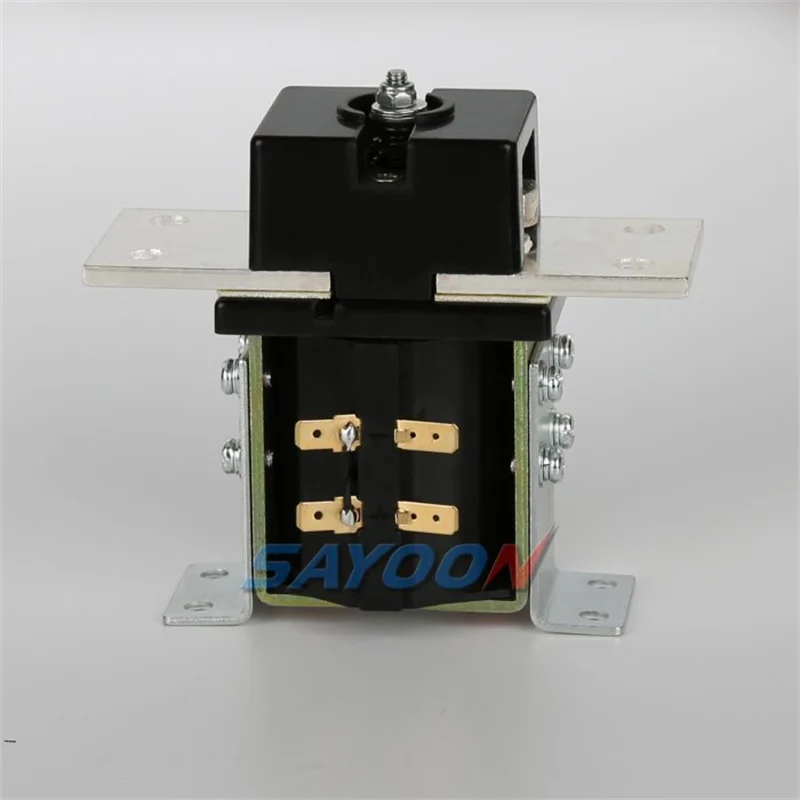
¿Por qué no otras líneas sin revisión? el SZJ600A normally open DC contactor fits panels standardized on M12 hardware that value its 6–13 W keep economy; QZJ600A is the published pointer when the bus exceeds 60 V but stays within its ≤150 V class; loads beyond 600 A continuous belong in the 800 A and 1000 A classes.
Ajustar Límite none of these SKUs is a protection device, none is valid above its published contact voltage class, and duty profiles that exceed published operating or life rows need an engineering review before PO. For methodical field-by-field integration steps, reuse the 400A DC contactor integration checklist pattern one class down.
To move to quotation, send your 600 A duty profile with bus voltage, duty blocks, terminal plan, and coil budget.
Parte 7. ¿Qué errores de ingeniería se manifiestan en la clase 600 A?
- Reading the 600 A label and missing the ≤60 V contact voltage cap.
- Drilling busbar for one M12 stud when the chosen SKU publishes 2-M8 terminals.
- Sizing the control supply for keep watts and browning out on the 120–170 W start surge.
- Treating rupture lines as protection ratings instead of coordination windows.
- Skipping cycle-count estimates against published electrical life on high-cycle processes.
- Ignoring ambient rows inside hot rectifier rooms.
- Releasing the PO without torque values on the installation work instruction.
Referencias
Preguntas frecuentes
What is a 600A DC contactor used for?
Typical duties are electroplating rectifier outputs, heavy DC motor branches, battery test benches, and DC distribution feeders where continuous current lands around the 600 A class.
What voltage can a 600A DC contactor switch?
Read the SKU line, not the amp label: CZW600A and SZJ600A publish contact voltage ≤60 V, while QZJ600A publishes ≤150 V. Buses above the published class disqualify the SKU.
Why does CZW600A use two M8 terminals?
Its published load terminal row lists 2-M8 screws, which spreads the 600 A joint across two studs. The busbar drilling and torque plan must follow that published pattern.
What coil power should panels budget for 600 A class parts?
CZW600A publishes a 20–45 W band, while SZJ600A publishes Start: 120–170 W with Keep: 6–13 W. The control supply must survive start surges and the steady-state budget uses the keep line.
What fault current lines do 600 A SKUs publish?
CZW600A lists 1800 A / 5 ms at 48 V DC and SZJ600A lists 2000 A / 5 ms. Use them in coordination studies; fault clearing itself belongs to breakers and fuses.
Can a 600A DC contactor run a 72 V bus?
Not the ≤60 V SKUs. A 72 V bus points to the QZJ600A published ≤150 V class or a series review with engineering before any PO.
Where should a 600 A RFQ start on this site?
Start at the CZW series pillar, shortlist by published voltage class and terminal hardware, then send the duty profile through the contact page for confirmation.