L'examen d'un contacteur 1000 V CC commence par la classe de tension du système documentée, les notes d'isolation et de distance d'isolement du projet, l'alimentation de la bobine, le courant permanent et les tensions nominales de la fiche technique — sans inventer de consignes ni traiter l'étiquette d'ampérage d'un catalogue comme une preuve de classe de tension. Utilisez-le pour verrouiller les données probantes sur la classe de tension avant de comparer les devis de contacteurs scellés en résine époxy HV. C'est une liste de contrôle pour les équipes OEM et de tableaux de commande — ce n'est ni un dimensionnement ni une approbation pour 1000v-dc-contactor-voltage-class-oem-review.
Partie 1. Traitez 1000V comme une question de document de classe de tension
L'étiquette d'un contacteur CC de 1000 V n'est utile que lorsque le projet précise la classe de tension du système, les exigences en matière d'isolation et la famille de normes à laquelle se réfère la conception. Les calibres en ampères ne suffisent pas à prouver la classe de tension. Commencez par la note de conception électrique, et non par la photo d'un produit.
Des équipes à la recherche de contacteur CC 1000V généralement besoin d'une liste de contrôle de projet, pas d'un slogan de catalogue.
Les comparaisons HT s'effondrent lorsqu'un devis utilise un langage d'époxy scellé et qu'un autre utilise un langage de distribution basse tension sans rappeler la classe.
Partie 2. Recueillir les intrants des équipementiers qui déterminent l'admissibilité de la famille de VÉ
Notez la tension du système, le courant continu, l'alimentation de la bobine, la température ambiante, le montage et tout rôle de précharge ou de circuit principal. Ces paramètres déterminent si un circuit haute tension scellé par de l'époxy, tel que le SEV ou le HEV, peut même être envisagé par rapport à un contacteur de distribution basse tension.
| Entrée OEM | Source nécessaire | Envoyer avec devis |
|---|---|---|
| Classe de tension du système | Conception électrique | Déclaration de classe |
| Courant continu | Dessin ou calcul | Ampère avec référence |
| Rôle de chemin | Principal / précharge / autre | Note narrative |
| Alimentation de la bobine | Conception de commande | Contactez-nous |
| Environnement | Mise en page | Ambiance et montage |
Partie 3. Séparer le marketing du catalogue des champs de tension de la fiche technique
Comparez uniquement les champs de tension et d'isolation de la fiche technique qui correspondent au langage de classe du projet. Si deux devis utilisent des formulations de classe de tension différentes, normalisez les colonnes de l'appel d'offres avant de classer les prix. Un langage de classe non spécifié est un point en suspens, et non une victoire de négociation.
Important : N'acceptez pas une cotation exprimée uniquement en ampères comme preuve de la classe 1000V sans que les champs de tension de la fiche technique ne correspondent aux spécifications du projet.
Partie 4. Vérifier les interfaces de bobine et de commande sur les corps HV
Les contacteurs scellés à l'époxy haute tension nécessitent toujours une tension de bobine (Us) correcte et des notes de connecteur. Les erreurs de commande ressemblent à des dysfonctionnements de produits. Conservez l'examen de la bobine sur la fiche technique tandis que la classe de tension reste ancrée dans les documents du circuit de puissance.
Partie 5. Relier l'examen de 1000V aux directives existantes de classe 600V sans les dupliquer
Les notes de la classe 600V restent pertinentes en tant que méthode de documentation : identifier la source de la classe, lister les champs de preuves et refuser les consignes inventées. Une enquête à 1000V élève simplement le seuil de la classe et pointe généralement vers des familles scellées à haute tension plutôt que vers des organes de distribution CZW bas basse tension.
Partie 6. Quelles routes SAYOON HV correspondent à une demande documentée de classe 1000V ?
Une fois les entrées verrouillées, discutez des chemins scellés à l'époxy SEV et HEV par rapport aux fiches techniques des modèles. Ne traitez pas un contacteur de distribution CZW basse tension comme un substitut de classe 1000V sans preuve de reconception.
| Besoin d'une classe documentée | Itinéraire HT SAYOON | Note de consultation de prix |
|---|---|---|
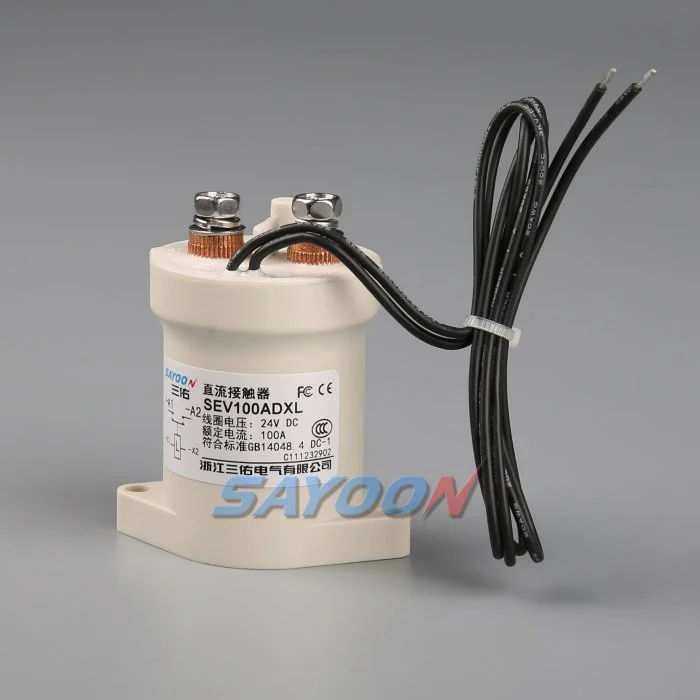
| Discussion scellée HT | SEV100AD | Confirmer les champs de tension de la fiche technique |
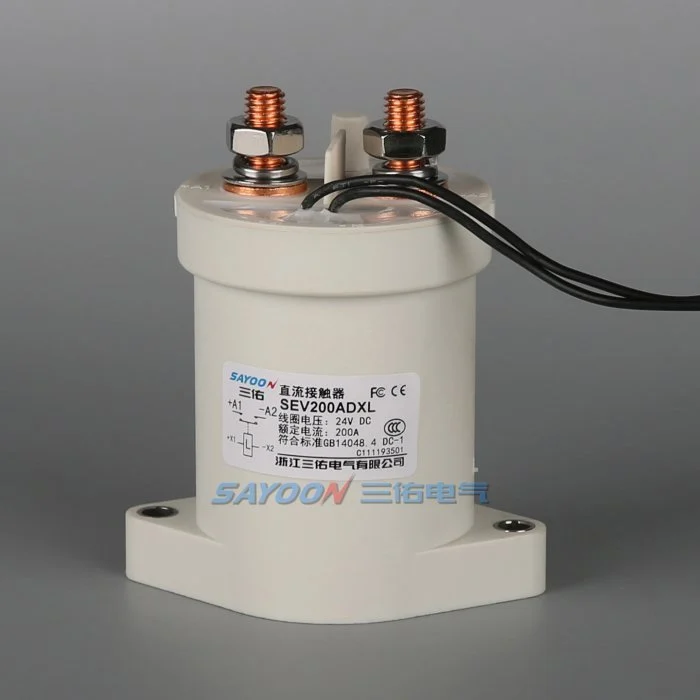
| Discussion sur la HT à intensité plus élevée | SEV200FD | Colonnes de la même classe |
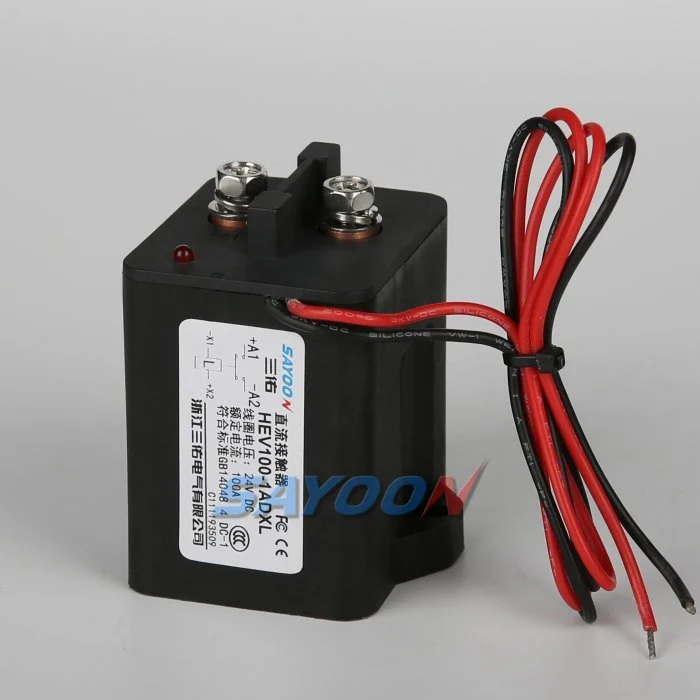
| Famille HV alternative | HEV100 | Correspondance de classe de fiche technique |
Les routes des produits sont acheminées après la documentation des entrées :
- Contacteur CC étanche en époxy haute tension SEV100AD — discussion de classe HV documentée.
- Contacteur CC scellé à l'époxy haute tension SEV200FD — trajet MT à courant plus élevé après la rédaction du service.
- Contacteur CC scellé en résine époxy haute tension HEV100 — autre famille HV lorsque la fiche technique correspond.
Apportez la feuille de classe verrouillée au Contacteur DC Haute Tension Série SEV discussion, ou contacter SAYOON pour l'alignement des fiches techniques SEV/HEV.
Lectures complémentaires : Contacteur DC Haute Tension Série SEV; Notes sur la classe de tension des contacteurs 600 V CC; Guide d'achat des contacteurs CC haute tension de la série SEV.
Partie 7. Avis sur la limite d'ajustement pour la classe 1000V
Limite d'application : examen de la documentation de classe de tension OEM pour les contacteurs CC haute tension ; pas de certification de coordination de l'isolement ni d'homologation de véhicule. La coordination de l'isolement et l'homologation du véhicule ou de l'installation restent en dehors de cet article.
FAQ
Sur quoi porte l'évaluation d'un contacteur 1000V CC ?
Classe de tension du système documentée, champs de tension de la fiche technique, alimentation de la bobine, courant et rôle du chemin - et non le marketing des ampères seul.
Un article de 600 V est-il suffisant pour une demande de 1000 V ?
La méthode de documentation est similaire, mais le seuil de classe et probablement la famille de produits diffèrent ; réutilisez la méthode, pas l'ancienne instruction de classe.
Que doit-on inclure dans un RFQ pour une classe de 1000V ?
Énoncé de classe avec source, courant, rôle du chemin, bobine Us, environnement et documents requis.
Un corps de vanne CZW basse tension peut-il être coté pour la classe 1000V ?
Pas sans preuve de reconception montrant que la fiche technique prend en charge cette classe.
Les normes SEV et HEV remplacent-elles les études de coordination en matière d'isolation ?
Non. Ce sont des parcours de produits destinés à la discussion après l'existence des contributions du cours de projet.
Cette page sert-elle à certifier les équipements HT ?
Non. La certification et l'homologation des usines ou des véhicules restent en dehors de cette liste de contrôle.