A 1000V DC contactor review starts with documented system voltage class, insulation and clearance notes from the project, coil supply, continuous current, and datasheet voltage ratings—without inventing setpoints or treating a catalog ampere label as voltage-class proof. Use it to lock voltage-class evidence before comparing HV epoxy sealed contactor quotations. It is a checklist for OEM and panel teams — not sizing or approval for 1000v-dc-contactor-voltage-class-oem-review.
Part 1. Treat 1000V as a voltage-class document question
A 1000V DC contactor label is only useful when the project states system voltage class, insulation expectations, and which standard family the design references. Ampere ratings alone do not prove voltage class. Start with the electrical design note, not a product photo.
Teams searching for 1000v dc contactor usually need a project checklist, not a catalog slogan.
HV comparisons collapse when one quote uses sealed epoxy language and another uses low-voltage distribution language without restating class.
Part 2. Collect OEM inputs that decide HV family eligibility
Write system voltage, continuous current, coil supply, ambient, mounting, and any precharge or main-path role. Those inputs decide whether an epoxy sealed HV route such as SEV or HEV is even eligible for discussion versus a low-voltage distribution contactor.
| OEM input | Source needed | Send with quote |
|---|---|---|
| System voltage class | Electrical design | Class statement |
| Continuous current | Drawing or calculation | Ampere with reference |
| Path role | Main / precharge / other | Narrative note |
| Coil supply | Control design | Coil Us |
| Environment | Layout | Ambient and mounting |
Part 3. Separate catalog marketing from datasheet voltage fields
Compare only datasheet voltage and insulation fields that match the project class language. If two quotations use different voltage-class wording, normalize the RFQ columns before ranking price. Unstated class language is an open item, not a negotiation win.
Important: Do not accept an ampere-only quotation as proof of 1000V class without datasheet voltage fields matched to the project statement. (Source: project electrical design / manufacturer HV datasheet.)
Part 4. Review coil and control interfaces on HV bodies
HV epoxy sealed contactors still need correct coil Us and connector notes. Control mistakes look like product faults. Keep coil review on the datasheet while voltage class stays anchored to the power-path documents.
Part 5. Relate 1000V review to existing 600V class guidance without duplicating it
600V class notes remain relevant as a documentation method: source the class, list evidence fields, and refuse invented setpoints. A 1000V inquiry simply raises the class threshold and usually points to HV sealed families rather than low-voltage CZW distribution bodies.
Part 6. Which SAYOON HV routes fit a documented 1000V-class inquiry?
After inputs are locked, discuss SEV and HEV epoxy sealed routes against model datasheets. Do not treat a low-voltage CZW distribution contactor as a 1000V class substitute without redesign evidence.
| Documented class need | SAYOON HV route | RFQ note |
|---|---|---|
| HV sealed discussion | SEV100AD | Confirm datasheet voltage fields |
| Higher-current HV discussion | SEV200FD | Same class columns |
| Alternate HV family | HEV100 | Datasheet class match |
Product routes after inputs are documented:
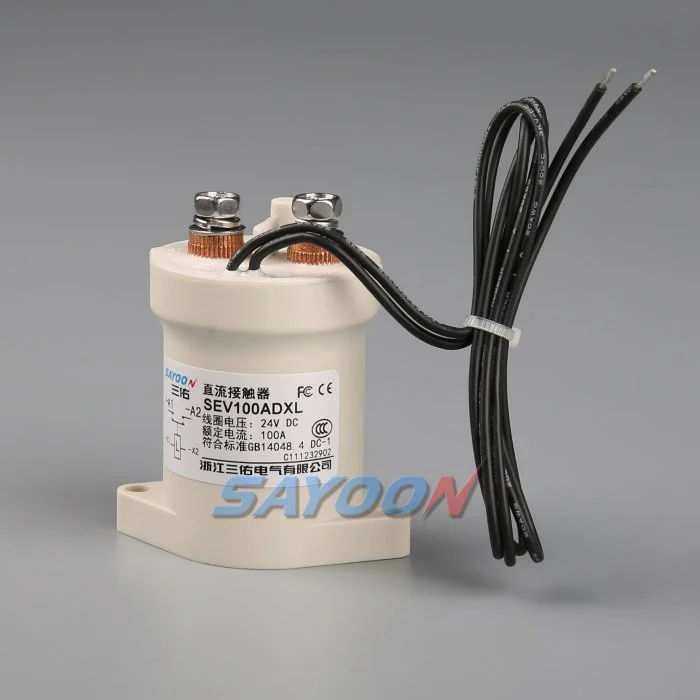
- SEV100AD HV epoxy sealed DC contactor — documented HV class discussion.
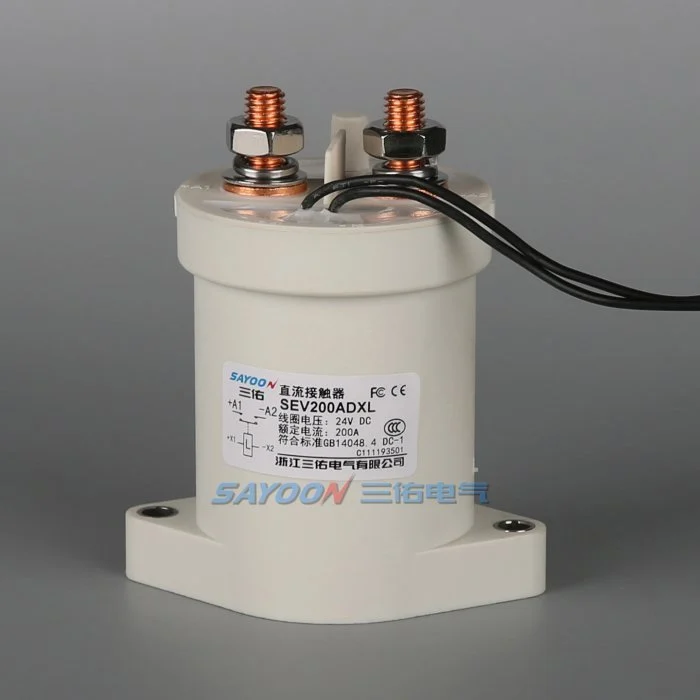
- SEV200FD HV epoxy sealed DC contactor — higher-current HV route after duty is written.
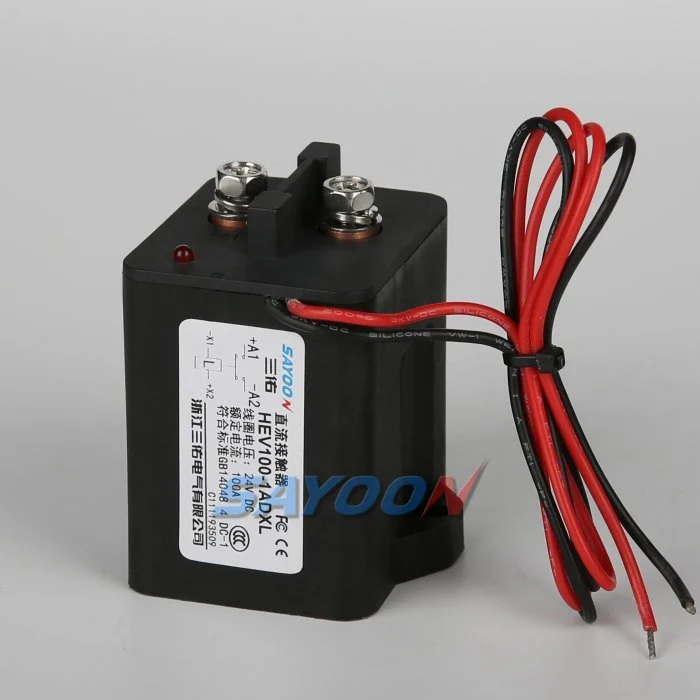
- HEV100 HV epoxy sealed DC contactor — alternate HV family when datasheet fits.
Bring the locked class sheet to the SEV Series HV DC Contactor discussion, or contact SAYOON for SEV/HEV datasheet alignment.
Related reading: SEV Series HV DC Contactor; 600V DC contactor voltage class notes; SEV Series HV DC contactor buyers guide.
Part 7. Fit Boundary for 1000V class reviews
Fit Boundary: OEM voltage-class documentation review for HV DC contactors; not insulation coordination certification or vehicle approval. Insulation coordination and vehicle or plant approval remain outside this article.
FAQ
What does a 1000V DC contactor review focus on?
Documented system voltage class, datasheet voltage fields, coil supply, current, and path role—not ampere marketing alone.
Is a 600V article enough for a 1000V inquiry?
The documentation method is similar, but the class threshold and likely product family differ; reuse the method, not the old class statement.
What belongs in a 1000V-class RFQ?
Class statement with source, current, path role, coil Us, environment, and required documents.
Can a low-voltage CZW body be quoted for 1000V class?
Not without redesign evidence showing the datasheet supports that class.
Do SEV and HEV replace insulation coordination studies?
No. They are product routes for discussion after project class inputs exist.
Does this page certify HV equipment?
No. Certification and plant or vehicle approval stay outside this checklist.