A 2 pole 50 amp contactor is usually searched as a definite-purpose AC contactor for HVAC, heating, refrigeration or other equipment that switches two conductors. The phrase is not a complete specification. A valid replacement must also match coil voltage and frequency, load voltage, motor or resistive utilization rating, locked-rotor requirements, terminal capacity, mounting dimensions, enclosure clearance and the equipment manufacturer’s approved circuit. Sayoon’s products are DC contactors and are not direct alternatives for a two-pole 50 A AC HVAC contactor.
Application boundary: “50 amp” and “2 pole” identify only part of the requirement. Use the exact equipment diagram and contactor data sheet. Electrical servicing and testing must be performed by qualified personnel under the approved energy-control procedure.
What the keyword normally describes
Current Google results are dominated by two-pole definite-purpose contactors for AC equipment. Listings vary by coil voltage—commonly 24, 120 or 208/240 VAC—and by load-voltage and motor ratings. Some titles emphasize a 50 A resistive rating; others include horsepower or locked-rotor data. These devices can share a similar black open-frame body while being electrically different.
A purchasing request that says only “two-pole 50 amp contactor” can therefore produce the wrong coil or an inadequate motor rating. Start with the original full part number and equipment model, then verify every field below.
| Selection field | Why “2 pole 50 amp” is insufficient | Evidence required |
|---|---|---|
| Bobine | Many coil voltages use the same frame | Coil label, control schematic, voltage and frequency |
| Load | 50 A may be tied to one utilization category | Load voltage, FLA, LRA, horsepower or resistive duty |
| Les Pôles | Terminal count can be misread | Two controlled power paths on the approved diagram |
| Terminaux | Wire range and lug style vary | Conductor size, terminal type and torque data |
| Fit | Similar frames can differ in height and hole centers | Drawing, mounting pattern and cover clearance |
Separate coil voltage from contact voltage
The coil receives a control signal and creates the magnetic force that closes the main contacts. The main contacts switch the load circuit. The coil voltage therefore does not have to equal the load voltage. A 24 VAC coil can control a higher-voltage AC circuit when the complete contactor is rated for that service.
Do not infer the coil from the condenser supply. Read the original marking and diagram. The wrong coil may fail to pull in, chatter, overheat or damage the control transformer. Also confirm 50/60 Hz requirements where the data sheet distinguishes frequency.
Understand the 50 A rating
A nominal ampere value needs a load category and voltage. Compressor and motor circuits impose high starting current, so the replacement must meet the required full-load and locked-rotor ratings. Resistive heating loads create a different duty. Use the equipment nameplate and manufacturer replacement table rather than assuming that a 50 A resistive listing covers every 50 A motor application.
Record normal running current, starting behavior, cycling frequency and compartment temperature. If the old contactor welded or overheated, determine whether the load or operating sequence exceeded its intended duty.
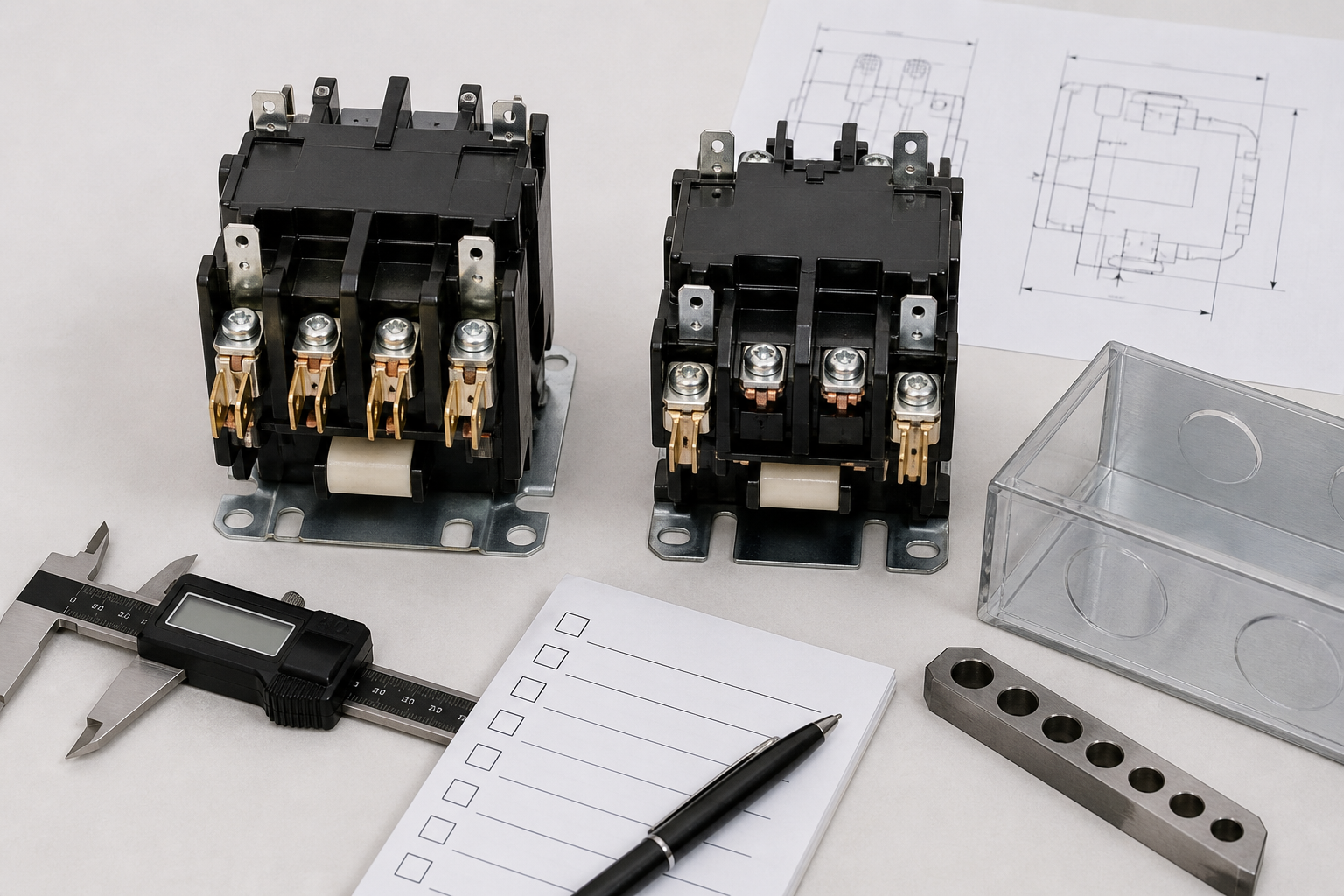
Verify that both poles match the circuit
A two-pole contactor opens and closes two main paths. That topology must match the original equipment design. Do not replace a one-pole shunted contactor with a two-pole device, or the reverse, without explicit approval. Even if the equipment appears to operate, the changed circuit can affect diagnostics, isolation expectations and listing.
Trace terminals using the diagram, not continuity tests on energized equipment. The contactor being open does not make the cabinet safe; line-side terminals can remain energized.
Mechanical and conductor compatibility
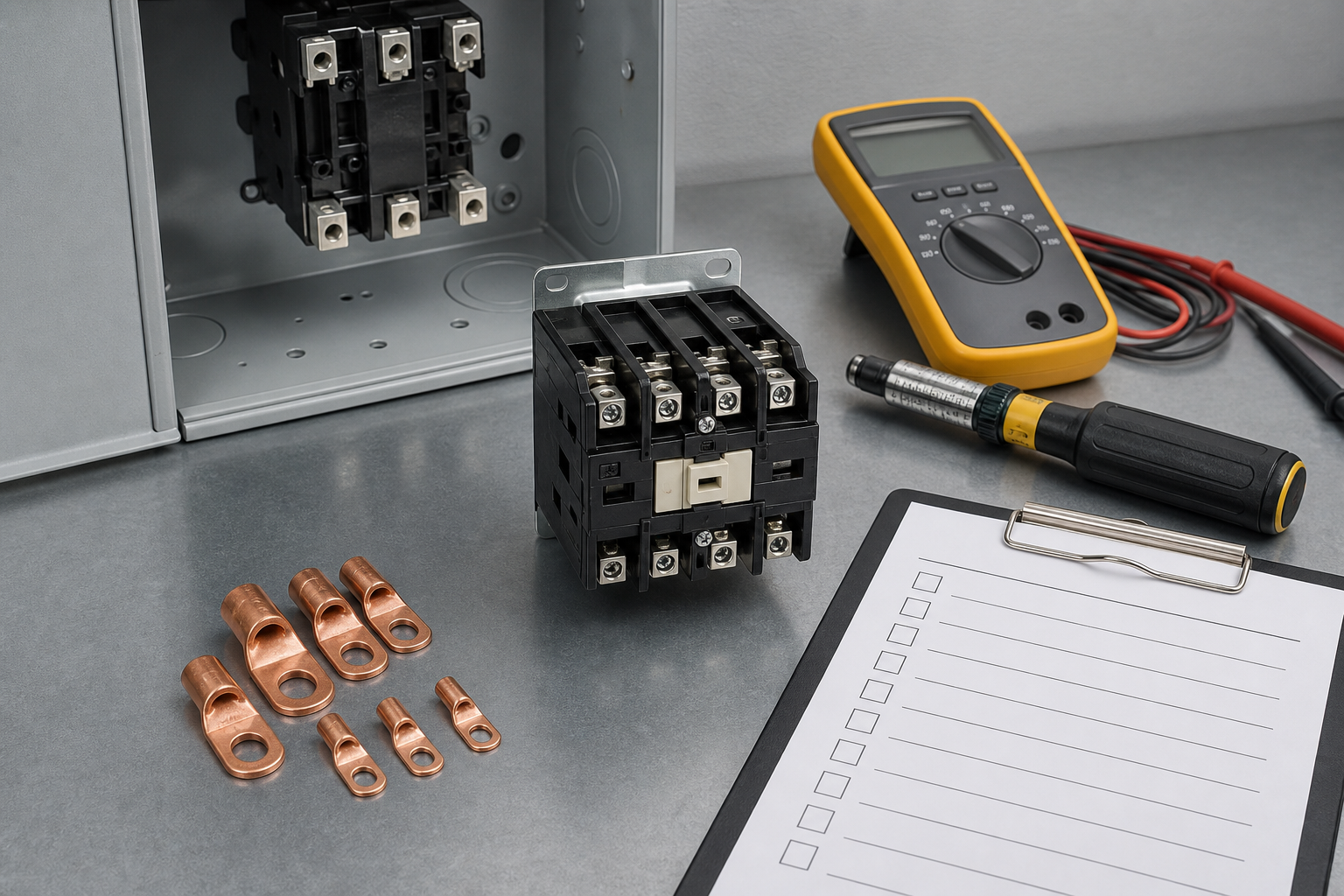
Measure mounting-hole centers, body width, height, terminal position and distance to the cover or nearby grounded metal. Confirm that conductors reach naturally and that bend radius is acceptable. A larger “heavy duty” replacement can create unsafe clearance or place stress on terminals.
Match conductor range and terminal hardware. Do not trim strands to fit, stack unapproved lugs or transfer burned hardware. Use the manufacturer’s torque and preparation instructions. Heat damage at one terminal often indicates a connection problem that must be corrected along with the contactor.
Diagnose the original failure
A contactor that will not close may have a failed coil or may be missing the control command. Chatter can result from low control voltage, loose connections, contamination or a damaged magnetic assembly. Welded contacts can indicate excessive starting duty, short cycling, low voltage or a load fault. A discolored terminal may point to a loose joint rather than an internal contact problem.
Record the symptom before removal and check the associated controls and load under the equipment procedure. Installing a new component without correcting the root cause can lead to a repeat failure.
Safe replacement and acceptance checks
Use the facility’s hazardous-energy process and verify the electrically safe condition before touching conductors. OSHA 1910.333 addresses work involving exposed live parts, while OSHA 1910.147 addresses control of hazardous energy during servicing.
After an approved installation, restore barriers and covers. Qualified personnel should confirm stable pull-in and release, normal equipment sequence, acceptable terminal temperature, absence of chatter and correct operation through the manufacturer’s test procedure.
Why a DC contactor is not the same product
AC and DC contactors differ in coil design, magnetic behavior, utilization ratings and arc control. A two-pole 50 A HVAC contactor should not be replaced with a DC device based on ampere rating. Sayoon’s Série SDC et SDC15-200A are relevant only to documented DC circuits.
For technical comparison, read the Sayoon guides to Contacteurs AC versus DC, AC and DC coil differences et safe contactor testing.
Procurement and approval record
Ask the supplier for the complete part number, current data sheet, dimensional drawing, coil designation, load ratings at the required voltage, conductor range and approvals. State the equipment model and serial-number range. Require the supplier to identify whether the item is original, an authorized cross-reference or only a proposed alternative.
Retain the installed part number, measured control voltage, terminal work, torque record and functional results. Photograph the completed covered installation. This prevents the next purchase from being based on a truncated “50 A 2 pole” description.
Erreurs courantes à éviter
- Selecting by 50 A alone without the load category.
- Assuming line voltage equals coil voltage.
- Changing one-pole and two-pole topology without approval.
- Reusing burned lugs or damaged conductors.
- Ignoring short cycling or a failing compressor.
- Buying by physical appearance instead of a drawing.
If any specification remains unclear, obtain an approved manufacturer cross-reference or engineering review before installation.
Questions to answer before ordering
First, determine whether the load is a compressor, fan motor, heater or another device. Record the supply voltage and the ratings from the equipment nameplate. Second, identify the coil directly from the original contactor and wiring diagram. Third, confirm that two separate power paths are switched and note every auxiliary or quick-connect terminal.
Ask whether the replacement must fit an existing bracket without drilling and whether a protective cover or terminal barrier is required. Record the available height above the terminals and the conductor size. If the enclosure shows heat or corrosion, include photographs and environmental details in the request.
Interpreting online cross-reference claims
Search results often group many contactors by current and pole count. A seller may call a part “universal” because it fits several common condensers, but that wording is not an engineering approval for every 50 A application. Compare the proposed manufacturer data with the original equipment requirements line by line.
Where a cross-reference changes the manufacturer, retain written evidence showing coil rating, motor or resistive rating, terminal range, dimensions and approvals. If the supplier cannot provide those documents, treat the item as an unverified candidate rather than a confirmed replacement.
Post-installation observations
During the approved functional test, listen for chatter and observe whether the contactor closes promptly and releases cleanly. Confirm that the compressor and fan start in the expected sequence. After the prescribed operating period and safe isolation, inspect for loose conductors, abnormal odor, discoloration or unexpected heating. Record the results so future maintenance has a baseline.
Keep that baseline with the equipment service history and approved purchasing information.
Video: how a contactor works
This educational video explains the operating mechanism but does not replace equipment-specific service instructions.
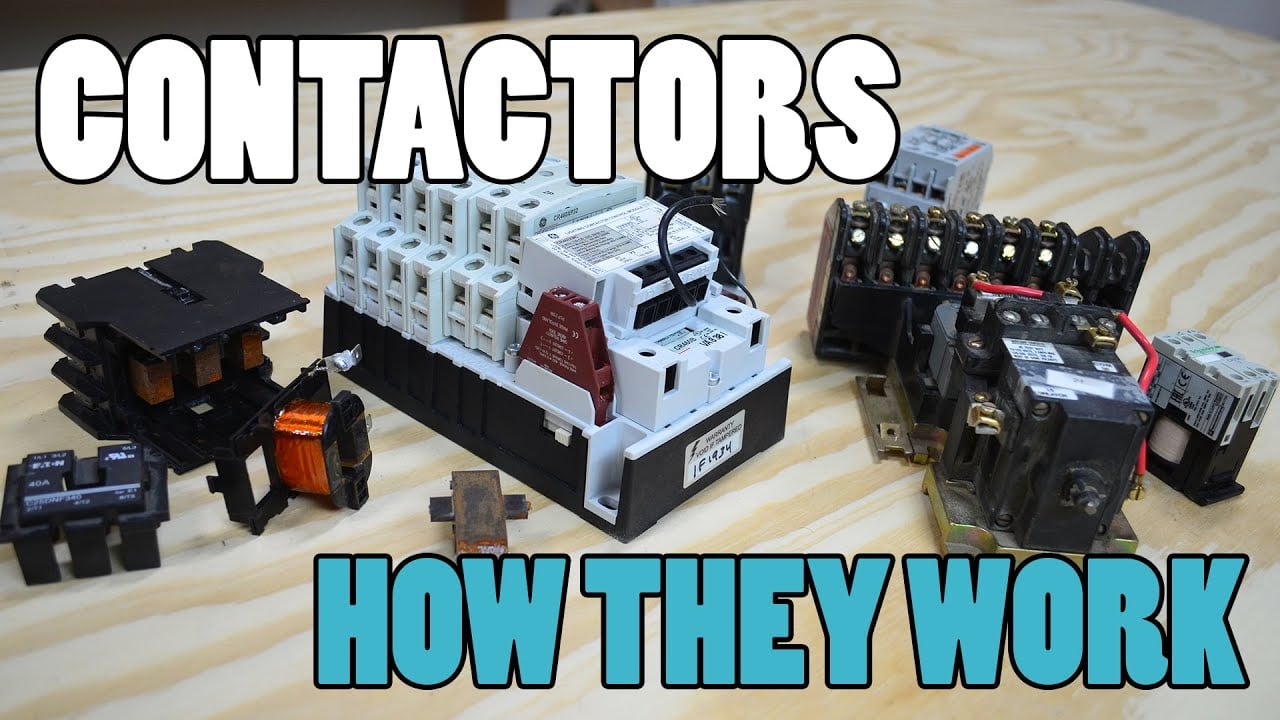
Regarder sur YouTube — Electrician U
Foire aux questions
Can any 50 A contactor replace a 50 A contactor?
No. Coil, voltage, load category, poles, terminals, fit and approvals must match.
Is a 2-pole 50 A contactor always for HVAC?
No, but HVAC and definite-purpose AC products dominate this search. Identify the actual equipment and load.
Does 50 A describe motor starting current?
Not necessarily. Verify FLA, LRA, horsepower and voltage ratings in the manufacturer data.
Can a one-pole unit replace it?
Only with explicit approval of the circuit change; pole topology is part of the equipment design.
Un contacteur CC Sayoon peut-il le remplacer ?
Pas dans un circuit CVC (HVAC) en courant alternatif. Les produits Sayoon nécessitent une application documentée en courant continu (CC).