DC contactor laboratory reference material selection starts with the measurement being checked, not with the availability of a familiar sample. Ask the laboratory to explain whether the activity needs a reference material, a measurement standard, a reference artefact or another control, and how that item is suitable for the intended purpose. A retained contactor from an earlier successful test is not automatically a certified reference material. This guide helps buyers review suitability evidence without prescribing a laboratory method. It separates reference-item selection from instrument calibration, production sampling and the qualification of a contactor model.
Define the property and purpose
Begin with the question the laboratory’s check is intended to answer. Different activities can examine different properties, so one reference item should not be presumed suitable for every part of a contactor test programme. Ask which measurement or process step the item supports and how its characteristics relate to that task. The answer should describe an actual use rather than simply list a reference supplier.
Distinguish a reference used to support a measurement from the contactor specimens submitted for testing. A buyer may supply a comparison unit, but its role and limitations need agreement. Previous satisfactory behaviour does not establish an assigned reference value for every relevant property. Keep the laboratory responsible for determining the suitability of its measurement controls, while providing the product information it needs to make that assessment.
Use precise names for different items
Terms such as reference material, certified reference material, measurement standard and check specimen should not be treated as interchangeable purchasing labels. The UNIDO laboratory guide discusses reference materials in relation to defined properties, homogeneity, stability and intended use. NIST’s Standard Reference Materials programme provides another useful example of reference products accompanied by property-specific documentation.
Neither source means that every DC contactor measurement requires the same kind of material. An electrical laboratory may use standards or artefacts appropriate to its methods, while a materials-analysis activity may need a suitable material reference. Ask for the laboratory’s reasoning and preserve its terminology. Replacing that terminology with a generic “golden sample” can hide important differences in evidence and control.
| Champ de preuve | Informations requises | Objectif de revue |
|---|---|---|
| Objectif | Measurement and intended check | Choose the appropriate type of control |
| Evidences | Relevant properties and supporting document | Connect the item to its stated characteristics |
| Utiliser | Range, handling and status | Preserve fitness for purpose |
| Response | Uncertain suitability and affected work | Resolve the impact on reported results |
Planning checklist based on the scoped technical reference and the applicable purchase documents; no universal acceptance limits are implied.
Review the documented characteristics
Ask which stated characteristics make the item suitable for the planned check. These can include assigned values, uncertainty information, scope of use and conditions relevant to the property. Not every reference product certifies every characteristic shown in its documentation. The reviewer should distinguish certified values from other descriptive information rather than treating the entire document as one broad guarantee.
Connect the supporting document to the physical item and its version or lot where applicable. A valid certificate for one material does not identify a different container or replacement batch. When a reference is supplied with multiple documents, establish which are applicable together. This reduces the risk that a convenient online download is accepted even though it describes a different product or revision.
Confirm suitability for the measurement range
A reference can be well characterized and still be unsuitable for a particular task. Ask how its relevant properties relate to the method’s measurement range and intended use. Where differences exist, the laboratory should explain whether and how they affect suitability. Purchasing should not demand an unsupported statement that a reference is equivalent merely because the exact preferred item is unavailable.
Do not infer suitability from a common unit alone. Two items can be described with the same unit while differing in the conditions or property being represented. Give the laboratory the actual testing requirements so it can evaluate the reference appropriately. The purpose of this review is to understand the fit, not to impose a universal range ratio or numerical acceptance criterion without a method-specific basis.
Keep traceability and uncertainty in context
Where metrological traceability or uncertainty is relevant to the planned use, request the applicable evidence and the laboratory’s explanation of its role. A traceability statement on a supplier website is not a substitute for the documentation associated with the reference being used. The evidence needs to connect to the actual property and measurement process under review.
Avoid assuming that a small uncertainty quoted for a reference is the uncertainty of the complete contactor test. The laboratory’s result can involve other contributions. Likewise, the reference producer’s accreditation does not by itself determine the suitability of every item for every method. Review the property-specific information and the laboratory’s assessment together rather than collecting institutional logos as a proxy for technical relevance.
Plan transport, storage and handling
Ask which handling and storage requirements preserve the reference’s stated properties. The necessary controls depend on the item and its intended use. Receiving condition, environmental exposure and handling history may matter, but this article provides no universal storage temperature, shelf life or conditioning procedure. Those requirements should come from the reference documentation and the laboratory’s established process.
Identify who checks the item when it arrives and how damage or uncertainty is handled. If a reference has been transported to a customer site, determine whether additional checks are needed before use. A closed box does not establish that every relevant condition was maintained. Preserve the available evidence and let the laboratory decide whether the item remains suitable, rather than assuming shipping receipt equals readiness.
Control identity at the point of use
An inventory register should let the laboratory connect the physical reference with its status and supporting documentation. Similar-looking containers or artefacts can have different roles. Ask how staff distinguish the correct item and avoid using a withdrawn or uncertain reference. A purchasing team need not dictate the label design, but it should understand how the agreed control works.
Where an item is divided, transferred or incorporated into another arrangement, preserve the relationship to the original identity and any relevant restrictions. A handwritten name alone may be insufficient to recover that relationship later. The level of detail should match the significance of the item to the measurement, with the laboratory defining appropriate controls rather than relying on an informal memory of who prepared it.
Distinguish monitoring from reassignment of values
Routine checks can help the laboratory monitor its process, but they should not silently redefine the reference’s assigned properties. If observations raise a concern, record it and follow the laboratory’s response process. Do not adjust a reference value merely so the next check passes, or rewrite a supplier’s documentation to match an expected result.
An internally maintained check item needs its own justified basis for use. It may be valuable for monitoring even when it is not a certified reference material. Keep that distinction explicit. Ask which decisions its observations support and which they do not. This allows a buyer to understand the evidence without demanding that every useful laboratory control be described with a certification it does not possess.
Agree what happens when suitability becomes uncertain
Define how the laboratory identifies affected work if a reference is later found damaged, unstable, incorrectly identified or otherwise unsuitable. The response should reflect the possible effect on results. A replacement item may allow future work to continue, but it does not automatically resolve the significance of earlier measurements. Keep the timing and use history available for the laboratory’s assessment.
For a purchaser, the key question is how an issue affecting the ordered work will be communicated and resolved. Agree the communication route before an urgent report is needed. Avoid requesting a promise that no reference-related issue can ever occur. A clear response process provides more useful assurance than an unconditional statement that every result remains valid regardless of later evidence.
Review alternatives before an urgent test slot
If the preferred reference is unavailable, ask the laboratory to assess alternatives before the scheduled work. Explain the deadline and intended decision, but keep technical suitability as a separate requirement. A commercially available substitute should not be accepted solely because it can arrive sooner. The laboratory needs a documented reason that it supports the actual measurement purpose.
Ask whether the alternative changes the method, achievable evidence or reporting limitations. If it does, the customer and laboratory may need to agree a revised scope. Do not conceal that change inside a purchase-order substitution. A short, explicit decision about an alternative is easier to defend than a report that appears to describe the original plan while a different measurement control was used.
Request a concise suitability record
A useful record identifies the reference item, purpose, supporting documentation, relevant characteristics, handling requirements and responsible approval. It should explain the basis for suitability in terms a competent reviewer can follow. Avoid asking for a large collection of certificates without stating which question they must answer. The goal is an understandable link from the reference to the reported measurement.
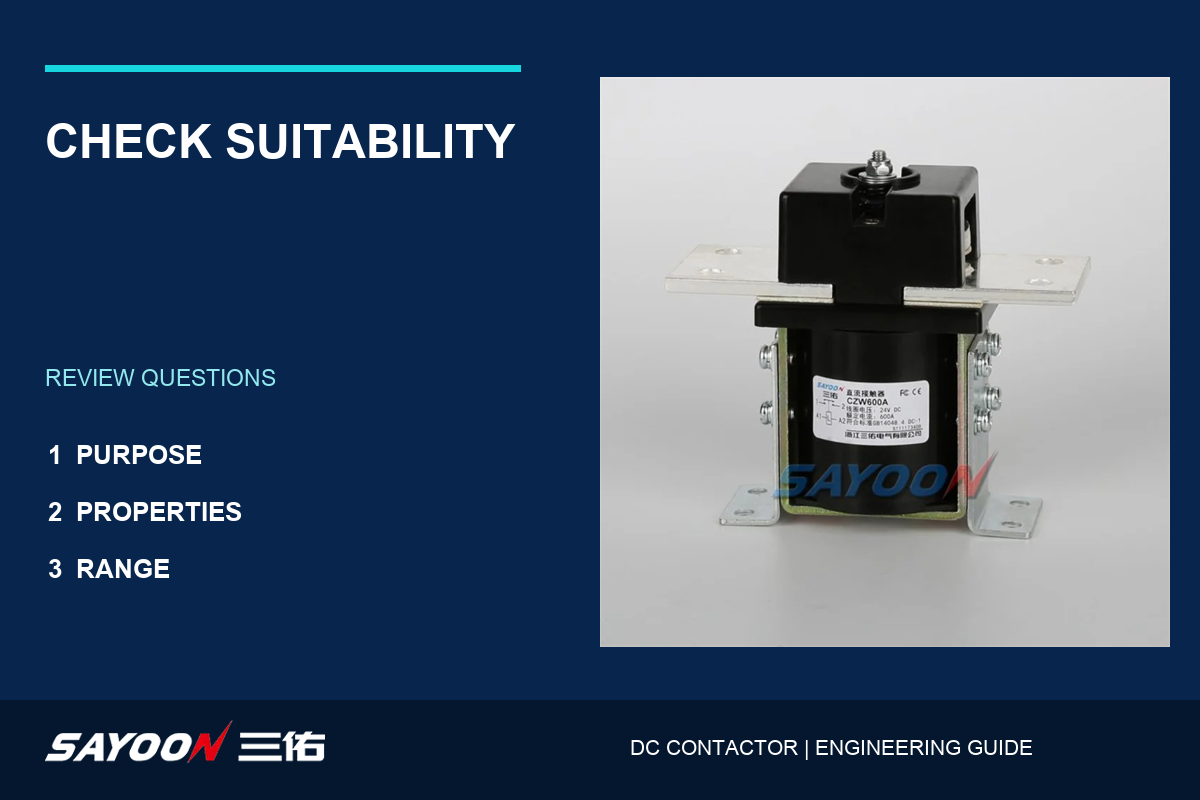
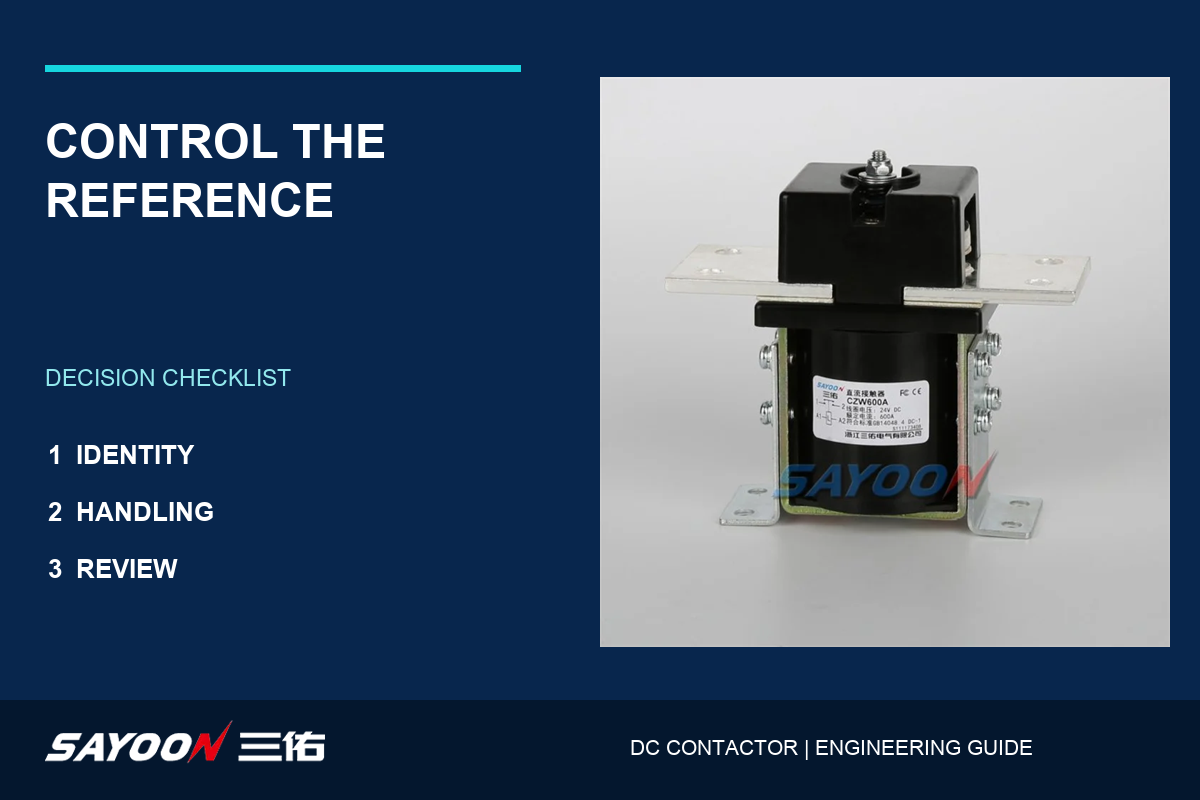
When commissioning work on a SAYOON contactor, provide the exact product identification and test purpose, then ask the laboratory which controls are appropriate. The contactor photograph illustrates the product under discussion; it does not imply that the product is itself a certified reference material. Retain the laboratory’s explanation alongside the contract and report so later reviewers understand the evidence boundary.
Vidéo éducative
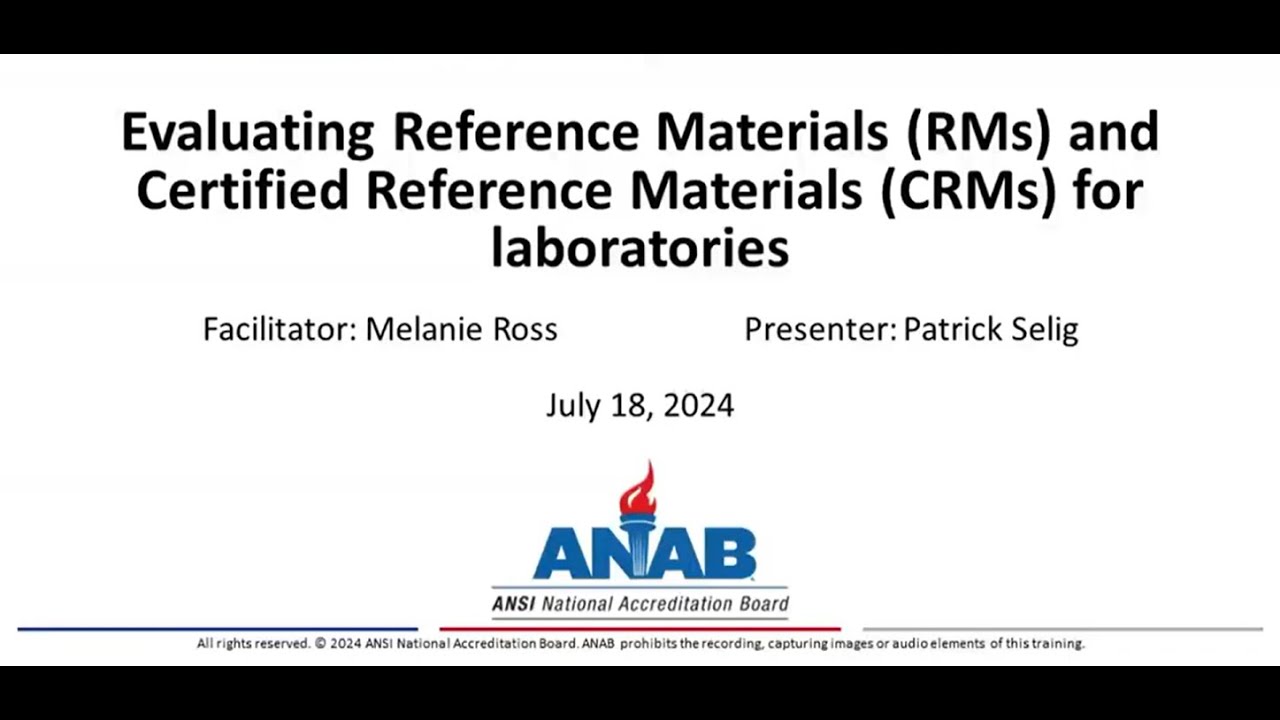
ANAB – ANSI National Accreditation Board explains evaluation of reference materials and certified reference materials for their intended laboratory purpose. This educational background does not assess a particular contactor or approve an equipment design.
Foire aux questions
Un contacteur testé précédemment est-il un matériau de référence certifié ?
Not automatically. A comparison specimen can have a useful role, but certified reference status requires the relevant property-specific evidence. Ask the laboratory to define the item’s actual purpose and limitations.
Chaque test de contacteur a-t-il besoin d'un matériau de référence ?
Aucune règle universelle n'est fournie ici. Le laboratoire doit déterminer quels standards, artefacts, matériaux ou autres contrôles sont appropriés à la méthode spécifique et à l'objectif de la mesure.
L'incertitude de référence est-elle égale à l'incertitude du test final ?
Non. La mesure complète peut impliquer des contributions supplémentaires. Le laboratoire doit évaluer l'incertitude pertinente pour son résultat rapporté en utilisant la méthode et les preuves applicables.
Que doit-il se passer lorsque une référence est remplacée ?
Vérifiez l'adéquation et l'identité du remplacement avant utilisation, enregistrez le changement et évaluez les implications pour la méthode ou les travaux antérieurs. Ne supposez pas qu'une description correspondante dans le catalogue établit une équivalence.
Guides produits et guides associés
Discutez de l'application en utilisant le Contacteur CC normalement ouvert CZW600A et le Guide de sélection des contacteurs CC. Lecture connexe : Contrôles internes de qualité du laboratoire de contacteurs CC, DC Contactor Laboratory Sampling: Review Representativeness.
Références techniques
Appliquez chaque référence dans son champ d'application indiqué. Les méthodes générales n'établissent pas une note de produit ou une acceptation de projet.