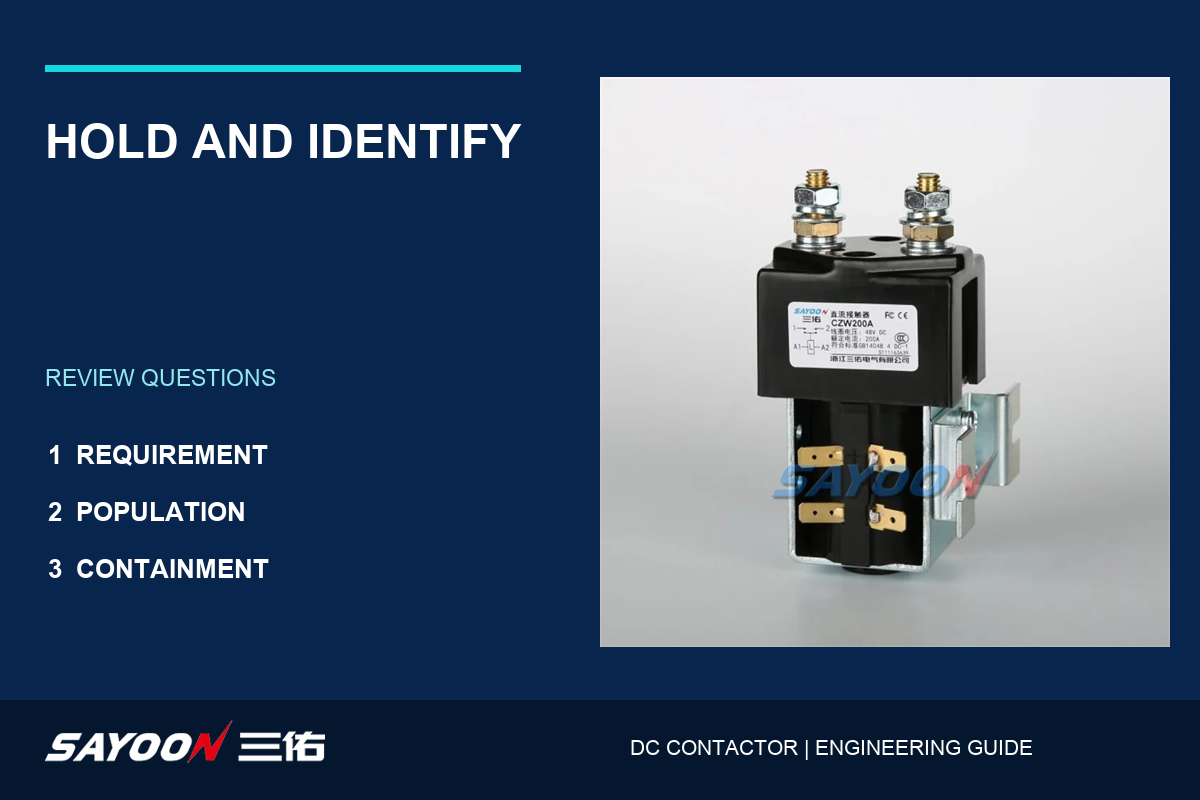
A DC contactor supplier concession is a documented request to accept a defined set of units that does not meet a particular requirement. Start by holding the affected population and identifying the exact drawing revision, discrepancy, lots, quantities, and proposed use. The buyer’s authorized engineering and quality reviewers then decide whether the supplied evidence supports acceptance within those limits. A supplier email or a passing check on a different characteristic cannot authorize release. If the issue affects a safety function or a requirement that the parties lack authority to waive, the review must follow the applicable approval route before the units move.
Establish what requirement was missed
Ask for the exact requirement and actual condition side by side. The request should cite the controlling purchase order, drawing, revision, or approved specification. Include the characteristic identifier, units, measurement conditions, and any applicable method. A description such as “mounting slightly different” leaves the reviewer unable to tell whether the issue concerns hole spacing, a datum, or the position of a terminal relative to an enclosure. If the measurement is disputed, reconcile the methods and drawing interpretation while the material remains on hold.
Distinguish an observed departure from an unresolved identity question. If the supplier cannot show that the delivered item matches the orderable part and revision, the reviewer may lack enough information to define the case at all. A photograph can document a marking or visible condition. It cannot establish that the underlying configuration is correct. Ask the supplier to reconcile the unit, traveler, batch records, and order line before proposing a decision that depends on that identity.
Bound the population before evaluating a release
List the affected part numbers, lots or serial ranges, and quantities. Reconcile units held at the supplier with material in transit, stock at receiving, and units already installed or shipped. If lot records are incomplete, make the uncertainty visible and define how the supplier will narrow the scope. An approval that says “current stock” is difficult to apply if several receipts are mixed or if the same problem spans multiple production runs.
Use a controlled physical and system hold so that the material cannot be picked or consumed by mistake. Do not split a suspect population into released and unreleased units without a traceable basis. If the decision relies on screening, agree on the method, records, and treatment of uncertain results first. The record needs to distinguish items that meet the original requirement after screening from items that still depart from it but might qualify for a specific concession.
Distinguish use as is from rework and repair
Use as is means an identified departure remains and the authorized party accepts the defined units under stated conditions. Rework aims to return the units to the original requirement and ordinarily calls for verification of the reworked characteristic. Repair can leave a configuration different from the original drawing, so the relevant technical evidence and approval route may differ. Return and scrap are also possible outcomes. Check the definitions and authorities in the applicable contract or quality procedure rather than relying on the name written on a supplier form.
JPL’s QC120 clause is a useful example of a purchaser distinguishing dispositions and reserving certain approval decisions. Its authority assignments and reporting procedures belong to that subcontract context. A commercial contactor buyer should identify the people named in its own order and project procedures. A purchasing contact may coordinate the decision while engineering evaluates the application and quality verifies the release record. If customer approval is required, internal agreement alone is insufficient.
| Campo di evidenza | Informazioni richieste | Scopo della revisione |
|---|---|---|
| Obbligo | Drawing revision and observed discrepancy | Establish the departure clearly |
| Population | Part, lot, serial range and quantity | Reconcile locations and shipments |
| Evidenza | Application and verification records | Review what the proposed scope supports |
| Rilascio | Authority, quantities, conditions and expiry | Prevent reuse on other lots |
Connect the discrepancy to the actual application
Imagine a hypothetical lot with a mounting dimension outside the ordered drawing tolerance. A supplier may show that a sample fits a shop fixture. The buyer still needs to ask whether the fixture represents the production bracket, whether the full approved tolerance stack was considered, and whether the altered fit can load the housing or reduce available clearance. The application review should state which assembly variant was assessed, what was checked, and which questions remain open. The example does not describe any actual SAYOON lot or product dimension.
Where the departure involves terminals, insulation, enclosure integrity, coil control, or any function important to the equipment, route the case to the responsible technical authority. The equipment’s operating conditions and the relevant evidence must be explicit. A benign outcome in one cabinet design may not apply to another one. If evidence is missing, hold the units while the proper review is obtained. Avoid using a release statement for a particular build as evidence that the contactor’s published ratings or approvals have changed.
Make any condition practical to enforce
A conditional release can specify the accepted serials or lot, maximum quantity, permitted order or build, required screening, and expiration. Choose identifiers that warehouse and production staff can actually match. If an authorization permits the units only on one equipment revision, the picking and assembly records should let staff identify that revision before use. If the buyer cannot enforce a condition, the wording on the approval sheet offers little operational protection.
Define who confirms that the conditions were met and what evidence is retained. An inspection report can document measured units, while the final release decision records the authority and approved scope. A supplier certificate or shipping note should reference the authorization when the order requires it. Keep the original discrepancy visible in the controlled record, even if the material is ultimately released. Rewriting the inspection result as an ordinary pass would erase the reason that special approval was needed.
Review a delivered or already installed population separately
If the supplier identifies the issue after shipping, ask for shipment dates, order numbers, quantities, and the traceability evidence linking the issue to those shipments. Receiving stock, work in progress, and installed units may require different actions under the customer’s procedures. Do not infer that a warehouse hold also reached a service depot or customer site. Establish what is known about each location and who is responsible for follow-up. The equipment owner and responsible technical authorities should decide any service action based on the actual application and evidence.
If information changes after approval, reopen the decision through the agreed procedure. A new affected lot, a different discrepancy, or a previously unknown installation can move the case outside its original scope. Preserve the initial record and clearly identify the later decision. This makes it possible to reconcile what was authorized at each stage and determine which units were handled under which conditions.
Separate the one-time decision from recurrence prevention
A concession answers what may happen to the specified units. An investigation or corrective action answers how the discrepancy occurred, why it escaped, and how recurrence will be prevented. One workflow can provide evidence to the other while both retain distinct decisions. For example, the buyer may reject the current lot even after the supplier has implemented a promising corrective action. A buyer may also allow a tightly limited lot while leaving the corrective action open until effectiveness evidence is available.
Repeated requests for the same departure should prompt a review of the manufacturing process or the controlled requirement. If engineering decides the requirement should change permanently, use the approved design or supplier change process with its own verification and effective date. Track whether shipments made before that date are still governed by the old revision. A history of concessions can help explain the problem, but does not establish that a new revision has been approved.
What to request from the supplier
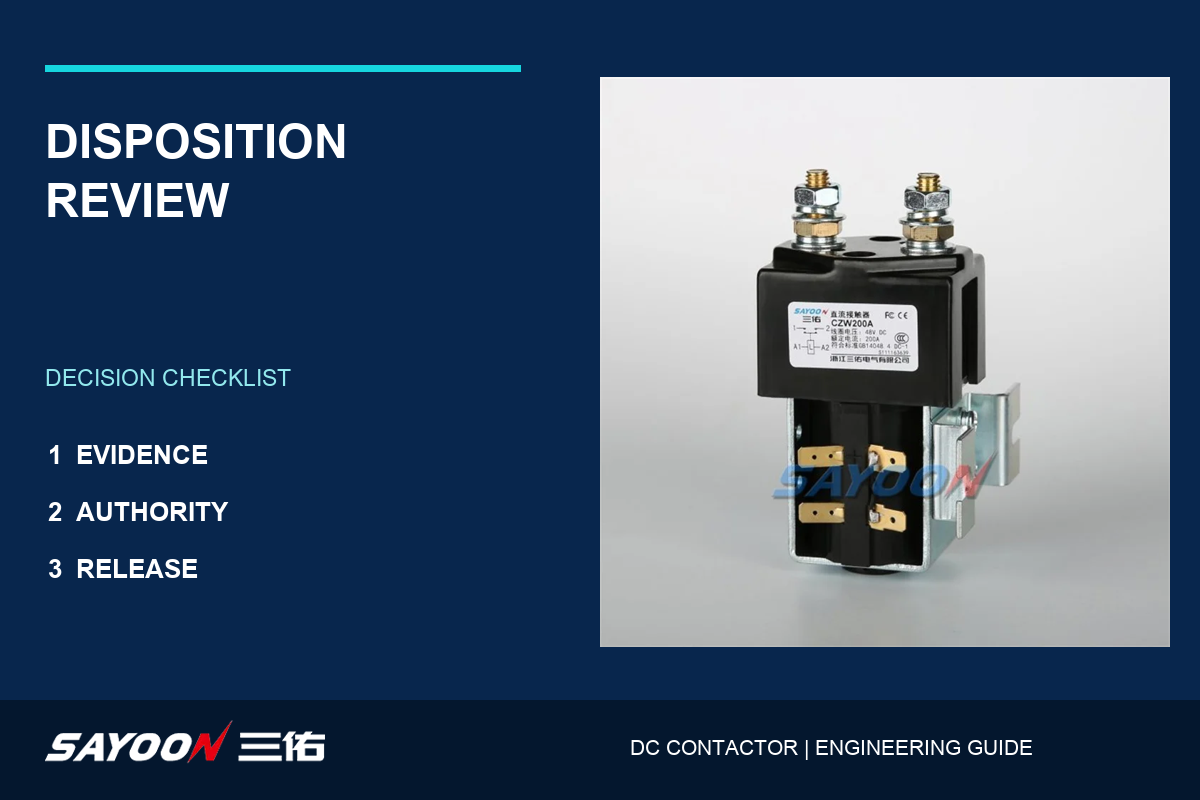
Request the order reference, exact part and revision, applicable requirement, observed condition and measurement method, affected quantity and identifiers, containment status, proposed disposition, technical rationale, and supporting evidence. Ask which units have already left the supplier and what work or screening has been done. Record the decision owner, scope, expiration, release conditions, and any separate corrective action. A concise request backed by usable records is easier to review than a broad claim that the discrepancy has no effect.
Video educativo
Quality Excellence Hub explains 8D containment and recurrence prevention, two activities that can support a separate lot decision. This educational background does not assess a particular contactor or approve an equipment design.

Domande frequenti
Can a supplier authorize use as is by email?
An email can transmit a request or a decision. Authority and record requirements come from the applicable order and quality procedure. Confirm those requirements before release.
Does concession approval change the drawing?
A concession covers the units and conditions identified in its authorization. A permanent drawing change follows the applicable configuration and approval process.
Can the next lot use the same approval?
Check the stated scope. If the next lot is outside the approved population, obtain its own disposition under the applicable procedure.
Is a corrective action report enough to release material?
A corrective action report can support the review. The affected units still need a documented disposition from the authorized party.
Prodotto e guide correlate
Discutere l'applicazione utilizzando il Contattore CC normalmente aperto CZW200A e il Guida alla scelta dei contattori in corrente continua. Letture correlate: Richieste di tracciabilità per lotti di produzione di contatori di corrente, Rapporto DC Contactor 8D: Revisione delle prove di azione correttiva.
Riferimenti tecnici
- cURL Too many subrequests by single Worker invocation. To configure this limit, refer to https://developers.cloudflare.com/workers/wrangler/configuration/#limits
- cURL Too many subrequests by single Worker invocation. To configure this limit, refer to https://developers.cloudflare.com/workers/wrangler/configuration/#limits
Applicare ogni riferimento nel suo ambito dichiarato. I metodi generali non stabiliscono una valutazione del prodotto o l'accettazione del progetto.