An “EV compressor contactor” is an application label, not a complete component requirement. SAYOON’s Automotive Air Conditioning solution page identifies compressor, fan, heater and auxiliary circuit contexts. First identify the exact circuit and the controlled action it requires; only then can product documentation be reviewed.
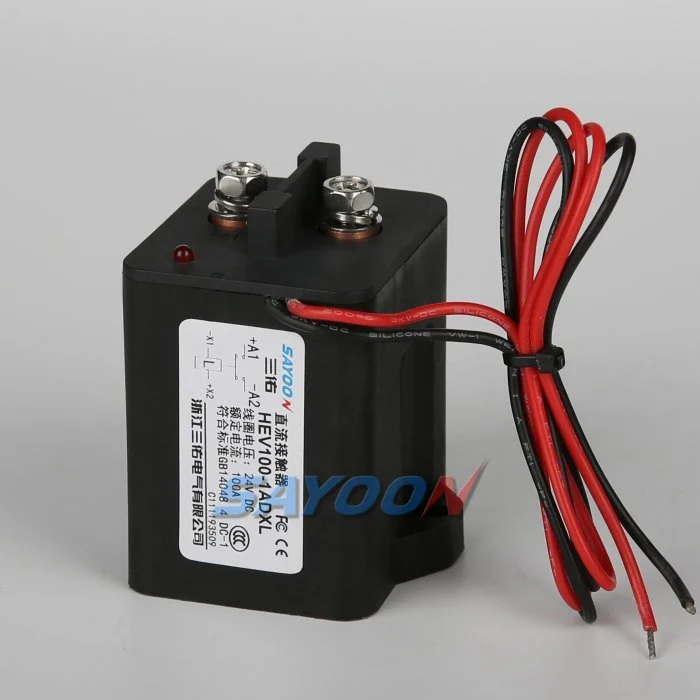
This first-party HEV100 photo gives product context only. It does not depict an EV HVAC installation or establish vehicle compatibility.
Identify the circuit before the component
| Record | Why it belongs in the enquiry |
|---|---|
| Circuit function | Compressor, fan, heater and auxiliary paths should not be assumed to have the same requirement. |
| Required action | State what opens or closes, who commands it and the required default state. |
| Governing evidence | Attach the drawing revision, control sequence and project conditions. |
Build a reviewable record
- Name the circuit path under review.
- Record the required controlled action and the state without the control input.
- Attach the current drawing and existing device label if this is a replacement.
- List any project conditions or approvals that the responsible team requires verified.

A product view should prompt a documentation check, not an inferred terminal assignment or operating condition.
If the uncertainty is specifically about coil terminals, continue with the A1/A2 DC coil terminal review. Keep that coil question separate from the application label.
Continue with a documented product path
Once the circuit record is complete, the SAYOON HEV Series HV DC Contactor page is a route to product documentation and a technical enquiry. It does not mean every HEV model fits a compressor, HVAC circuit or vehicle. Ask the technical team to compare the documented requirement with the available product information.

First-party HEV100 media supports the product-document pathway only; it is not a model recommendation or performance claim.