DC contactor supplier inspection record retention means keeping the evidence needed to identify what was inspected, which requirements applied, what results were obtained and how exceptions were resolved. Agree on the retention period, starting event, access rights and disposal authority in the purchase documents. Keep records readable, protected and retrievable throughout that period. A certificate kept without its supporting evidence may not answer a later question about a particular shipment or production lot.
There is no single retention duration for every DC contactor purchase. Customer clauses, applicable obligations and the agreed quality system determine the requirement. This guide focuses on preserving and retrieving inspection evidence after it is created. It does not establish a legal retention schedule or claim that an industrial contactor purchase automatically follows an aerospace contract.
Start with the question the record must answer
A useful record package should let a future reviewer establish the ordered part and revision, the inspected unit or lot, the requirement, the method and the result. It should also reveal the decision made when the result did not meet the requirement. Define these needs before choosing a folder structure or purchasing a document system.
Consider a buyer who reports a discrepancy months after delivery. The supplier may need to identify which shipment contained the affected units and retrieve the associated inspection results. A file named only “final test” without a part, lot or report reference can be difficult to connect to the correct population.
Separate record retention from product traceability. Traceability establishes relationships among parts, lots, materials and processes. Retention preserves evidence over time and makes those relationships usable later. One supports the other, but a well-labeled part does not guarantee that its inspection records will still be available.
Determine the applicable period and its trigger
Read the purchase order and incorporated quality clauses. Identify the required duration and the event that starts the clock: delivery, contract completion or another specified event. If different clauses appear to conflict, seek an authorized clarification rather than selecting the shortest period for convenience.
The linked archived JPL QC29-N clause illustrates a customer-specific requirement to preserve inspection and test evidence and restrict destruction. It is an example of contractual wording, not a universal duration for contactors. JPL also explains that clauses incorporated in an order can apply regardless of their archived status; use the actual contract reference.
Record any requirement that extends beyond a normal schedule, including a customer hold or unresolved investigation. Decide who can authorize disposal and what evidence of that authorization must remain. Automatic deletion should not proceed simply because a folder’s nominal age has reached a software setting.
Define the minimum evidence package
| Evidence field | Required information | Review purpose |
|---|---|---|
| Scope | Order, part, lot and report identifiers | Find the right population |
| Duration | Period, trigger and applicable clause | Avoid premature disposal |
| Custody | Owner, access and recovery arrangement | Protect availability |
| Retrieval | Readable package and approved exceptions | Answer a later evidence request |
Planning checklist based on the scoped technical reference and the applicable purchase documents; no universal acceptance limits are implied.
The package should include the inspection or test results required by the order, associated identification and the approvals that give those results meaning. Retain the relevant requirement references and method revision. Where a result depends on instrument or fixture identity, preserve enough information to connect it to the applicable measurement record.
Keep accepted deviations and nonconformance dispositions with the affected evidence. An inspection sheet may show an out-of-limit reading that was resolved through a narrowly scoped authorization. If only the clean summary certificate remains, a future reviewer may misunderstand what actually occurred and what was approved.
Do not collect unnecessary personal or commercially sensitive information without a defined purpose. Identify who needs access to each record class and what can be supplied to a customer. A practical package preserves the required technical evidence while following the applicable confidentiality and information-handling arrangements.
Use identifiers that survive organizational changes
Choose stable identifiers for the purchase order, part and revision, production lot, shipment and report. Record relationships among them in an index. A useful system should support retrieval by more than one entry point, because a customer may know a shipment number while the supplier stores records by production lot.
Avoid relying on one employee’s inbox or memory. Store the controlled record in an authorized repository with an assigned owner. If email contains an approval, capture it with its context and attachments in the retained package. A message subject line alone is not a reliable account of the approval scope.
When a document is corrected, preserve the relationship between the original and the corrected version. Show who made the change, when and why, using the applicable control procedure. Do not silently overwrite an earlier result or create a report revision that makes the original observation disappear.
Preserve readability as well as the file
A stored file is useful only if the information can still be opened and interpreted. Check that scans show complete pages, legible units and signatures where required. Confirm that attachments, graphs and legends are included. A successful upload message does not prove that the retained copy is complete.
For electronic data, consider the software and format needed to interpret it. Preserve a suitable human-readable report together with required native data where the agreement calls for it. Document the relationship between exported summaries and source readings. A screenshot of a result should not replace underlying data that the order requires to be retained.
Plan format migration when systems change. Verify page counts, record identifiers, attachments and readability after migration. Use checksums or another suitable integrity control where appropriate, while recognizing that a matching file checksum says nothing about whether the original report was technically correct or contractually complete.
Protect access and recoverability
Assign access according to role and keep records available to authorized reviewers. Separate permission to read from permission to change or destroy where the system supports that control. Explain how customers or auditors request evidence and who reviews the request before release.
Maintain backups and test recovery. A backup job that reports success has not demonstrated that a particular inspection package can be recovered. Use an authorized sample to verify restoration and readability without disrupting the controlled original. Document the recovery result and correct any gaps found.
Address foreseeable changes such as employee departure, supplier relocation and replacement of a file-sharing platform. Record custody must remain clear through those changes. If a sub-supplier holds required evidence, confirm the contractual arrangement for continued access rather than assuming the records will remain available indefinitely.
Test retrieval with a realistic request
Choose a delivered lot and ask someone other than its original inspector to retrieve the package. Provide the kind of information a customer is likely to supply. Check whether the reviewer can locate the results, understand the acceptance reference and reconcile any disposition without a lengthy search through unrelated folders.
Measure the exercise against the agreed service expectation, if there is one. Do not invent a universal response deadline. Note missing links, ambiguous file names and records stored outside the approved repository. Improve the index or workflow and repeat the relevant portion of the check.
A retrieval test also checks that access restrictions work. The reviewer should receive the authorized evidence without gaining unnecessary access to unrelated customer information. A public download folder may be convenient, but convenience alone does not make it an appropriate repository for confidential inspection records.
Handle requests, corrections and holds carefully
When a customer requests evidence, identify the order, part, lot and purpose before assembling the response. Check that the supplied copies are complete and correspond to the requested population. Preserve a record of what was provided and any scope limitations, especially when part of the original package remains under review.
If a retained record contains an error, follow the correction process and notify affected parties where required. Distinguish an administrative correction from a change to a technical result or disposition. The person responsible for the technical decision should assess whether the error affects earlier acceptance.
During a complaint or investigation, suspend routine disposal for the relevant population under the authorized hold process. Identify the records covered and who can release the hold. Do not use a general retention schedule as a reason to destroy evidence that is needed for an unresolved issue.
Make disposition an authorized final step
Before deleting or destroying a record, verify that the applicable period has expired, the starting event was correct and no hold or additional approval applies. Check customer clauses that require consent before destruction. A supplier’s default policy cannot override a longer obligation incorporated in the purchase documents.
Record the disposition decision according to the applicable procedure. Identify the record class or population, authority, date and method. Disposal should cover controlled copies and storage locations consistently while preserving any evidence that must remain. Do not promise that every backup copy disappears immediately unless the system and agreement actually support that claim.
Periodically review the retention schedule with the responsible quality and records owners. New customer clauses or changed products may require a different arrangement for later orders. Keep earlier agreements traceable so a revised policy does not accidentally shorten the obligation for records already in custody.
Prepare the supplier agreement before ordering
Give the contactor supplier the required record types, identifiers, retention period and trigger, access expectations, format requirements and disposal conditions. Ask where records will be held and how sub-supplier evidence will be retrieved. Confirm feasibility before the order is accepted, particularly when a customer requires a package beyond normal catalog documentation.
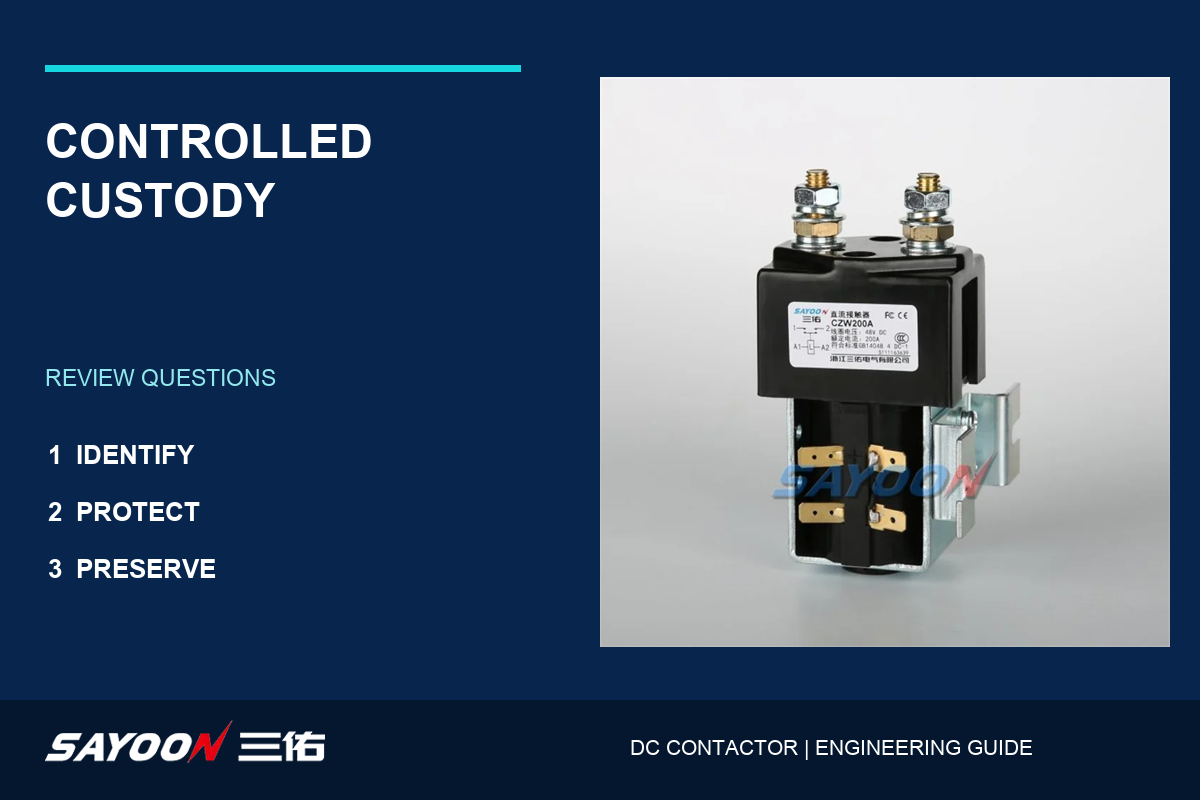
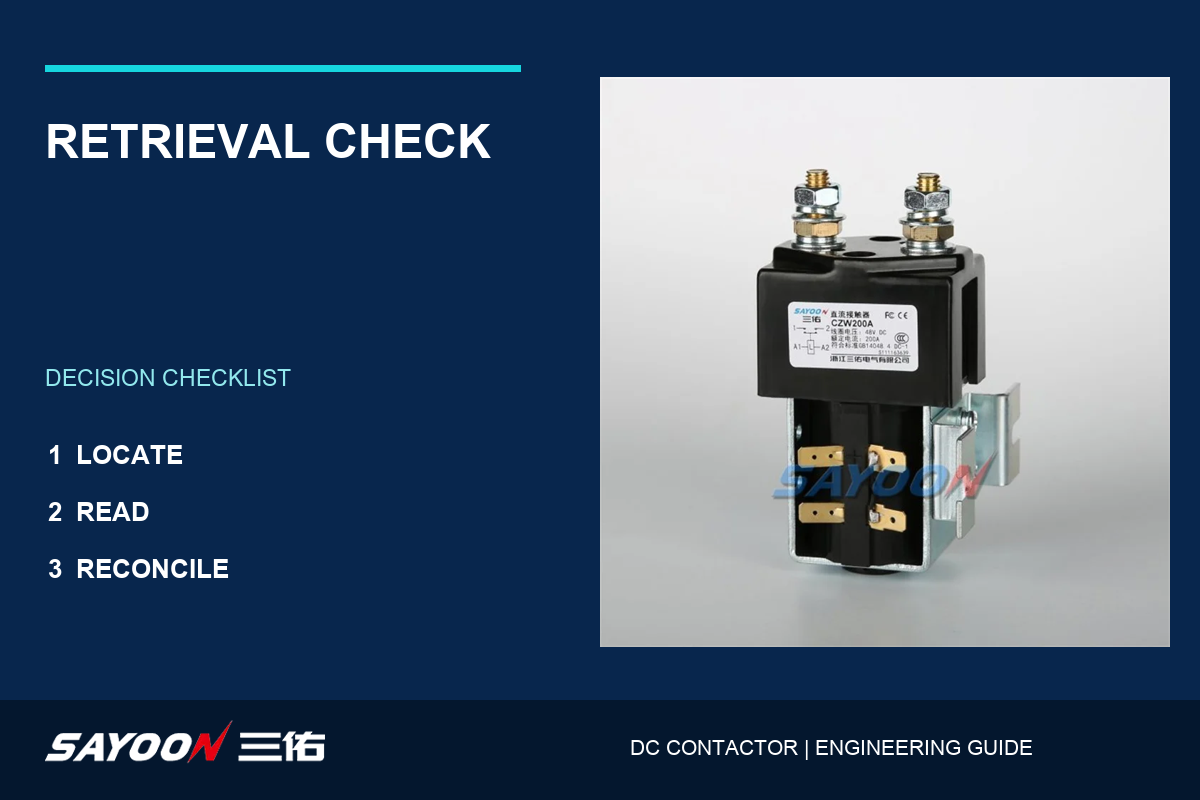
Use the actual SAYOON product and ordered variant when discussing the evidence package. A product photograph or catalog page does not establish which inspection records are generated for a specific order. Ask for a clear agreement on the deliverable rather than assuming every internal manufacturing record is automatically included.
The practical outcome is a controlled package that can answer a later technical question without reconstructing history. Clear ownership, stable identifiers and a tested retrieval path often matter more than a large collection of files. Review completeness and usability together, because neither storage capacity nor a long nominal period guarantees useful evidence.
Educational video
New York State Archives explains basic records management, retention, access and preservation; its government examples do not set retention periods for an industrial purchase. This educational background does not assess a particular contactor or approve an equipment design.
Frequently asked questions
How many years should contactor inspection records be retained?
Use the applicable order, obligations and agreed schedule. A duration in an aerospace customer clause is not automatically a requirement for every industrial contactor purchase.
Is a certificate of conformity sufficient?
It depends on the agreed deliverable. When the order requires inspection results, traceable test evidence or dispositions, a summary certificate alone does not replace them.
Can archived customer clauses still matter?
Yes, when incorporated in the applicable order. Check the clause reference and contract terms rather than assuming the website’s archived label cancels an existing obligation.
What should a retrieval test demonstrate?
It should show that an authorized reviewer can identify the correct population, obtain a complete readable package and understand its requirements, results and exceptions without relying on the original inspector’s memory.
Product and related guides
Discuss the application using the CZW200A Normally Open DC Contactor and the DC contactor selection guide. Related reading: DC Contactor Product Change Notices: Revalidation Review, DC Contactor 8D Reports: Corrective Action Evidence Review.
Technical references
Apply each reference within its stated scope. General methods do not establish a product rating or project acceptance.