DC contactor laboratory test method selection starts with the question the evidence must answer, not with the shortest available test or a familiar standards number. Define the contactor configuration, intended decision, measured characteristic and applicable requirements, then ask the laboratory to propose a method with an appropriate scope and demonstrated capability. Agree revisions, options, deviations and reporting before work begins. This guide provides a buyer workflow for choosing the method; it does not specify a universal contactor test programme, replace the applicable product standard or establish that a SAYOON model is certified for an application.
Translate the purchasing question into a test objective
A request to test a contactor is incomplete. The laboratory needs to know whether the buyer seeks a measurement, a comparison, an investigation or evidence against defined requirements. Those objectives can demand different specimens and different forms of reporting. Write the decision in ordinary language before choosing a method identifier, so the technical proposal can be checked against the real purpose.
For example, comparing operating behaviour under agreed conditions differs from demonstrating compliance with every requirement of a product standard. A limited engineering test can be useful if its boundary is explicit. Problems begin when a narrow result is later described as broad approval. Specify the conclusion the buyer needs and the conclusions the ordered work will not establish.
Describe the tested item and relevant application boundary
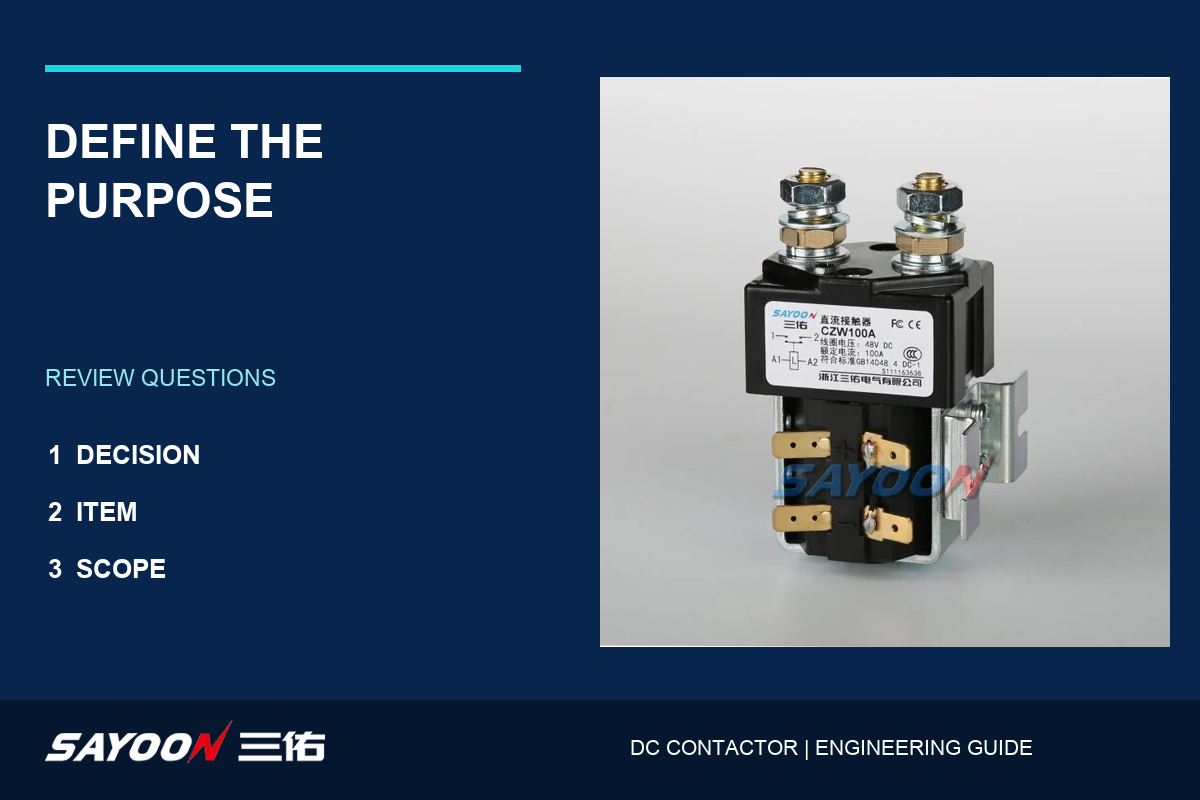
Provide the contactor identity, configuration and available manufacturer documentation. Separate the coil or control circuit from the main switched circuit. Include the aspects of the intended application that are necessary to select a method, while avoiding unsupported assumptions about the model. The laboratory should be able to ask targeted questions rather than guess the missing configuration from a catalogue image.
A product family can contain different constructions and options. Ask which specimens and configurations the proposed method will cover and how they will be identified. Do not assume that one tested example represents every family member. Any extension of evidence needs its own justified basis, accepted by the relevant decision maker and consistent with applicable requirements.
| Evidence field | Required information | Review purpose |
|---|---|---|
| Purpose | Decision and requested characteristic | Choose work that answers the actual question |
| Method | Identifier, revision and options | Make the procedure unambiguous |
| Capability | Verification or validation evidence | Confirm fitness for the proposed work |
| Delivery | Specimens, sequence and report scope | Prevent unsupported conclusions |
Planning checklist based on the scoped technical reference and the applicable purchase documents; no universal acceptance limits are implied.
Ask why the proposed method is appropriate
UNIDO implementation guidance explains method selection, verification and validation as distinct laboratory activities. The laboratory should connect its proposal to the requested characteristic and intended use. A recognized published method may be suitable, but its title alone does not settle whether the specimen, range, conditions and requested conclusion fit its scope.
CALA application guidance offers additional laboratory-management examples within its own programme. It is not an electrical product standard, and its sector-specific analytical requirements should not be transferred to contactors. Use it as context for asking how a laboratory controls methods. Obtain actual electrical-test requirements from the applicable authoritative documents and the agreed technical specification.
Identify the revision and resolve optional steps
Record the exact method version in the proposal. If a current version cannot appropriately be used, ask for the reason and its effect on the intended decision. A buyer specification may cite an earlier edition, while a laboratory normally works to a later one. Resolve that difference before testing instead of discovering it when the report is issued.
Some methods contain options or require supplementary instructions. Ask how those choices will be recorded and made repeatable. The buyer should understand which conditions are fixed by the method, which are agreed project choices and which require further technical justification. Avoid asking the laboratory to omit inconvenient conditions while still describing the result as an unmodified standard test.
Separate selection from verification and validation
Selection asks whether the method fits the task. Verification asks whether the laboratory can perform the adopted method with the required performance. Validation addresses fitness for intended use in circumstances such as nonstandard or modified methods. These questions overlap in a project discussion but should not be reduced to a single statement that the laboratory has experience.
Ask for an appropriate explanation of capability for the specific activity, including the equipment, personnel and measurement performance that matter. The evidence need not expose confidential information unrelated to the job. A general accreditation certificate also needs to be read with its scope. It should not be treated as proof that every proposed contactor test falls within accredited activities.
Examine modifications before accepting the proposal
A changed fixture, measurement range, processing step or environmental condition may affect what a method demonstrates. Ask the laboratory to identify departures explicitly and assess their significance. Some supplementary detail clarifies implementation; other changes alter the method or take it outside its intended scope. The distinction requires technical judgment rather than a marketing label.
Where a modified approach is proposed, request the evidence supporting its fitness for the intended decision. Agree how the report will describe the work and its limitations. Customer approval of a departure does not, on its own, establish technical validity. Nor does it automatically make the resulting evidence acceptable to a certification body, regulator or another purchaser with different requirements.
Plan specimens and sequence around the method
Method selection affects specimen allocation. Some activities change the tested item, so the order of tests can matter. Ask whether one specimen can serve the full programme, whether separate specimens are required and what condition must be documented between stages. The answer must come from the method and project requirements, not from a general desire to reduce sample cost.
Clarify what happens if a specimen becomes unsuitable before later stages. A replacement item can alter the interpretation of the programme. Define the authorization route for changes and how the report will distinguish original and replacement specimens. This helps the purchasing team avoid combining unrelated results into a single implied performance story that the actual programme does not support.
Agree measurements, uncertainty and decision rules
A measurement and a conformity statement are different deliverables. If the buyer requests pass or fail, identify the applicable requirement and agreed decision rule. Ask how relevant uncertainty will be considered and reported. Do not invent an acceptance threshold from a typical catalogue value or assume that the laboratory chooses the customer’s commercial tolerance.
When comparing suppliers or historical reports, check whether the methods and conditions support a fair comparison. Similar labels can conceal different definitions of the measured event or different specimen conditioning. A table of numbers is useful only when its entries refer to sufficiently comparable evidence. Where comparison remains limited, state that boundary beside the result rather than hiding it in a later discussion.
Work through a hypothetical method choice
Suppose a buyer wants to understand a contactor’s switching behaviour in a prototype controller. One proposal measures an agreed operating characteristic; another offers a broader sequence against a named product standard. The cheaper option may answer the engineering question, but neither price nor breadth alone establishes suitability. The buyer must first decide which conclusion is required.
The technical discussion records the configuration, characteristic, conditions and reporting purpose. If the prototype question differs from the standard’s conditions, the laboratory explains the distinction and proposes justified work. The buyer then accepts the appropriate scope with clear limits. This is a proposed decision process, not a published contactor test, approval claim or recommendation that laboratory testing substitutes for complete equipment validation.
Keep the agreed method visible through delivery
Place the final method identifier and revision in the acknowledged order, together with resolved options and authorized departures. Ensure the people supplying specimens and reviewing the report receive the same agreed scope. Email discussions can support the record, but conflicting attachments should be resolved into a coherent final instruction before work starts.
At report review, compare the delivered method and specimen identity with the agreement. Investigate unexplained changes rather than accepting a plausible-looking title. Preserve the reason for the selection so later teams understand what the evidence was intended to support. A sound method choice creates a useful boundary for purchasing decisions; it cannot guarantee that a product will meet an unstated requirement or every possible operating condition.
Educational video
IAFandILAC explains laboratory accreditation and the ILAC arrangement, providing context for reviewing laboratory competence and evidence; it does not demonstrate the individual procedure described here. This educational background does not assess a particular contactor or approve an equipment design.

Frequently asked questions
Is the newest method revision always the correct choice?
The latest valid version is normally considered, but suitability and applicable contractual or regulatory requirements must also be resolved. If another version is proposed, request a documented reason and understand whether the intended recipient will accept the resulting evidence.
Can a customer select a nonstandard method?
A nonstandard method can be considered when its fitness for the intended use is established appropriately. Customer preference alone does not demonstrate validity. Agree the technical basis, limitations and reporting so the result is not mistaken for an unmodified standard test.
Does an accredited laboratory automatically cover the proposed test?
No. Read the laboratory’s relevant scope and discuss the actual method, object and range. General accreditation status is useful context, but it should not be extended to activities or conclusions beyond the documented scope.
Can two contactor reports be compared by their final numbers?
Only after checking their methods, configurations and conditions. Differences in specimen history, measurement definition or processing can limit comparison. Ask for a technical assessment before using unlike results to rank products or infer a performance advantage.
Product and related guides
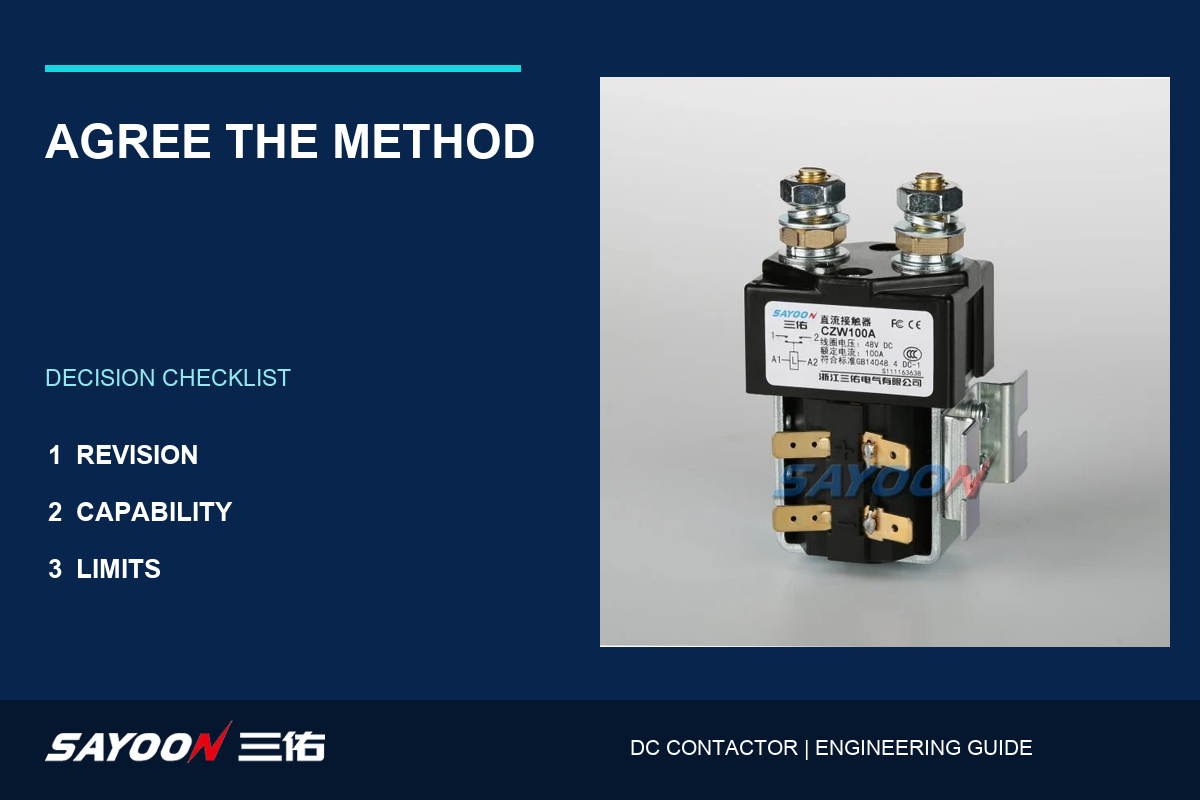
Discuss the application using the CZW100A Normally Open DC Contactor and the DC contactor selection guide. Related reading: DC Contactor Laboratory Method Verification: Evidence Review, DC Contactor Laboratory Accreditation: Verify the Scope.
Technical references
- UNIDO: ISO/IEC 17025 implementation guidance
- CALA: programme application guidance; sector-specific examples remain limited to that programme
Apply each reference within its stated scope. General methods do not establish a product rating or project acceptance.