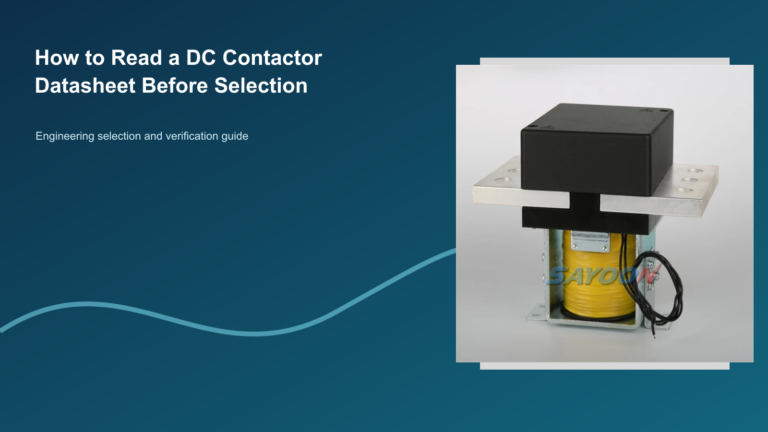
How to Read a DC Contactor Datasheet Before Selection
Read a DC contactor datasheet by separating main-circuit ratings, coil requirements, contact arrangement, environmental limits, life data, dimensions, terminals, and test conditions. Never combine the...
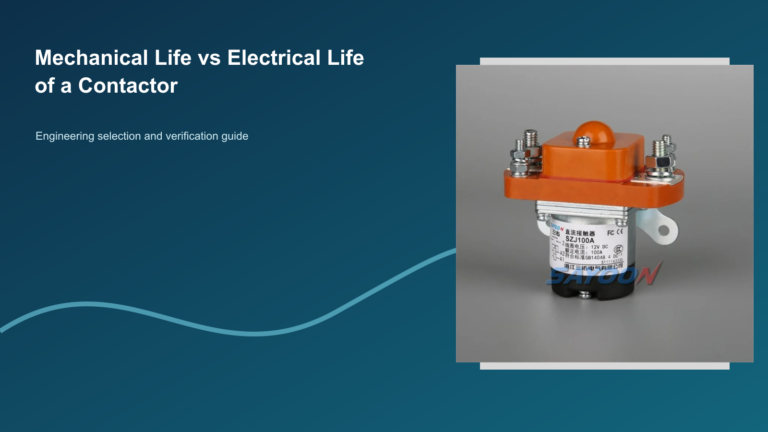
Mechanical Life vs Electrical Life of a Contactor
Mechanical life counts operations without the specified power-switching stress, while electrical life reflects contact wear under stated voltage, current, load, and duty conditions. The two...
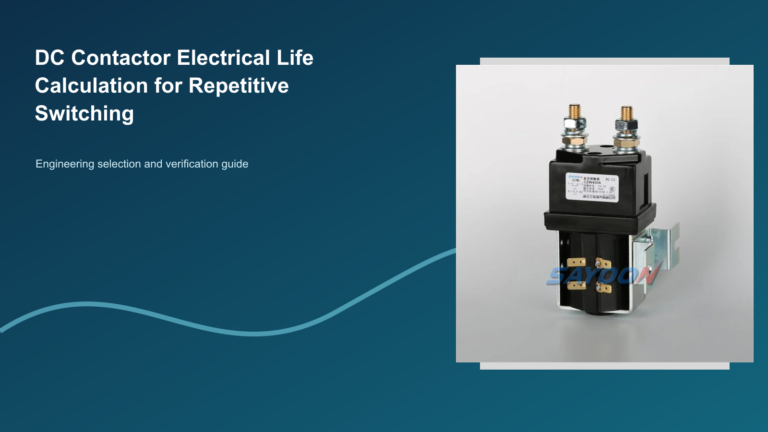
DC Contactor Electrical Life Calculation for Repetitive Switching
DC contactor electrical life cannot be calculated from current alone. Build a duty profile containing voltage, make current, break current, load time constant, switching direction,...
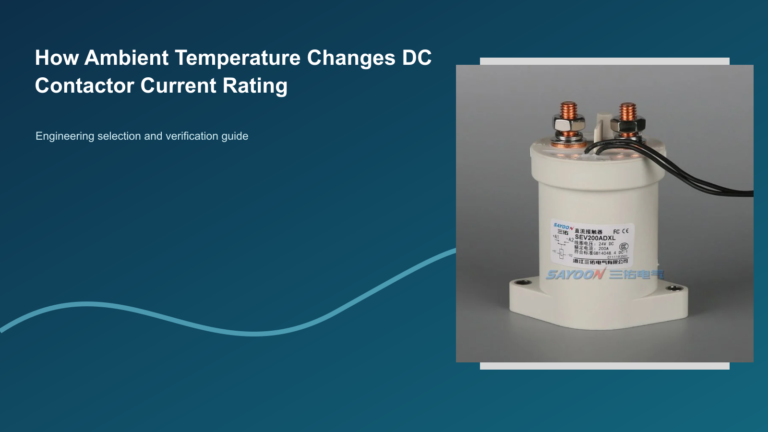
How Ambient Temperature Changes DC Contactor Current Rating
Ambient temperature changes the usable current of a DC contactor because coil heat, contact resistance, terminals, conductors, enclosure airflow, and nearby equipment all affect temperature...
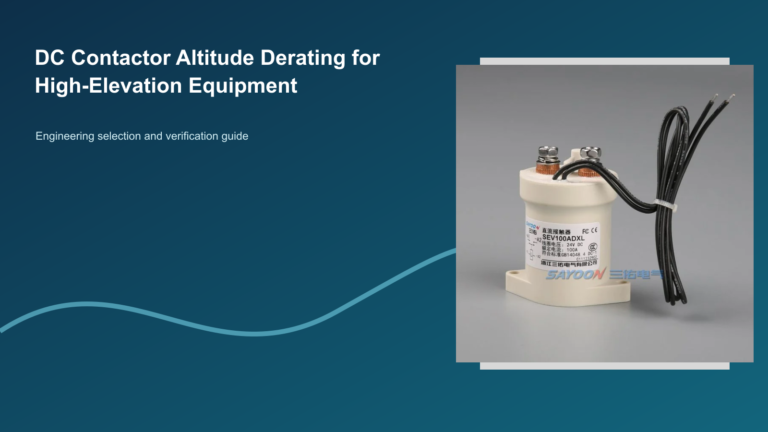
DC Contactor Altitude Derating for High-Elevation Equipment
DC contactor altitude derating is a system-level review of insulation margin and cooling as air density falls. Do not apply a universal percentage. Use the...
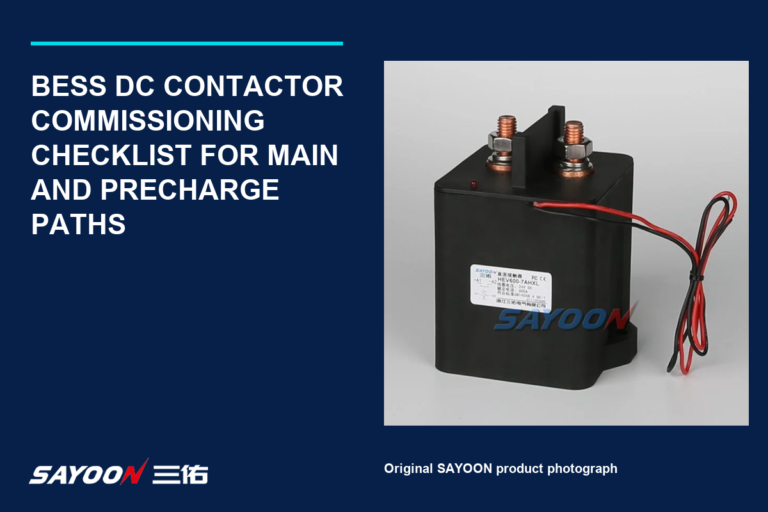
BESS DC Contactor Commissioning Checklist for Main and Precharge Paths
A BESS DC contactor commissioning checklist should prove identity, installation, insulation boundaries, control power, precharge sequence, main-contactor timing, auxiliary feedback, voltage drop, temperature, protection coordination,...
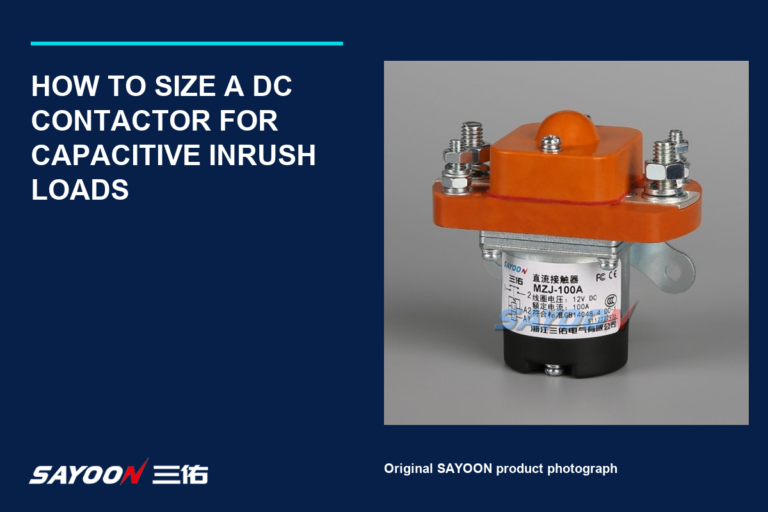
How to Size a DC Contactor for Capacitive Inrush Loads
A DC contactor for a capacitive load must be selected from the real charging event, not only the steady operating current. Document maximum bus voltage,...
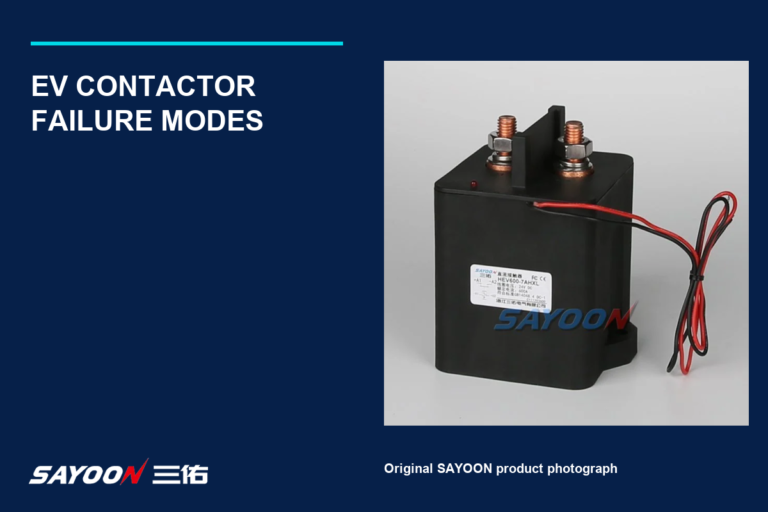
EV Contactor Failure Modes: Evidence to Check Before Replacement
EV contactor failure modes include failure to close, failure to open, welded main contacts, excessive resistance, unstable auxiliary feedback, coil or economizer faults, insulation degradation,...
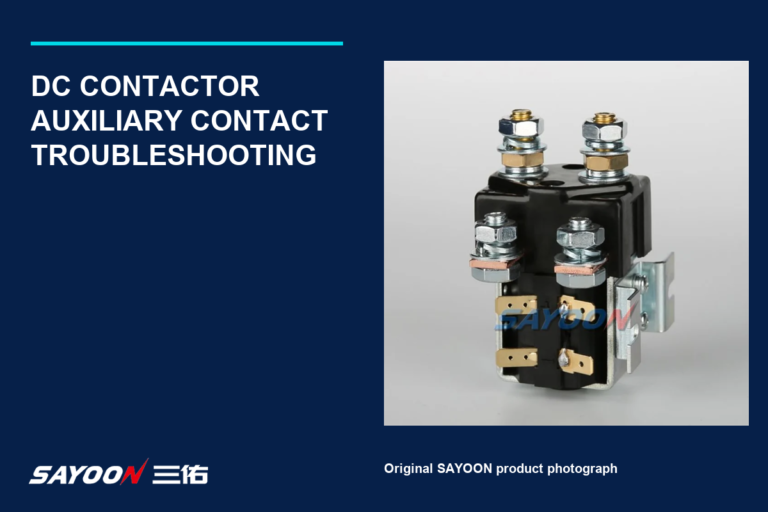
DC Contactor Auxiliary Contact Troubleshooting: Signal, Timing, and Wiring Checks
DC contactor auxiliary contact troubleshooting should verify the signal circuit separately from the main power path. Confirm the exact NO/NC arrangement, terminal map, wetting current,...
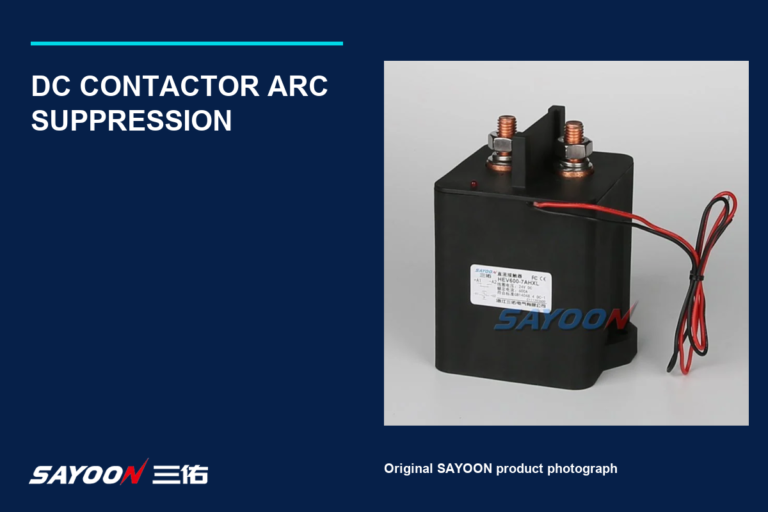
DC Contactor Arc Suppression: Load-Side Methods and Selection Limits
DC contactor arc suppression must address the load and the switching device as one system. A flyback diode, TVS, RC network, varistor, freewheel path, or...
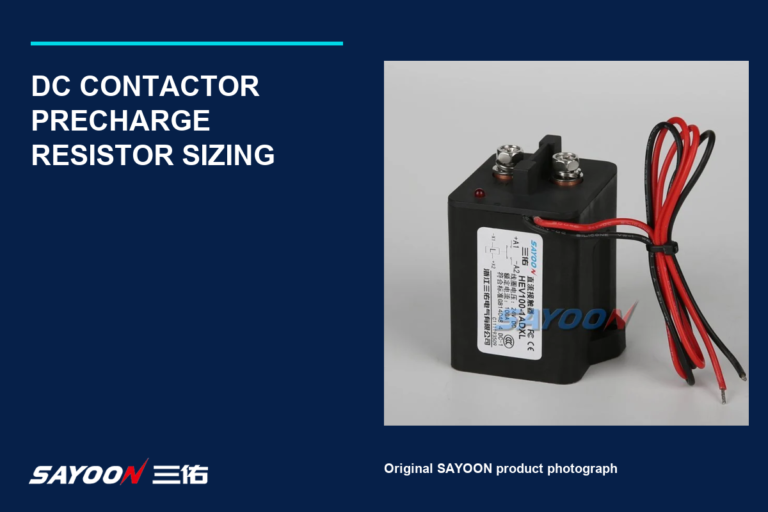
DC Contactor Precharge Resistor Sizing: Inputs, Equations, and Checks
DC contactor precharge resistor sizing starts with the DC-bus voltage, downstream capacitance, allowed peak current, required charge time, target final voltage, resistor pulse-energy capability, repetition...
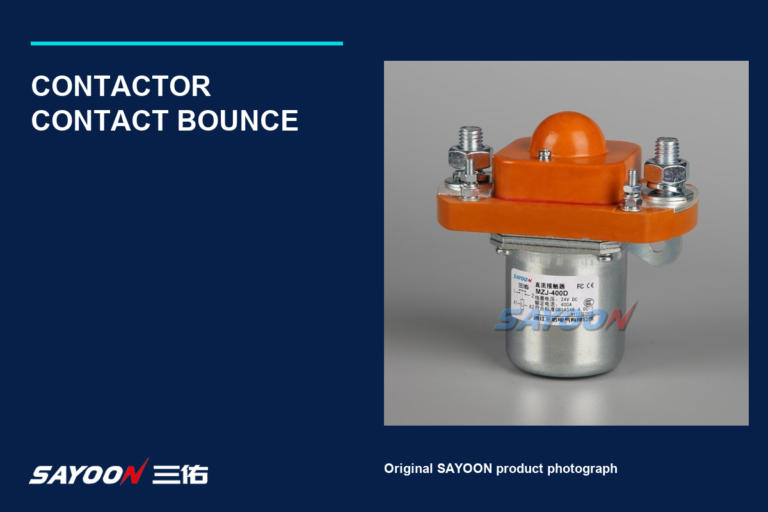
Contactor Contact Bounce: Causes, Measurement, and System Impact
Contactor contact bounce is a rapid sequence of unintended make-and-break events immediately after contacts first meet. It can increase arcing, electromagnetic interference, wear, and uncertainty...