A starter DC contactor is selected for a documented motor-start duty: write continuous current, start/inrush context, coil voltage, environment, and mounting constraints, then compare SDC15 family datasheets without treating a catalog label as an approved starter design. Use it to lock motor-start inputs before comparing SDC15 family quotations. It is a checklist for OEM and panel teams — not sizing or approval for starter-dc-contactor-selection-sdc15-motor-start-paths.
Part 1. Define starter duty versus continuous distribution duty
A starter DC contactor is reviewed for motor-start context: starting events, continuous carry after start if required, and thermal assumptions stated by the project. A distribution disconnect duty is a different RFQ. Mixing those labels produces wrong family comparisons.
Equipos que buscan starter dc contactor por lo general necesito una lista de verificación de proyectos, no un eslogan de catálogo.
Starter comparisons collapse when one quote assumes infrequent starts and another assumes dense duty without saying so.
Part 2. Write current and voltage class inputs with sources
Capture continuous current, any stated inrush or start context, system voltage, and coil supply. Source each number to a drawing or calculation note. Catalog ampere labels without source notes are not engineering inputs.
| Starter input | Se necesita fuente | Enviar con cotización |
|---|---|---|
| Corriente continua | Dibujo o cálculo | Amperio con referencia |
| Start/inrush context | Project note if stated | Event description |
| System voltage | Diseño eléctrico | Clase de tensión |
| Suministro de bobina | Diseño de control | Llámanos |
| Mounting/ambient | Diseño | Orientation and temperature |
Part 3. Review mounting, ambient, and service access
Starter packages often sit near motors or in compact AGV compartments. Confirm mounting attitude, clearance, and ambient limits against the datasheet. Accessibility for inspection should appear on the layout, not as an afterthought.
Importante: Do not treat a battery main or precharge contactor as a drop-in starter DC contactor without redesign evidence. (Source: project schematic duty notes / manufacturer datasheet.)
Part 4. Compare SDC15 family forms only on identical inputs
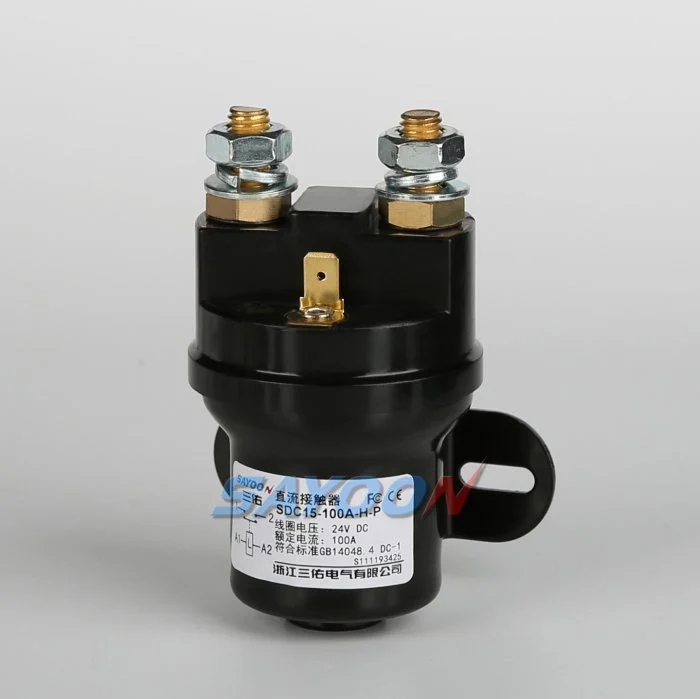
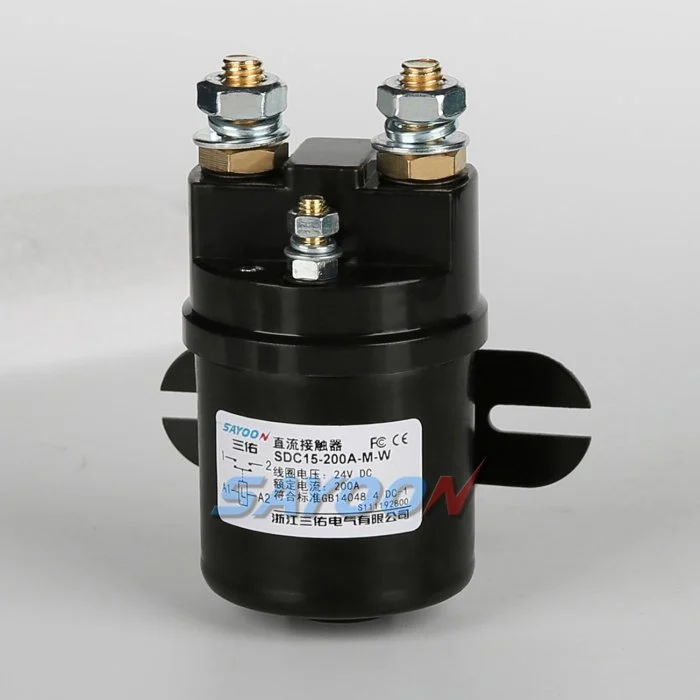
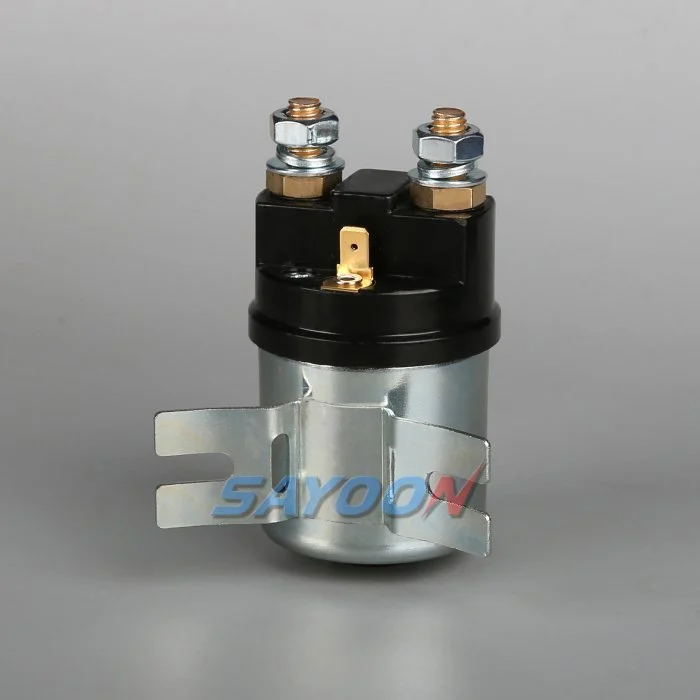
When comparing SDC15-100A, SDC15-200A, and SDC15B-200A routes, lock the duty sheet first. Variant letters and mounting suffixes are not interchangeable without datasheet confirmation. Quotation spreadsheets should carry the same input columns for every line.
Part 5. Keep precharge and HV battery contactors in their own lane
Precharge or HV battery contactors solve different path problems. If the drawing shows a motor-start contactor, do not silently replace it with an epoxy sealed HV main contactor because the ampere number looks similar.
Part 6. SAYOON starter routes for a documented inquiry
After inputs are complete, discuss SDC15 family starter DC contactors against model datasheets. Do not use an HV epoxy sealed battery contactor as a drop-in substitute for a documented starter DC contactor duty without redesign evidence.
| Documented class | SDC15 route | Nota de solicitud de cotización |
|---|---|---|
| 100A starter discussion | SDC15-100A | Confirm datasheet limits |
| 200A starter discussion | SDC15-200A | Same duty sheet columns |
| 200A variant discussion | SDC15B-200A | Suffix meaning verified |
Rutas de productos después de documentar las entradas:
- SDC15-100A starter DC contactor — documented lower-current start discussion.
- Contactor de CC para arrancador SDC15-200A — 200A class start route after duty is written.
- SDC15B-200A starter DC contactor — variant review when datasheet form matches.
Bring the locked starter duty sheet to the AGV & Electric Forklifts solution discusión, o contactar a SAYOON for SDC15 datasheet alignment.
Lectura relacionada: AGV & Electric Forklifts solution; DC contactor selection guide for motor control; 200 Amp DC contactor for motor branch isolation.
Part 7. Fit Boundary for starter selection
Fit Boundary: DC motor-start contactor input review; not motor sizing, coordination studies, or vehicle homologation. Motor sizing and protection coordination remain outside this article.
Preguntas frecuentes
What is a starter DC contactor?
It is a DC contactor reviewed for a documented motor-start duty, not a generic synonym for every DC contactor on a vehicle.
How is starter duty different from battery main duty?
Starter duty centers on motor-start events and related continuous carry; battery main paths follow different voltage class and sequencing rules.
What data is needed before comparing SDC15 quotations?
Current, start context if stated, voltage class, coil supply, mounting, ambient, and document requirements on one shared sheet.
Can SDC15B replace SDC15 without checking the datasheet?
No. Suffix and mounting variants need explicit datasheet confirmation.
What belongs in a starter DC contactor RFQ?
Duty inputs with sources, coil Us, environment, mounting, and required documents.
Does this article size the motor?
No. Motor sizing and protection coordination are out of scope.