Epoxy resin sealed high voltage contactors fit marine and EV programmes where humidity, splash, or wash-down exposure would degrade open-frame switches, provided the published IP class, contact voltage rating, continuous current, and coil envelope match each enclosure — marine service access and EV BDU vibration must still be validated on the RFQ, not assumed from sealing alone.
This guide compares epoxy resin high voltage contactor selection for two demanding environments: marine power compartments and road-going EV battery disconnect units. For marine programme context, see marine shipbuilding DC contactor applications; for the sealed product family, browse SEV Series epoxy sealed HV DC contactors.
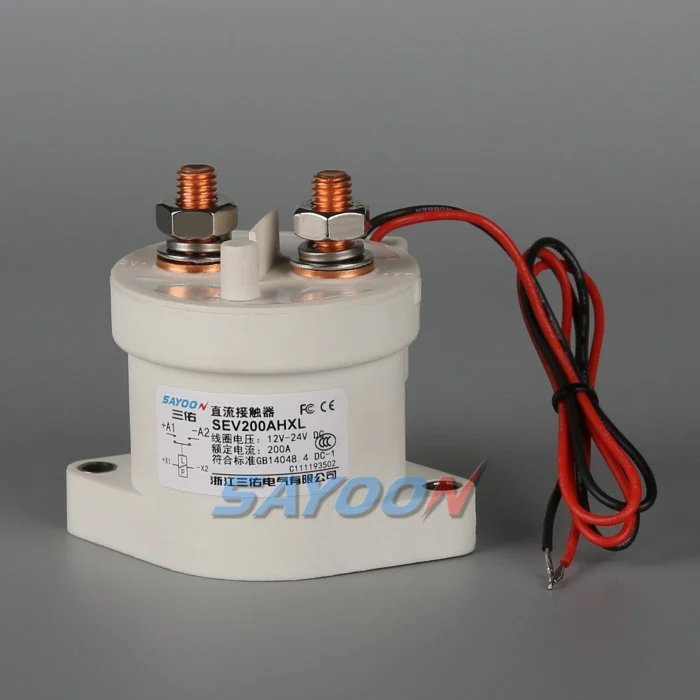
Part 1. Where do epoxy resin sealed high voltage contactors fit in marine and EV programs?
An epoxy resin high voltage contactor addresses environments where moisture ingress, salt spray, or road splash would compromise open-frame switching devices. Marine hybrid systems and EV BDUs both place HV switches near vented compartments, cooling paths, or service openings — sealing technology is therefore a procurement filter, not a decorative catalog phrase.
The fit question is programme-specific: does the published contact voltage class, continuous current, IP rating, and coil envelope match the enclosure your team already tooled?
| Programme type | Typical sealed contactor role | Environment stress |
|---|---|---|
| Marine hybrid / auxiliary DC | Branch disconnect or distribution switch | Humidity, vibration, limited service access |
| EV BDU main or precharge path | Battery disconnect or main connect | Road splash, thermal cycling, crash-safe layout |
| Shore-power or marine ESS branch | Storage disconnect | Condensation cycles, enclosure wash-down |
For EV disconnect architecture, read HV contactor selection for EV battery disconnect. For market context on mobility and storage growth, see e-mobility and energy storage demand trends.
Part 2. Why does epoxy resin sealing matter in humid or splash environments?
Epoxy resin encapsulation surrounds the switching mechanism to reduce contamination paths that would otherwise track across open frames. In procurement language, sealing supports consistent insulation performance when the surrounding air is humid or when cleaning fluids reach the compartment perimeter.
Sealing does not remove the need to specify IP class, temperature range, and terminal protection on the RFQ. It complements enclosure design — it does not replace it.
Sealing-related RFQ minimums
- Request IP class and test method reference from the supplier datasheet.
- Document operating and storage temperature corners for the installed location.
- State whether marine humidity, road splash, or wash-down applies to the compartment.
- Confirm terminal shrouding or boot strategy on the harness drawing.
- Attach enclosure ventilation or drain path notes when condensation is expected.
Published SEV400AH and SEV600AH product pages list IP68 and epoxy sealed construction. Quote those fields only for SKUs where the product page states them — do not transfer IP claims across unrelated amp classes without verification.
Part 3. How do marine power paths differ from EV BDU requirements?
Marine programmes often emphasize long service intervals, corrosion exposure, and manual maintenance access in tight compartments. EV BDUs emphasize vibration, thermal cycling, crash-safe layout, and fast production test — yet both need auditable contact voltage and continuous current lines on the RFQ.
| Decision factor | Marine programme emphasis | EV BDU emphasis |
|---|---|---|
| Service access | Manual inspection in confined space | End-of-line automated test |
| Contamination | Salt spray and condensation | Road splash and debris |
| Vibration class | Hull and machinery vibration | Road profile and pack resonance |
| Voltage class documentation | Branch potential vs shore interface | Pack max vs nominal |
| Auxiliary feedback | Manual confirm vs remote monitoring | BMS safety input timing |
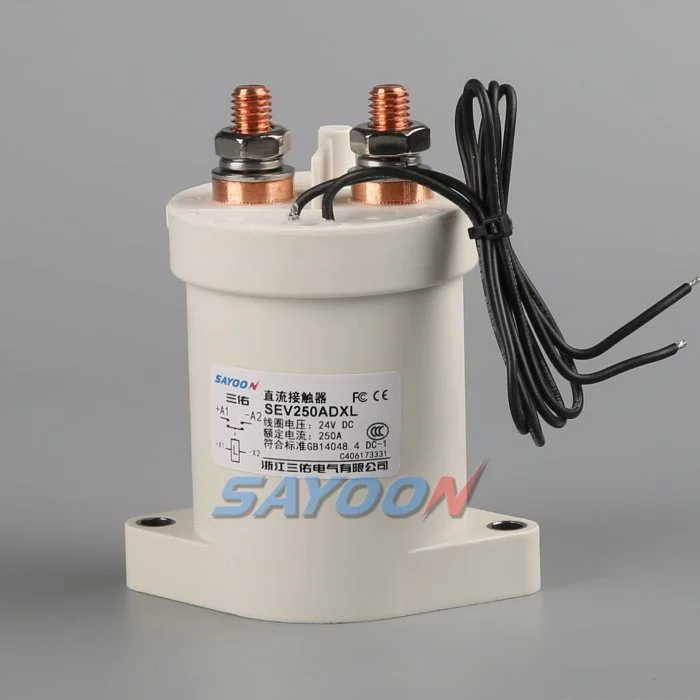
Lower-current marine auxiliary branches may begin comparison on published SEV250AD epoxy sealed HV DC contactor parameters when continuous duty fits the product page. Main paths that exceed those bounds should move to higher SEV or HEV class review.
The high-voltage system overview at BatteryDesign.net explains contactor roles in architecture terms — useful for cross-team RFQ language, not a substitute for SKU-specific tables.
Part 4. Which published IP and voltage fields should RFQs repeat?
Contact voltage class and IP rating answer different questions. Voltage class governs main-path potential the contacts must withstand in service. IP class governs ingress protection against solids and liquids under the stated test method.
| RFQ line | Governs | Typical error |
|---|---|---|
| Contact voltage class (DC V) | Main path potential | Using nominal pack voltage only |
| Continuous current at duty | Thermal carry while closed | Confusing with rupture field |
| IP class | Enclosure exposure compatibility | Assuming sealing phrase equals IP68 on every SKU |
| Coil rated voltage | Control circuit | Mixing with contact voltage |
| Auxiliary contact rating | Feedback sense circuit | Omitting current rating |
Cross-check each line against high voltage DC contactor OEM specification audit guidance before PO release when programmes export to multiple regions.
Part 5. When should teams compare SEV versus HEV sealed families?
Both SEV and HEV families on the SAYOON site describe epoxy sealed HV DC contactors for demanding paths. Compare published continuous current, outline envelope, coil options, and stated compliance scope per series page when either environment sits near a class boundary.
Series comparison workflow
- Freeze maximum contact voltage and continuous current for the sealed path.
- Shortlist two SEV SKUs from the series pillar page.
- Add one HEV candidate when mechanical envelope or current class differs.
- Mark pass / review per RFQ line — ampere label alone is insufficient.
- Escalate when rupture, auxiliary, or IP requirements exceed any published bound.
Programmes with custom coil or harness needs should review OEM and ODM contactor programmes before assuming catalog coil options cover every marine or EV variant.
Part 6. What RFQ table supports marine and EV sealed contactor selection?
Use one matrix so marine electrical, EV BDU, and procurement teams sign the same record.
| RFQ field | Programme value | Supplier documented value | Pass / review |
|---|---|---|---|
| Application (marine / EV / both) | (fill) | (fill) | |
| Maximum working contact voltage | (fill) | (fill) | |
| Continuous current at duty | (fill) | (fill) | |
| IP / sealing class | (fill) | (fill) | |
| Coil voltage and hold power | (fill) | (fill) | |
| Auxiliary contacts | (fill) | (fill) | |
| Vibration / shock class (if required) | (fill) | (fill) | |
| Stated material compliance scope | (fill) | (fill) |
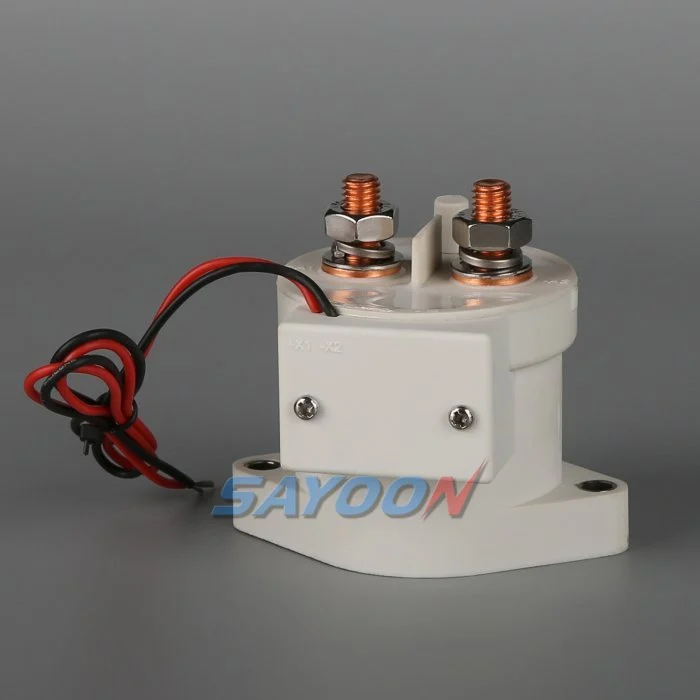
When continuous current exceeds mid-range examples, compare SEV600AH epoxy sealed high-voltage DC contactor published parameters before approving a single SKU across marine and EV variants.
Fit Boundary: Catalog sealing and IP data support component-level selection. They do not replace platform safety analysis, class society or homologation evidence, or customer-specific environmental test reports.
Part 7. What mistakes occur when sealing is treated as a universal substitute for system design?
Sealing-related mistakes on marine and EV programmes
- IP class omitted from RFQ — procurement selects sealed marketing language without test method reference.
- Nominal voltage used instead of maximum — contact class collapses during charge or regeneration peaks on EV paths.
- Marine SKU reused on EV traction pole without current review — thermal margin fails in production test.
- Auxiliary feedback assumed — BMS or marine alarm logic lacks rated NO/NC confirmation.
- Enclosure ventilation ignored — condensation continues despite encapsulated contactor.
- Certificate scope over-read — material compliance on a SKU page treated as full platform approval.
When any line remains blank after supplier response, hold PO release and send enclosure IP target and voltage class for engineering confirmation.
References
- BatteryDesign.net — High Voltage System — HV architecture context for sealed contactor roles
- ISO 6469-3 scope (road vehicles — electrical safety) — system-level electrical safety framing for EV programmes
FAQ
What is an epoxy resin high voltage contactor?
A high voltage DC contactor whose switching mechanism is encapsulated in epoxy resin to reduce contamination and moisture ingress paths compared with open-frame designs. IP class and voltage ratings are still specified separately on the datasheet.
Are sealed contactors always required for marine HV DC paths?
Not always — the requirement follows enclosure exposure, service policy, and customer spec. Sealed types are commonly shortlisted when humidity, spray, or wash-down reaches the compartment.
Can the same sealed SKU serve marine auxiliary and EV BDU poles?
Only after each pole’s contact voltage, continuous current, auxiliary, and mechanical envelope pass independent RFQ review — do not reuse one part number by default.
Which IP rating should appear on a marine or EV RFQ?
Request the IP class and test method reference from the supplier for the specific SKU. Published SEV examples cite IP68 on selected product pages — verify per SKU before reuse.
How do SEV and HEV sealed families differ at RFQ stage?
Both are HV DC families with epoxy sealed options on the SAYOON site. Compare published continuous current, outline, coil options, and compliance scope per series before freezing one cross-programme part number.
When should engineering review override catalog sealing claims?
When platform maximum voltage, fault current, vibration class, or homologation evidence exceeds published table bounds, or when redundant poles and special coil timing are required.
Where can teams learn EV disconnect sizing alongside sealing choice?
Start with EV disconnect selection articles for path architecture, then apply this guide to confirm sealed SKU fit against enclosure IP targets and environmental duty.