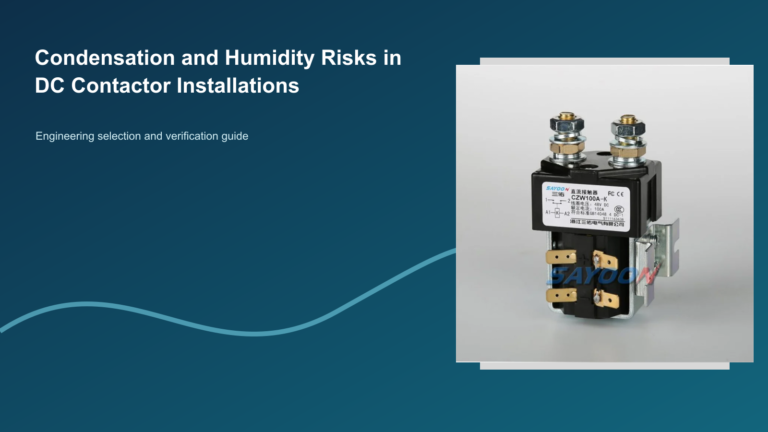
Condensation and Humidity Risks in DC Contactor Installations
Humidity and condensation can create surface leakage, corrosion, coil or electronics damage, and unstable insulation around a DC contactor. Relative humidity alone does not describe...
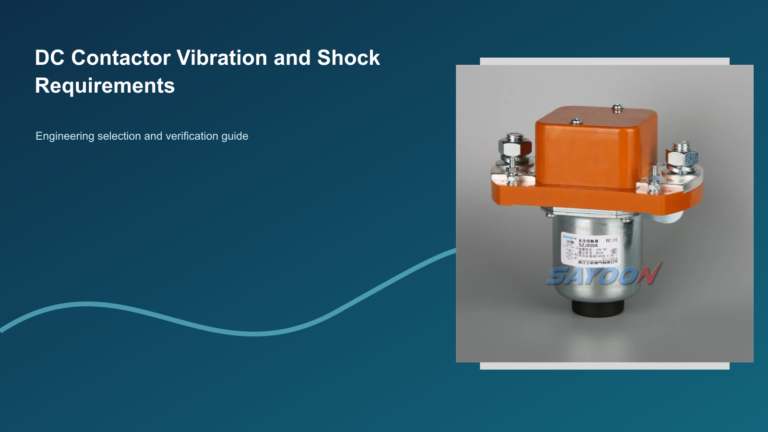
DC Contactor Vibration and Shock Requirements
DC contactor vibration and shock requirements must match the mounted product, axis, spectrum or pulse, duration, temperature, electrical state, and acceptance criteria. A generic acceleration...
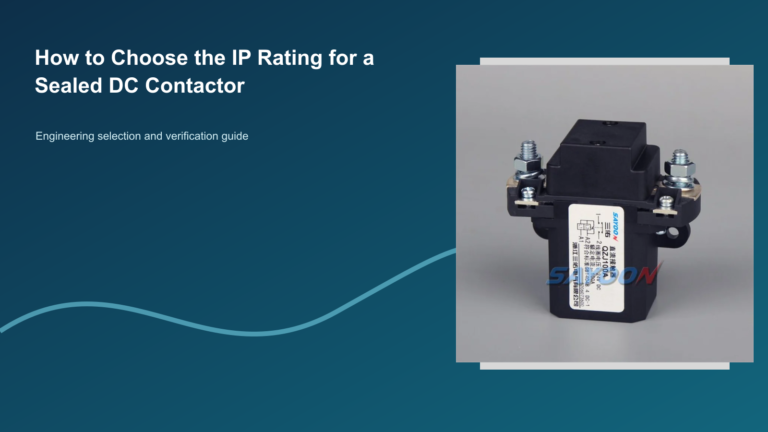
How to Choose the IP Rating for a Sealed DC Contactor
Choose a DC contactor IP rating from the actual dust and water exposure at the device boundary, not from a general statement that the unit...
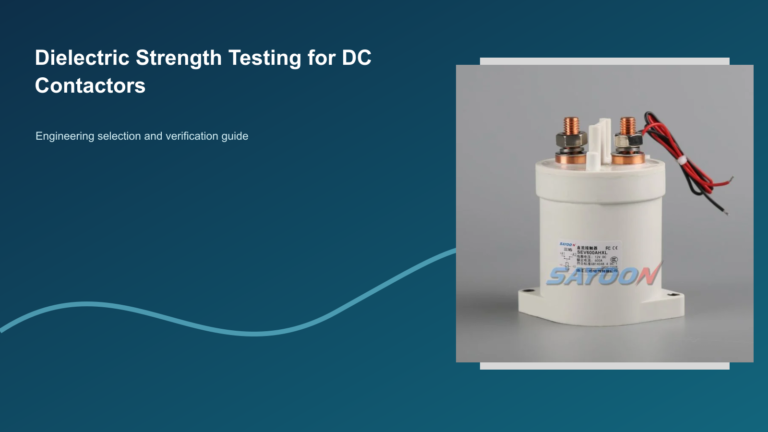
Dielectric Strength Testing for DC Contactors
A DC contactor dielectric strength test applies a specified test voltage between defined terminal groups for a defined time and leakage criterion. Use only the...
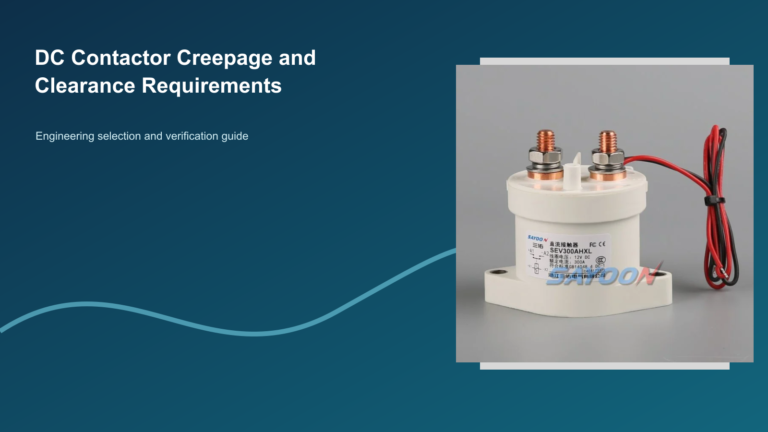
DC Contactor Creepage and Clearance Requirements
DC contactor creepage and clearance requirements depend on the governing standard, working and transient voltage, pollution degree, material group, altitude, insulation type, and geometry. Measure...
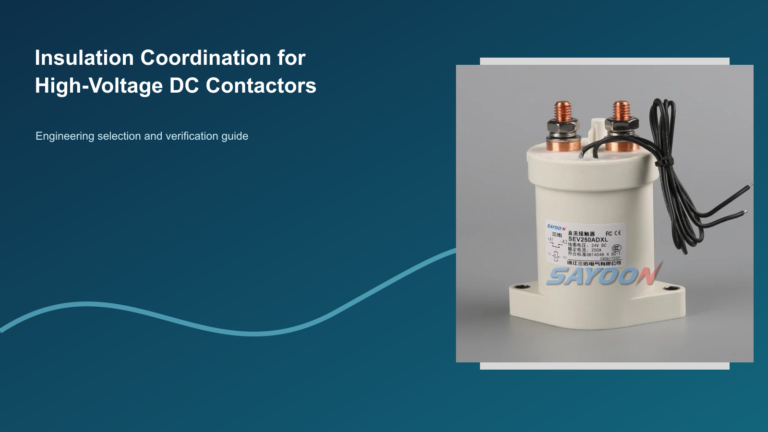
Insulation Coordination for High-Voltage DC Contactors
Insulation coordination for a high-voltage DC contactor aligns working voltage, transient overvoltage, pollution degree, material group, altitude, creepage, clearance, solid insulation, and protective measures. The...
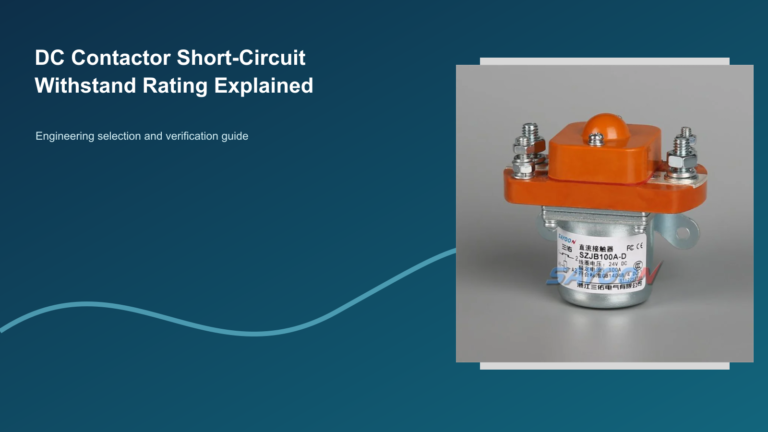
DC Contactor Short-Circuit Withstand Rating Explained
A DC contactor short-circuit withstand rating is meaningful only with the stated prospective current, time, protective device, test voltage, conductor arrangement, and acceptance criteria. The...
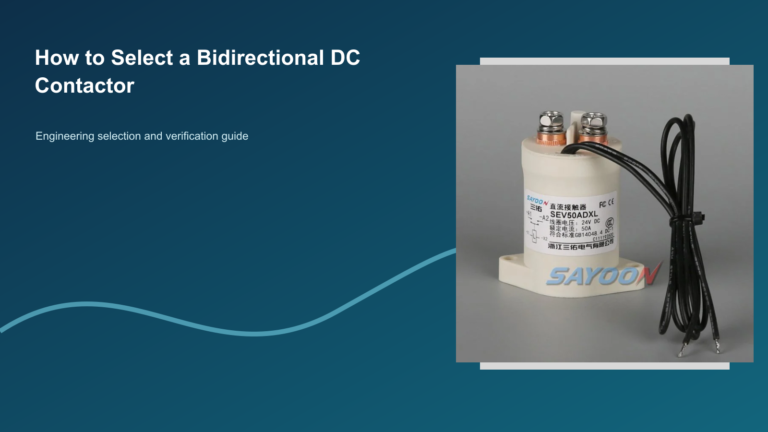
How to Select a Bidirectional DC Contactor
A bidirectional DC contactor must interrupt the required current in both directions under the stated voltage and fault conditions. Confirm that the exact device is...
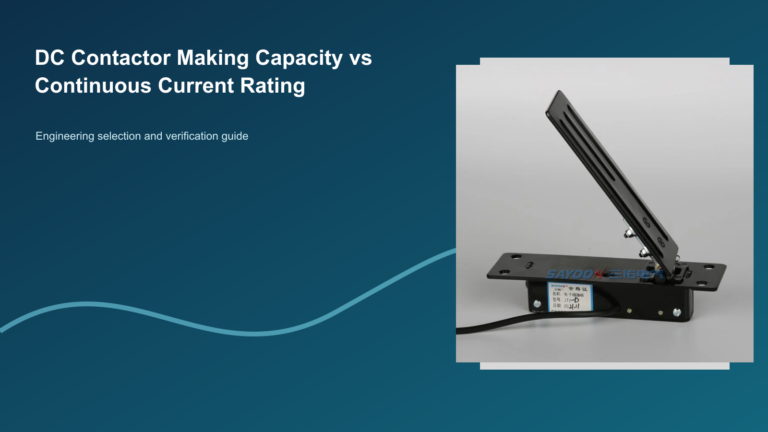
DC Contactor Making Capacity vs Continuous Current Rating
Contactor making capacity describes the current stress when contacts close, while continuous current describes heating after the contactor is fully closed. A device can carry...
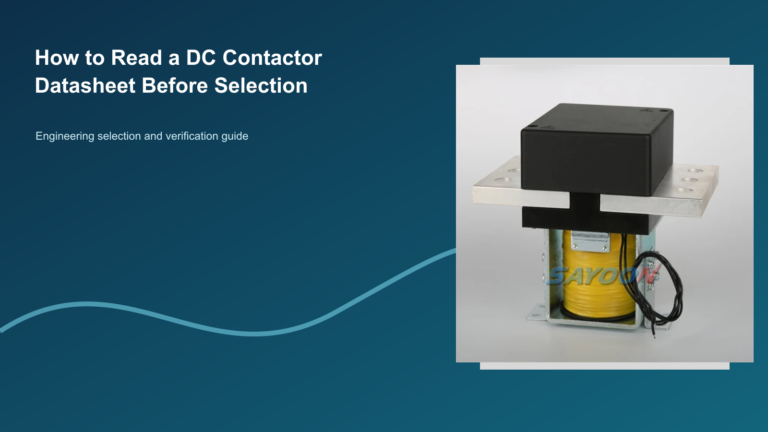
How to Read a DC Contactor Datasheet Before Selection
Read a DC contactor datasheet by separating main-circuit ratings, coil requirements, contact arrangement, environmental limits, life data, dimensions, terminals, and test conditions. Never combine the...
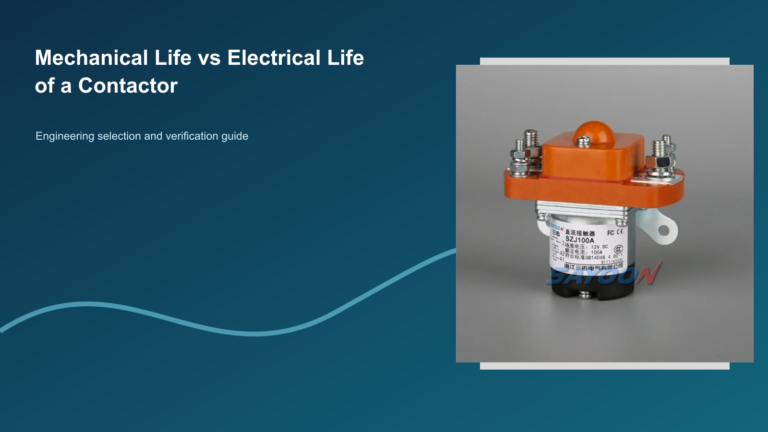
Mechanical Life vs Electrical Life of a Contactor
Mechanical life counts operations without the specified power-switching stress, while electrical life reflects contact wear under stated voltage, current, load, and duty conditions. The two...
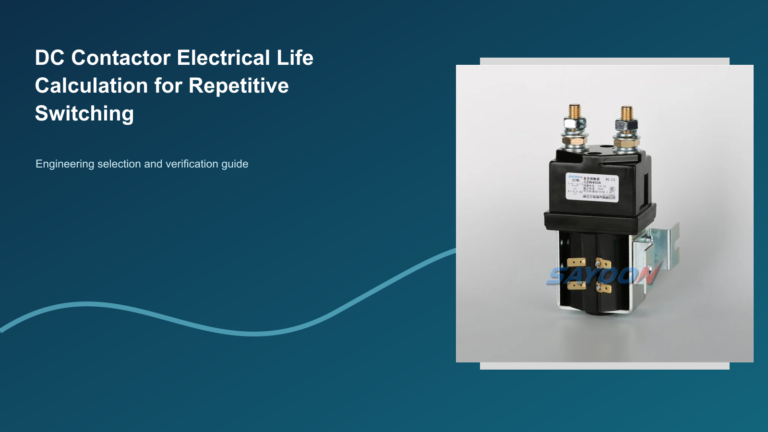
DC Contactor Electrical Life Calculation for Repetitive Switching
DC contactor electrical life cannot be calculated from current alone. Build a duty profile containing voltage, make current, break current, load time constant, switching direction,...